You’ve saved forty blue-and-white Christmas trees to a Pinterest board called “someday” and still haven’t bought a single ornament. That’s not a you problem — it’s a too-many-shades-of-blue problem. Powder blue, cobalt, slate, and navy don’t all get along, and one wrong spool of ribbon can turn an elegant tree into a muddy one.
So we did the sorting for you. Across 23 real trees from real homes — flocked, green, tabletop, and two-story — we pulled the exact ornaments, planters, ribbons, and lighting that make each one work, from dollar-store finds to porcelain pots that cost more than your first car. Main styles covered: traditional chinoiserie, cool wintery minimalist, cozy rustic kraft-paper, and full maximalist.
You’ll find a lot of ginger jars, a few surprising uses for brown kraft paper, and one very honest conversation about cool white LED lights. And stay until the end — we break down the most common mistakes that can ruin these looks.
📌 Save this to Pinterest for later — you’ll want to revisit these ideas.
This post contains affiliate links. If you buy through them, we may earn a small commission at no extra cost to you.
1. Flocked White Tree Anchored in a Rustic Wooden Crate
The crate does more work than any single ornament here. A flocked white tree in a standard metal stand reads gift-shop display; drop it into a weathered wooden crate and the whole vignette suddenly has a foundation that the deep blue gifts and the nailhead chair can build on. Bronze and gold ornaments pick up the crate’s warm tones, which is exactly why these blues never turn cold. Swap the crate for a glossy skirt and you lose the tension between rustic and refined that makes this one stick in your memory.
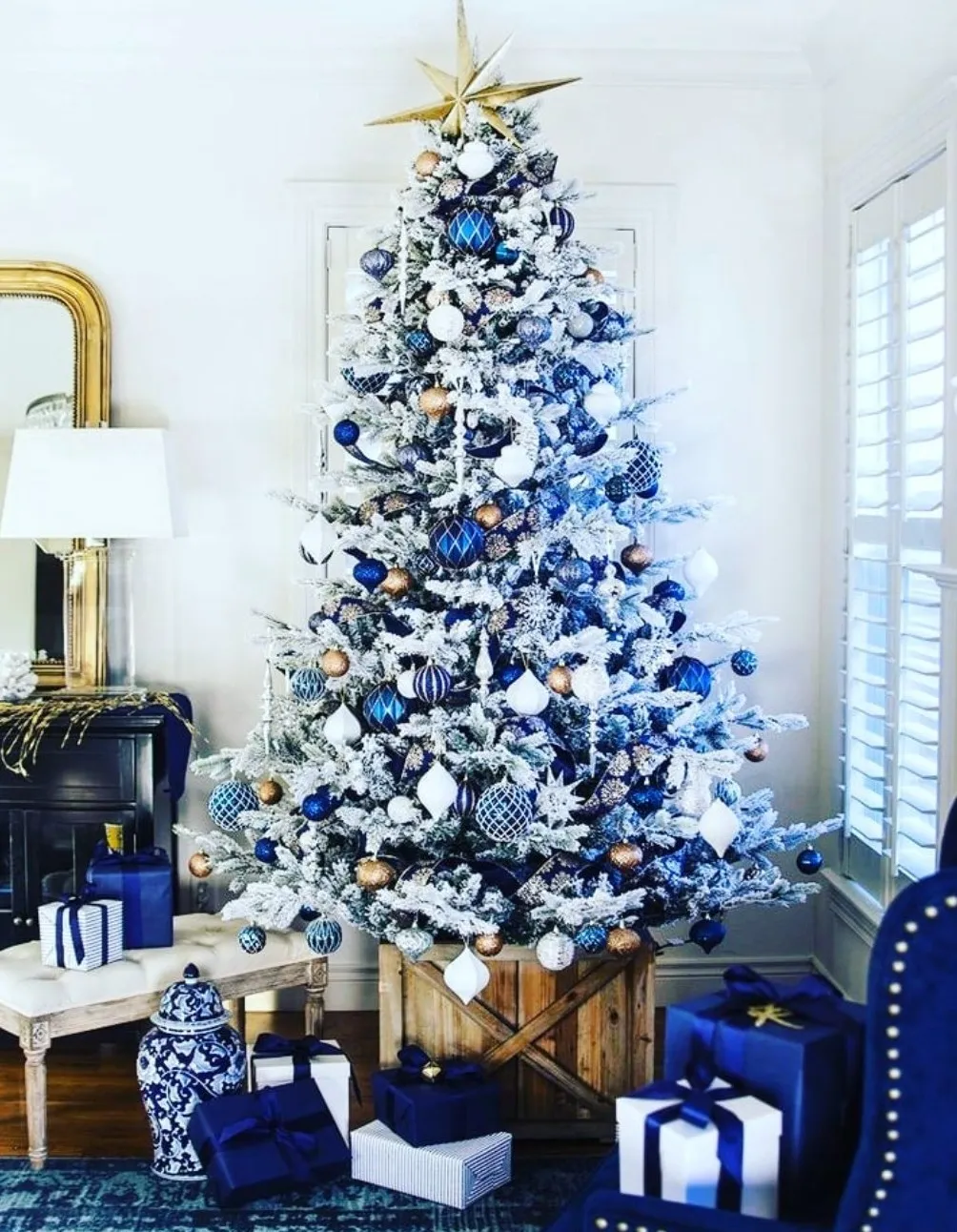
- Flocked 7.5 ft tree: $180–$450
- Wooden crate stand: $45–$120
- Blue, white, and bronze ornaments, about 90 pieces: $120–$300
- Gold star topper: $25–$60
- Wrapping paper, ribbon, patterned rug: $80–$200
Total: $450–$1,130
Budget alternative: shop Facebook Marketplace in early November for a used flocked tree — people upgrade constantly. A produce crate from a farm stand, sanded and sealed, saves another $200. This is the rustic cousin of Idea #9, which trades the crate for porcelain.
2. Ginger Jar Ornaments in a Blue-and-White Chinoiserie Cachepot
Three things carry this tree. Scale contrast comes first — oversized ginger jar ornaments beside small patterned spheres keep your eye traveling instead of glazing over. Temperature comes second: crisp blue-and-white porcelain against flocked branches reads wintry, and a scattering of red berries warms it just enough to avoid the department store look. Third, the ceramic pot repeats the ornament pattern at floor level, so the tree feels planted in that dining room rather than dropped into it.
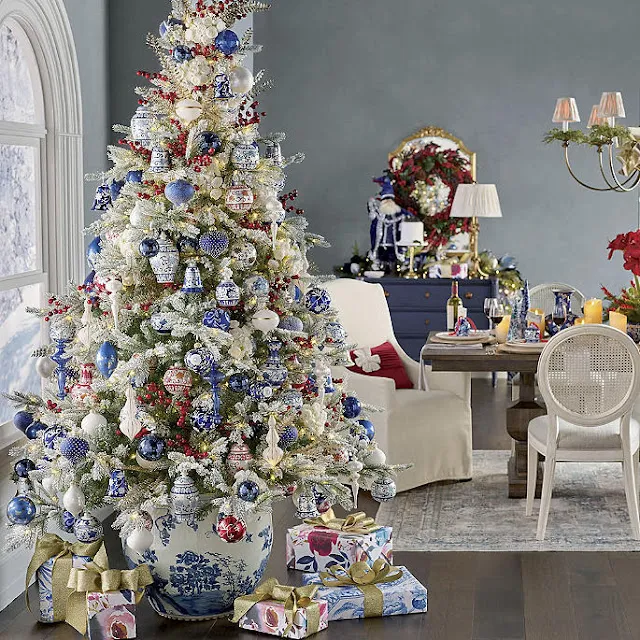
Here’s the rule I give clients for patterned ornaments: no two identical motifs should touch. Lay every blue-and-white piece on a table and sort by pattern scale — large, medium, small. Hang the big ones first, at eye level and in the top third, then fill around them with smaller motifs. If you own six matching spheres, split them into two groups of three and place them on opposite sides of the tree. Matching pairs hung side by side is the fastest way to make an expensive ornament collection look cheap.
3. Blue, Gold, and Cream Poinsettias with Foo Dogs at the Base
The formula here runs about 45% evergreen and blue-and-white, 25% gold and silver metallic, 20% cream and champagne poinsettias, and 10% green foliage showing through. Swap cobalt for slate blue and the whole tree turns quiet and coastal. Swap the gold for aged brass and it reads vintage instead. Keep the cream poinsettias to roughly one for every six ornaments and the tree stays refined rather than overstuffed.
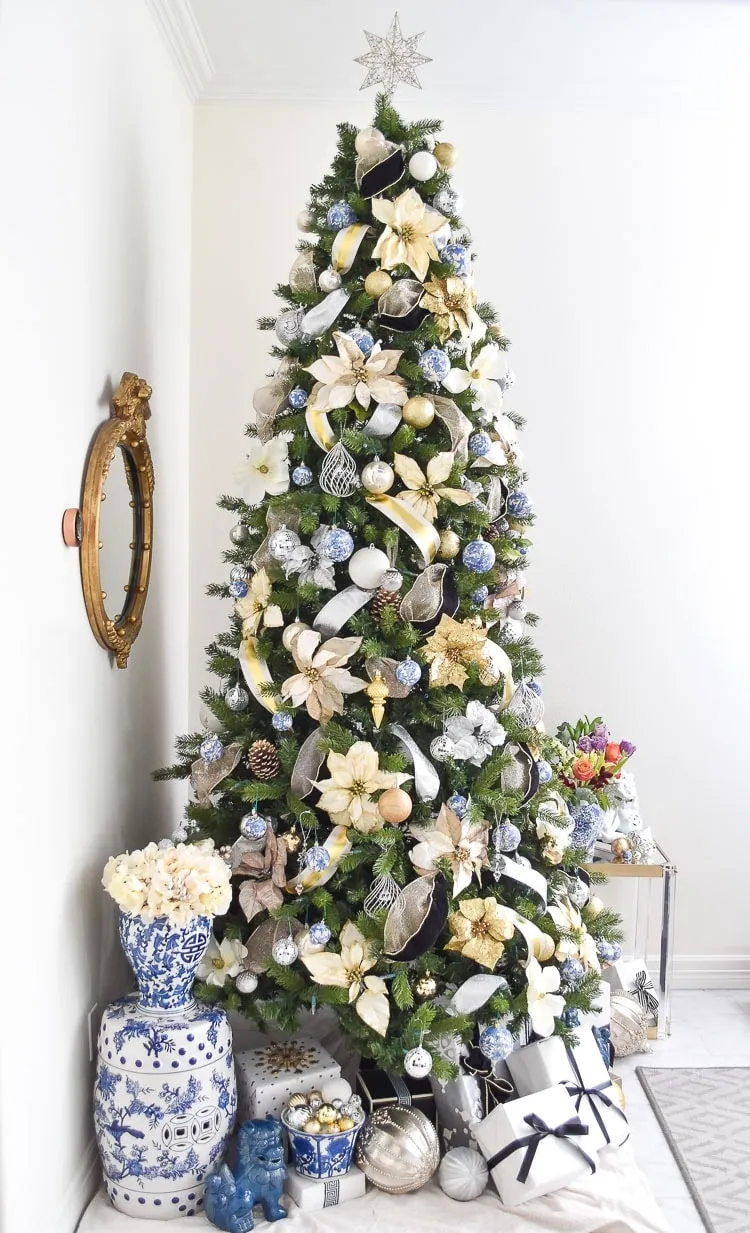
Faux poinsettias are space hogs. Each bloom swallows the equivalent of about four ornaments’ worth of branch, so on a tree under 7.5 feet, cap them at five or six. Also think about that gilded oval mirror before you commit to this layout — it doubles every light source in the frame, which is gorgeous at night and slightly blinding at 7 a.m. in December. If your tree faces a window, save the foo dog statues for a lower shelf where they won’t compete with the topper.
4. Velvet Knots in Navy and Olive on a Heavily Flocked Tree
Velvet ribbon is the difference between elegant and craft-fair. Use 3-inch wired velvet, cut 18-inch lengths, and tie a soft knot instead of a stiff bow — pinch the center, twist once, and let the tails fall. Place knots at the 10, 2, and 6 o’clock positions, then mirror at 12, 4, and 8 so the tree reads balanced from any angle. Wire each one to a branch rather than hooking it, or the weight of velvet will drag those tails straight down by New Year’s.
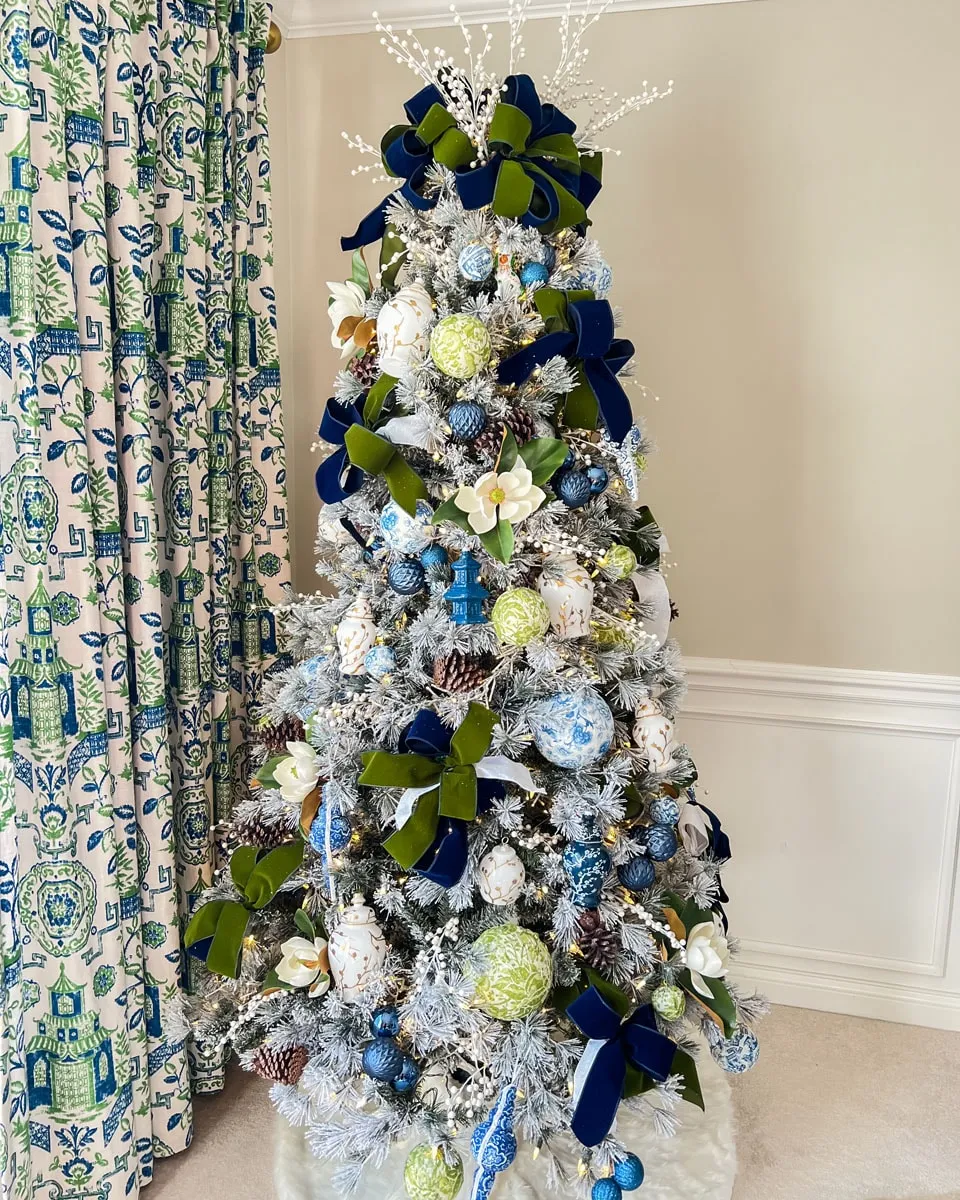
- Clip faux magnolia blooms from the stem with wire cutters, leaving 3 inches.
- Wrap the stem in floral tape, then twist in two white berry sprigs.
- Hot-glue the bundle to a wooden pick and let it cure for 10 minutes.
- Tuck picks between branches rather than on top — they should look grown, not placed.
- Space them every 10 to 12 inches, sitting slightly deeper than the ornaments.
About 40 minutes for 20 picks, roughly $35 in materials.
5. Chinoiserie Ornaments and Clear Icicles Above a Sideboard
- Blue-and-white ornament sets: Target Threshold, about $6 for six
- Large ceramic planter: HomeGoods or At Home, $30–$60
- Clear icicle ornaments: dollar store packs, $1.25 each
- Light blue ribbon: Michaels spools, $4–$8
- Brass-hardware sideboard: Facebook Marketplace, $80–$250 used
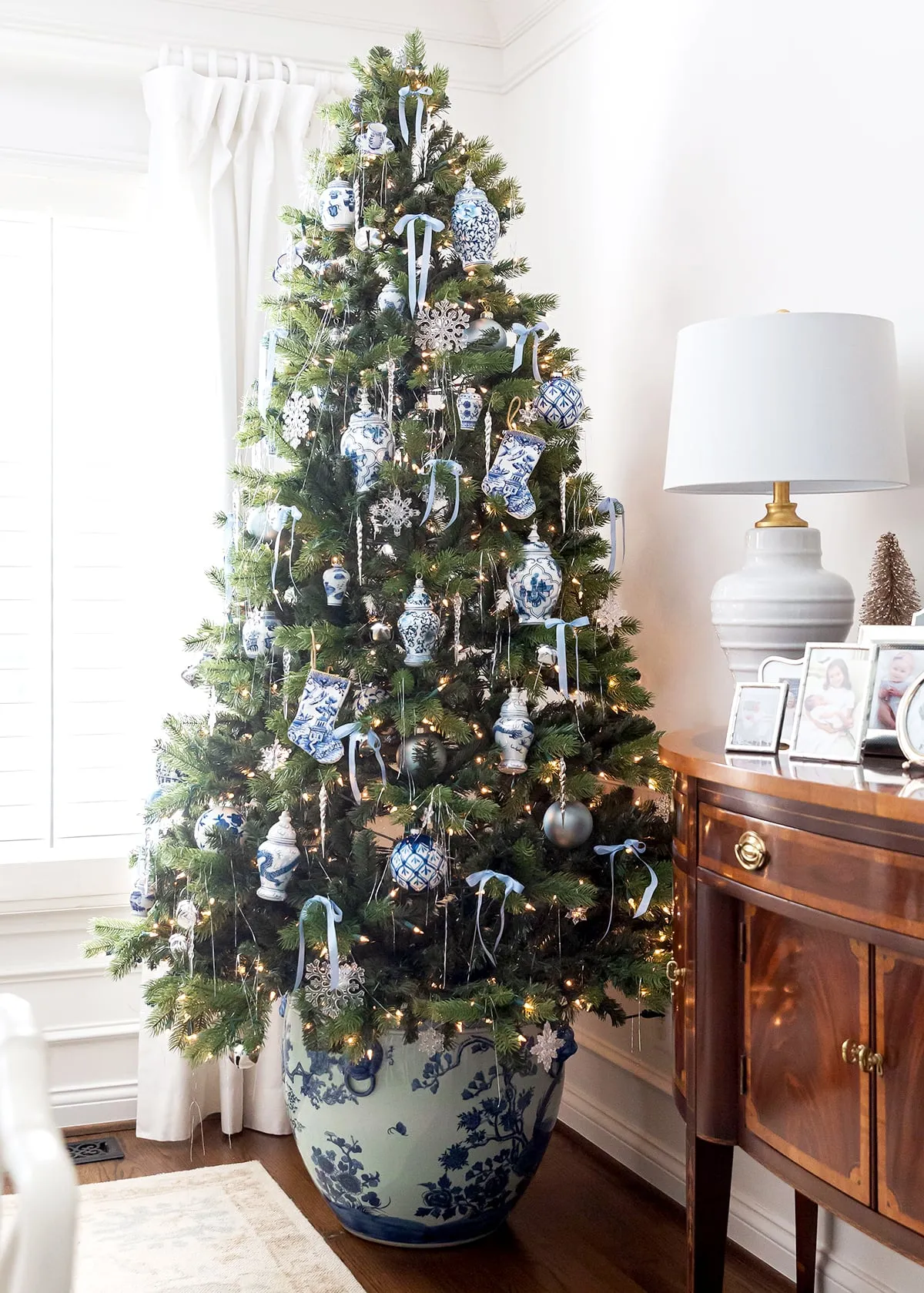
You can land within 40% of the original cost and most guests will never know which pieces came from where. The porcelain pot is the one place to spend — it’s the anchor. Compare with Idea #2, which goes heavier on pattern and lighter on metallics.
Chinoiserie has been quietly building for four seasons now, fueled by the grandmillennial crowd and every slow, sunlit movie kitchen we’ve saved to a board. What’s different in 2026 is the restraint: instead of covering a tree in pattern, people pick one motif — ginger jars, pagodas, a single floral — and let blue and white do the talking. That’s a trend with legs. Patterned porcelain never really leaves, it just changes scale.
6. Tall Gold Bamboo Mirror, Small Blue-and-White Tree
This setup wants a dining room or entry of at least 10 by 12 feet with ceilings around 8 to 9 feet, because the tall bamboo mirror needs breathing room. Keep the mirror at least three feet from the tree or you’ll get a hall-of-mirrors effect with the lights. In a smaller space, drop the tree to 6.5 feet and mount the mirror lower. If your room is tighter than that, Idea #11 shows a lighter, cooler version that works in about 100 square feet.
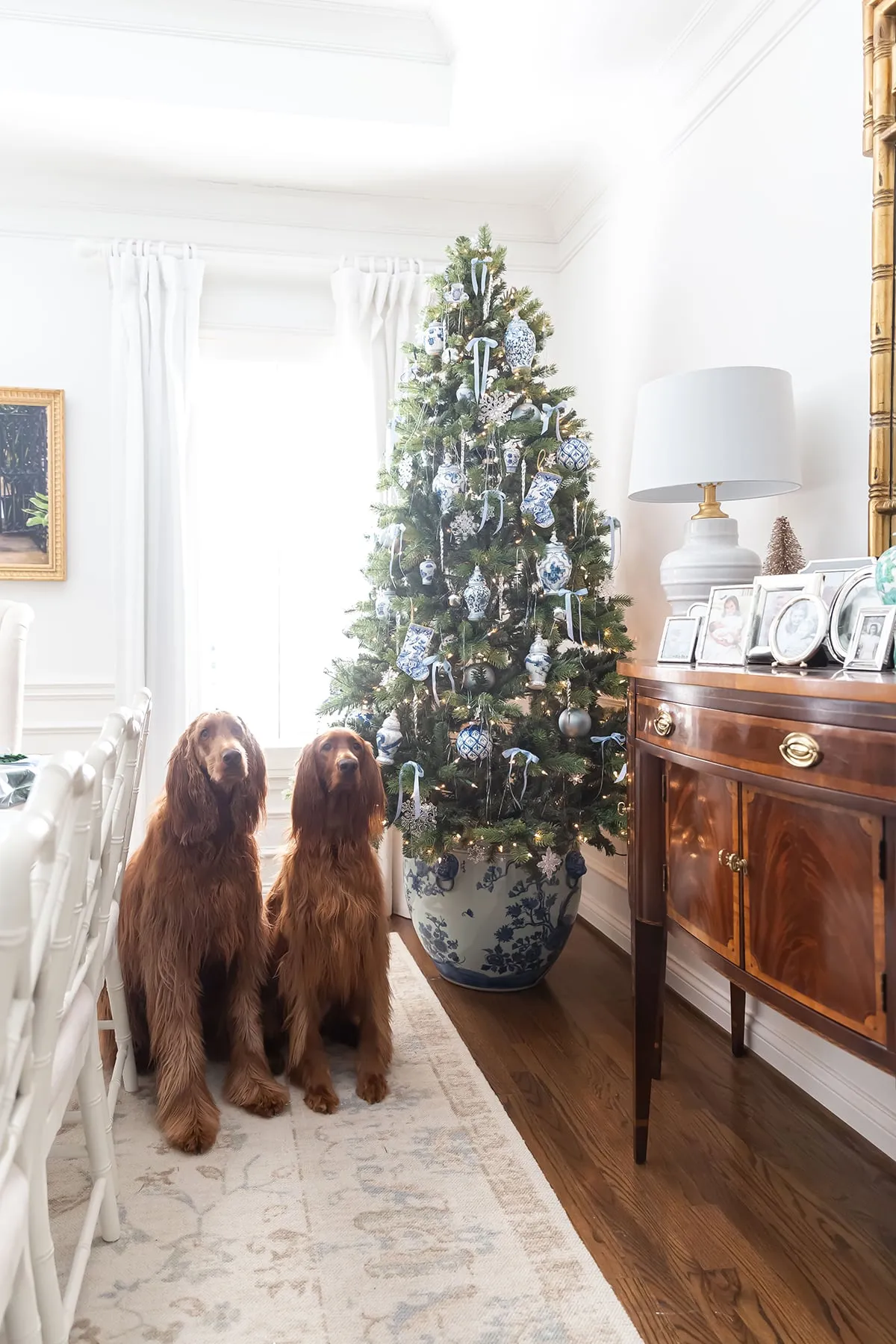
Flocked trees shed. Expect a fine white dust on the floor for the first week and again when you pack it up — vacuum with a brush attachment, never a beater bar. That ceramic planter weighs 20 to 30 pounds empty, so fill it with sand or foam before the tree goes in, and never lift it by the rim. Store light blue ribbons loosely wound around a cardboard tube; folded satin creases permanently and you’ll be ironing ribbon on a stepladder next December.
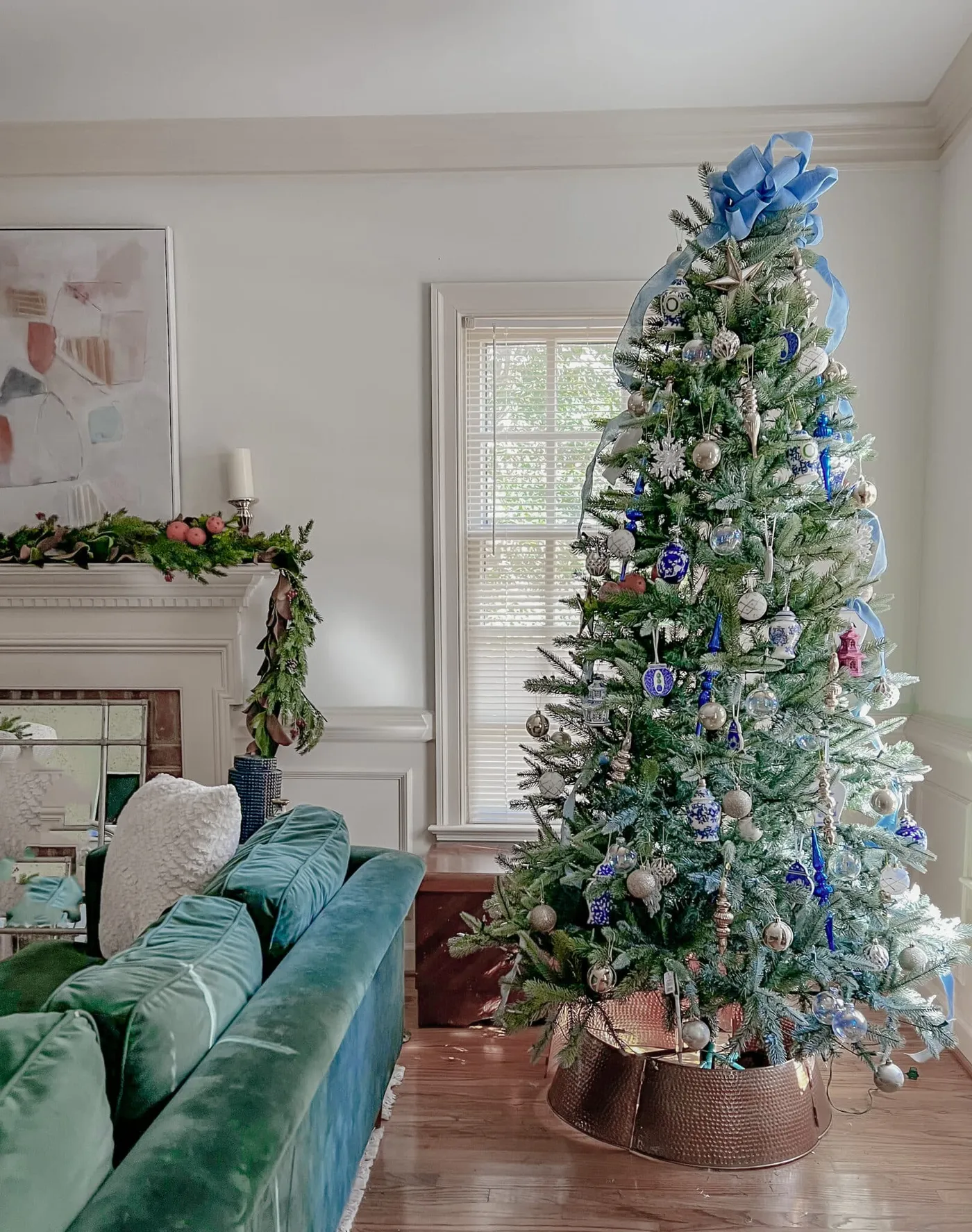
7. Hammered Bronze Collar and Teal Velvet in the Same Frame
- Start with a 9-foot pine garland and fluff every branch outward.
- Wire in three or four dried orange halves per foot, cut side facing out.
- Cluster red berries in odd numbers — threes and fives read natural, pairs don’t.
- Weave warm white battery lights through the back layer, not the front.
- Finish with cedar sprigs at the edges for a darker green contrast.
Roughly an hour, about $60 if you dry your own citrus.
Teal velvet and powder-blue ribbon are neighbors on the color wheel, not opposites, which is why the sofa and the tree feel like one room instead of two separate decorating decisions. The hammered bronze collar does the opposite job: it’s warm, textured, and slightly dull, so it grounds all that shine. Without it, a tree this polished floats. With it, the eye has somewhere to land at floor level before it climbs.
8. Cascading Light Blue Ribbon Through Green Branches
Break it down as 55% green fir, 20% blue-and-white pattern, 15% glossy white and iridescent, and 10% gold. That last 10% is what keeps it from feeling like a tile showroom — gold adds warmth to an otherwise cool palette. Want a different mood? Keep the same percentages and swap the light blue ribbon for deep navy and the gold for antique brass. The formula holds; only the temperature changes.
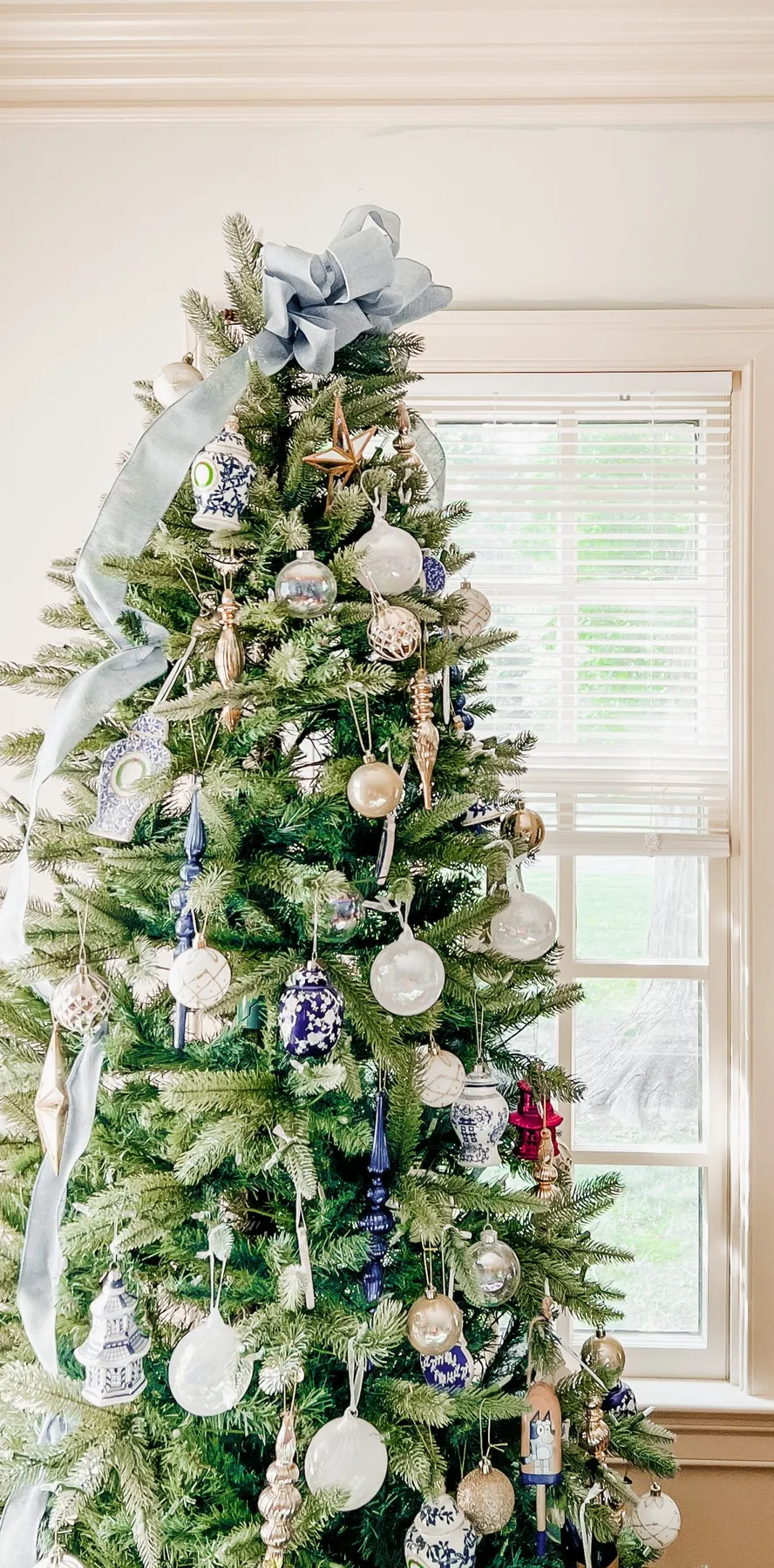
For a vertical ribbon, measure your tree’s height and multiply by three — that’s your total length, plus a yard for the bow. Anchor the top bow with floral wire, then weave the ribbon through branches every 12 to 15 inches, always running behind the lights. Skip the wire and you’ll re-drape it every time someone brushes past. Unroll your ribbon a day ahead so the creases relax; nothing kills a good drape like a memory of the spool.
9. Miniature Blue-and-White Stockings Hung as Ornaments
It’s the miniature stockings. Everything else here is a sphere, a jar, or an icicle — shapes that have been appearing on Christmas trees since before any of us were born. A tiny blue-and-white stocking, maybe four inches tall, breaks that rhythm completely and gives the eye something narrative to follow. Take it away and the tree is still beautiful, just anonymous. Small storytelling pieces are what make a tree feel collected rather than purchased.
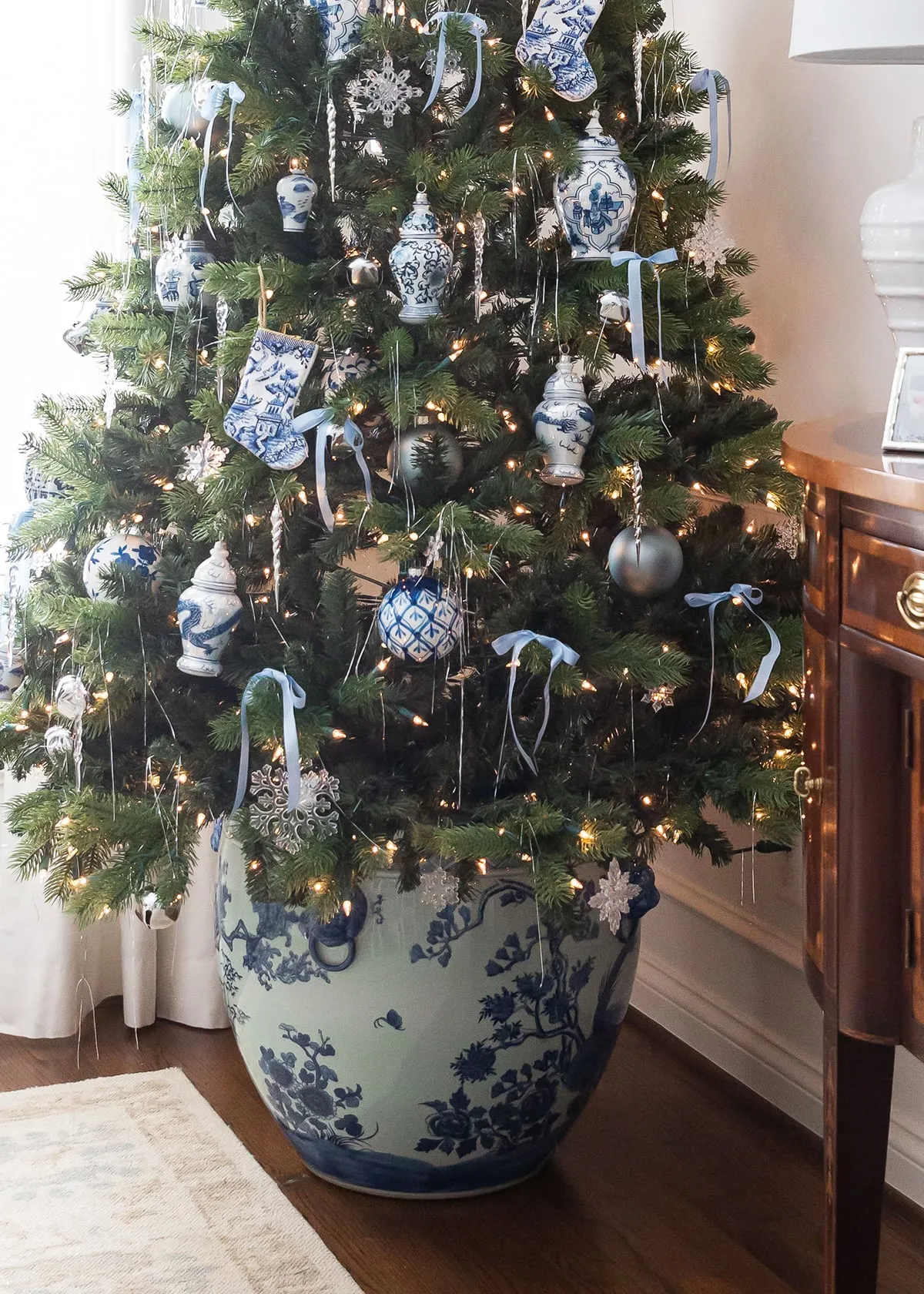
Fat quarters from any fabric store run $2 to $4 each, and one quarter makes two mini stockings. Sew or fuse them with hem tape, add a ribbon loop, and you’ve got a set of eight for under $20. The large ceramic planter is where to spend — check HomeGoods first, then At Home, then a local nursery selling pots in January. Blue satin ribbon at Michaels is $4 a spool and goes further than you’d expect.
10. Maximalist Tree on a Zebra Rug, Styled Like a Collection
Maximalism stopped being a dirty word around 2023, and by 2026 the most-saved living rooms are the ones packed with art, pattern, and objects that obviously took twenty years to collect. The blue-and-white pot at the base of this tree is the giveaway: it reads heirloom, not holiday. Designers are styling trees as one more collected object in a layered room instead of the room’s main event, and that honestly reads as wealth more than any matching ornament set ever will.
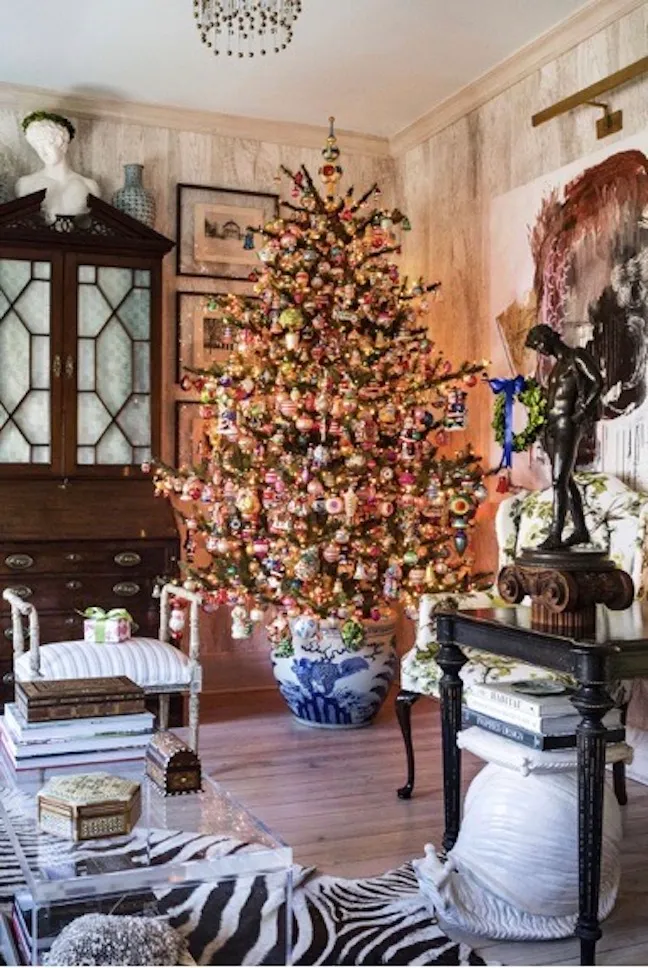
A tree this dense needs the rest of the room to give it space. Here the zebra rug, the abstract art, and the dark hutch all share one trait — confident but not busy — so the tree wins without a fight. In your own version, pick two through-lines and repeat them. If your tree is multicolor, keep the furniture neutral and let pattern live only in the rug. If you can’t see the tree from the doorway in three seconds, thin it out. This is the maximalist cousin of Idea #21.
11. Frosted Tree with Blue, Silver, and Clear Glass Spheres
Three cool elements stack into one calm composition: blue and silver spheres, clear glass baubles that catch every light, and white ribbon bows acting as punctuation. Nothing here shouts. The gifts continue the story with snowflake craft paper and dark blue ribbon, and the white faux fur rug bounces light back up into the branches so the tree glows even with the lights off. Cool palettes live or die on light — this one is designed to reflect it.
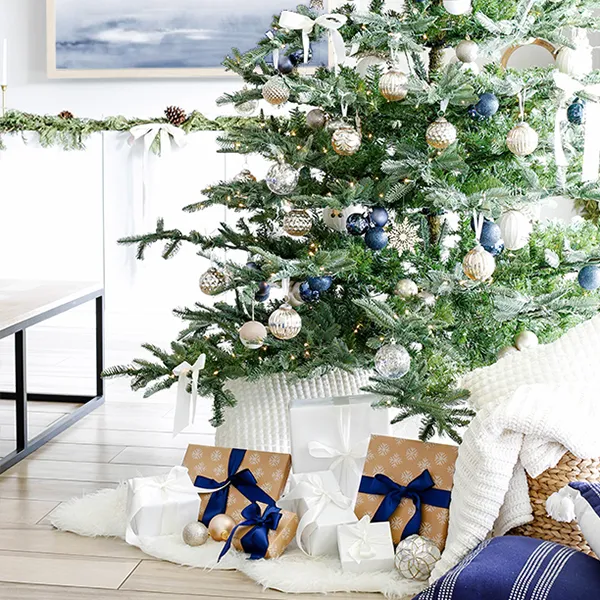
- Comfortable in living rooms from 10 by 10 feet up to 14 by 16 feet.
- Wants a light floor — white, pale oak, or faux fur over hardwood.
- Minimum 8-foot ceilings; a 7.5-foot tree leaves the right amount of air.
- Skip if your room faces north with one small window — cool tones go gray in low light.
If your space is darker, the snowflake tree in Idea #22 reads better because white flakes add their own brightness.
12. Glittered Blue Geometry Mixed with Natural Pinecones
- Flocked 7.5 ft tree: $200–$500
- Warm white string lights, 600 count: $25–$60
- Blue and silver ornament set, about 60 pieces: $80–$180
- Natural pinecones, gathered: $0–$25
- Floral wire and ornament hooks: $10–$20
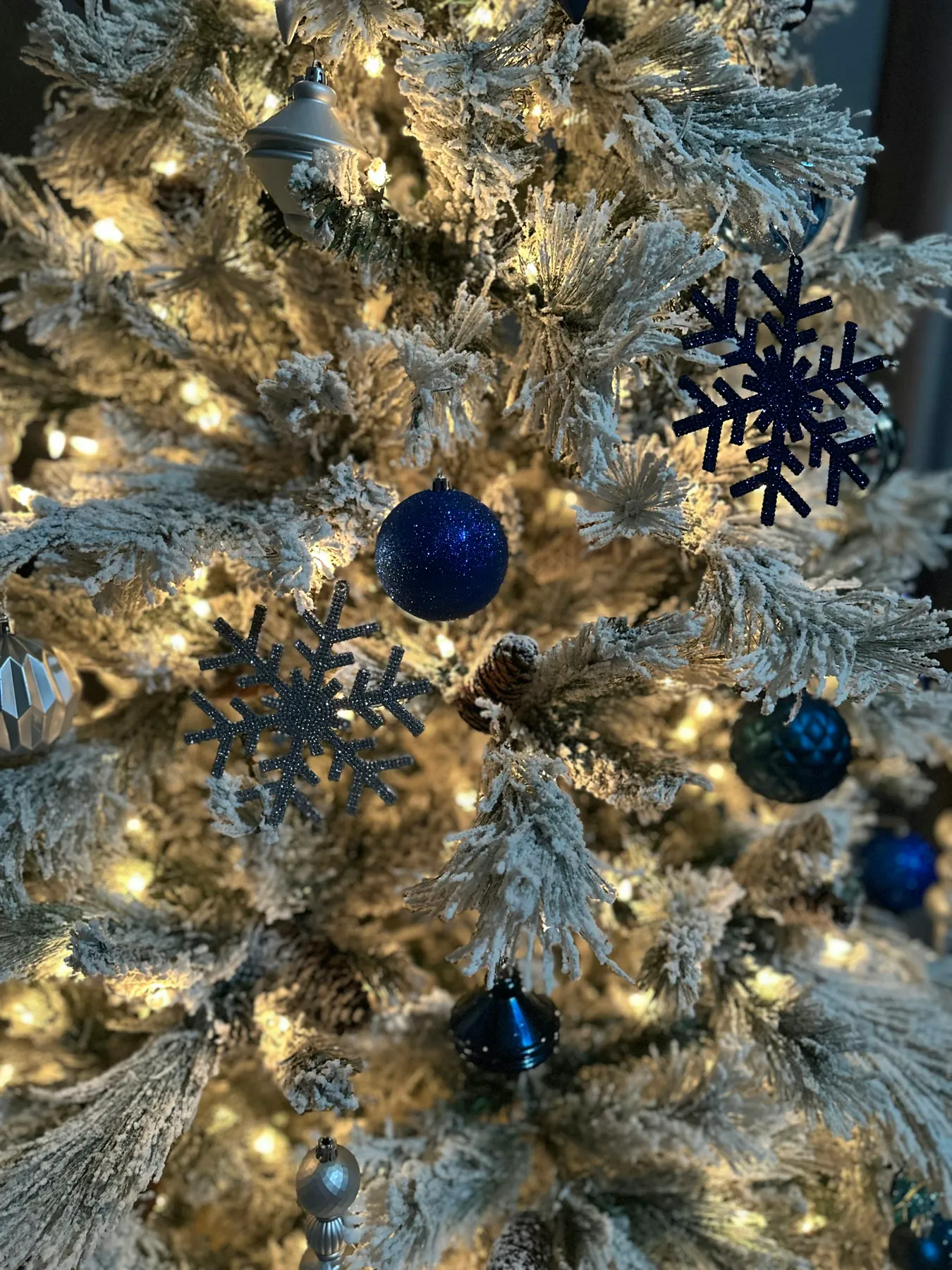
Total: $315–$785
Budget alternative: buy plain ornaments and a can of blue glitter spray for about $25, then cut snowflakes from craft foam with a template. Nobody inspects the back of a tree.
Light density is the most underrated number in tree decorating: 100 lights per vertical foot. A 7.5-foot tree needs around 750 bulbs, so check the spec on any pre-lit tree before you fall in love with the branch shape. Run lights in vertical zigzags rather than spirals — spirals leave dark bands, zigzags push light into the center. And test every strand before you string it; swapping a dead one at 11 p.m. on December 23rd is a specific kind of misery.
13. Red Berry Clusters Against Cobalt and White Porcelain
Loose blue ribbon hangers look lovely in September and frayed by January — cut the ends at a 45-degree angle and dab them with clear nail polish or a quick pass from a lighter to stop the unraveling. If you’re tempted by fresh berries, know that hypericum drops its fruit within two weeks and the juice stains white tablecloths and pale carpet. Faux clusters last for years; dust them with a dry brush, never water. Storage matters more than anything here: a divided ornament box costs $20 and saves $200 of porcelain.
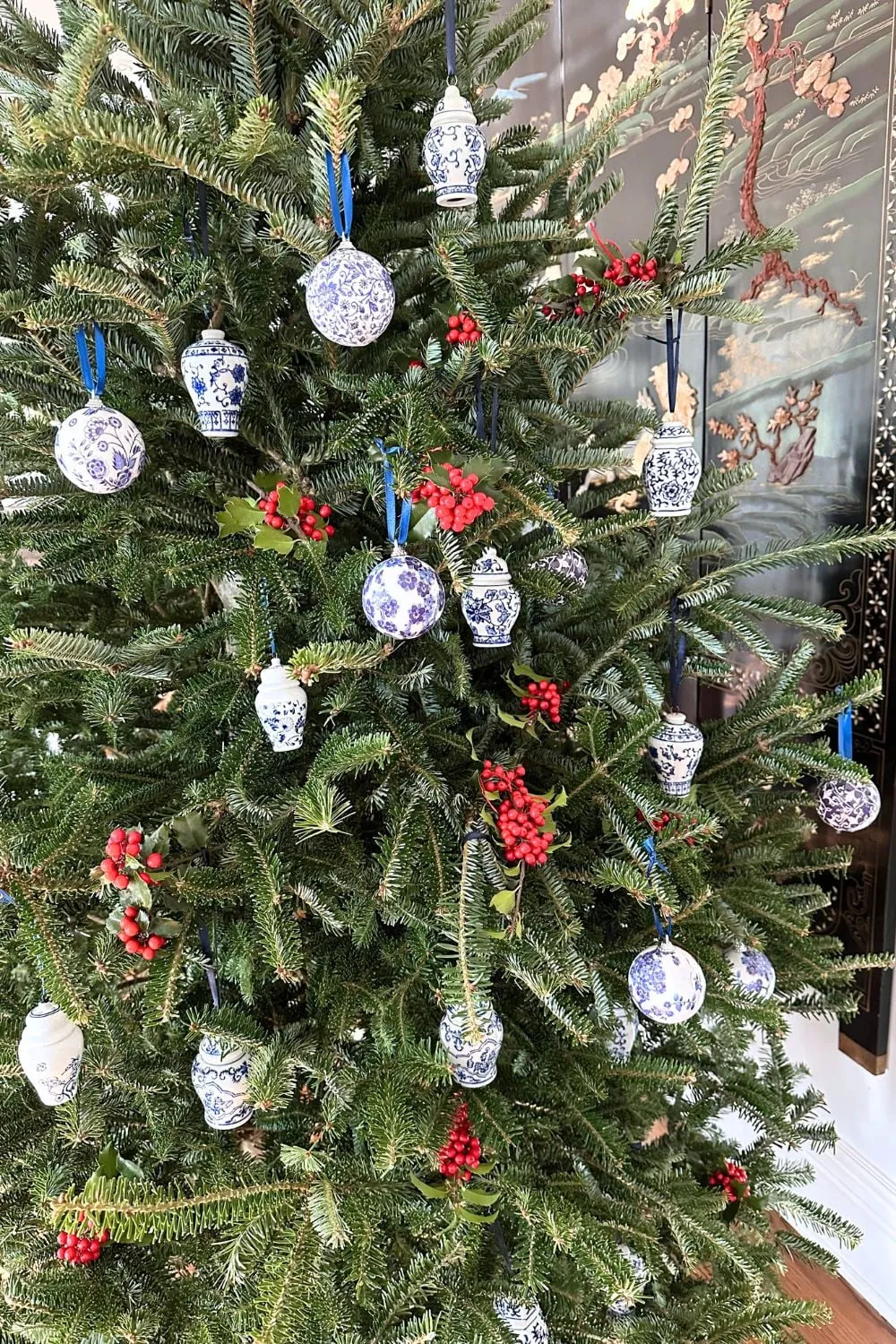
The red berries are the disruptive element, and that’s exactly why the tree works. Without them, blue-and-white porcelain on green branches is a lovely, safe, slightly predictable combination — the kind you’ve seen a hundred times and forgotten by dinner. Those clusters pull the cobalt forward and give the whole thing a pulse. Roughly a 5% gesture that changes the temperature of everything around it.
14. Pagoda Ornaments and Gold-Tied Pinecones on Frosted Branches
- Bake gathered pinecones at 200°F for 30 minutes to kill anything living inside.
- Wrap a 6-inch piece of 1/8-inch gold ribbon around the base, crossing twice.
- Tie a small bow and trim the tails to one inch.
- Attach a wire hook to the back with hot glue and let it cure.
- Hang them slightly deeper in the branches than the porcelain ornaments.
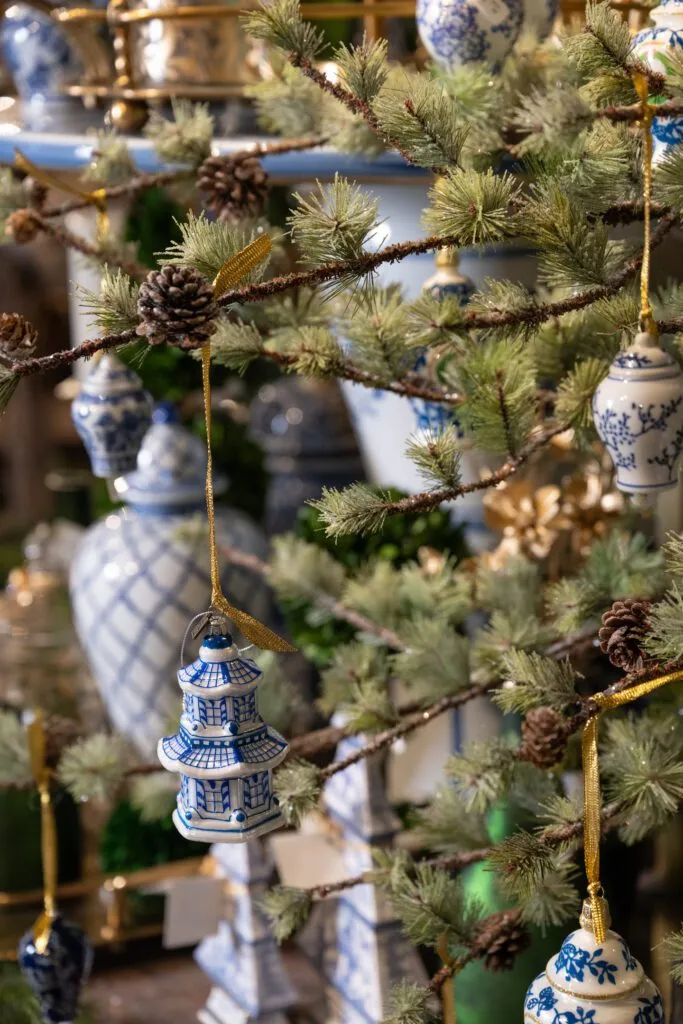
About 20 minutes for a dozen, under $10 in materials.
Read this tree as 60% frosted green, 25% blue-and-white pattern, 10% natural brown from the pinecones, and 5% gold. The brown is the secret ingredient — without it the blue and white reads cold, and with too much the tree turns rustic. Want it dressier? Drop the brown to 5% and raise the gold. Want it cozier? Go the other direction. Same tree, different temperature.
15. A Real Tree Dressed in Blue-and-White Porcelain
Real trees are heavier and wider than they look in the lot. For an 8-foot ceiling, buy a 6 to 7-footer — that leaves room for a topper and a stand. You need about 10 by 10 feet of clear floor so people can walk around it, and a stand holding at least one gallon of water per inch of trunk diameter. Check ceiling fan clearance before you commit. If your room is apartment-sized, the tabletop version in Idea #18 does much of the same work in a fraction of the footprint.
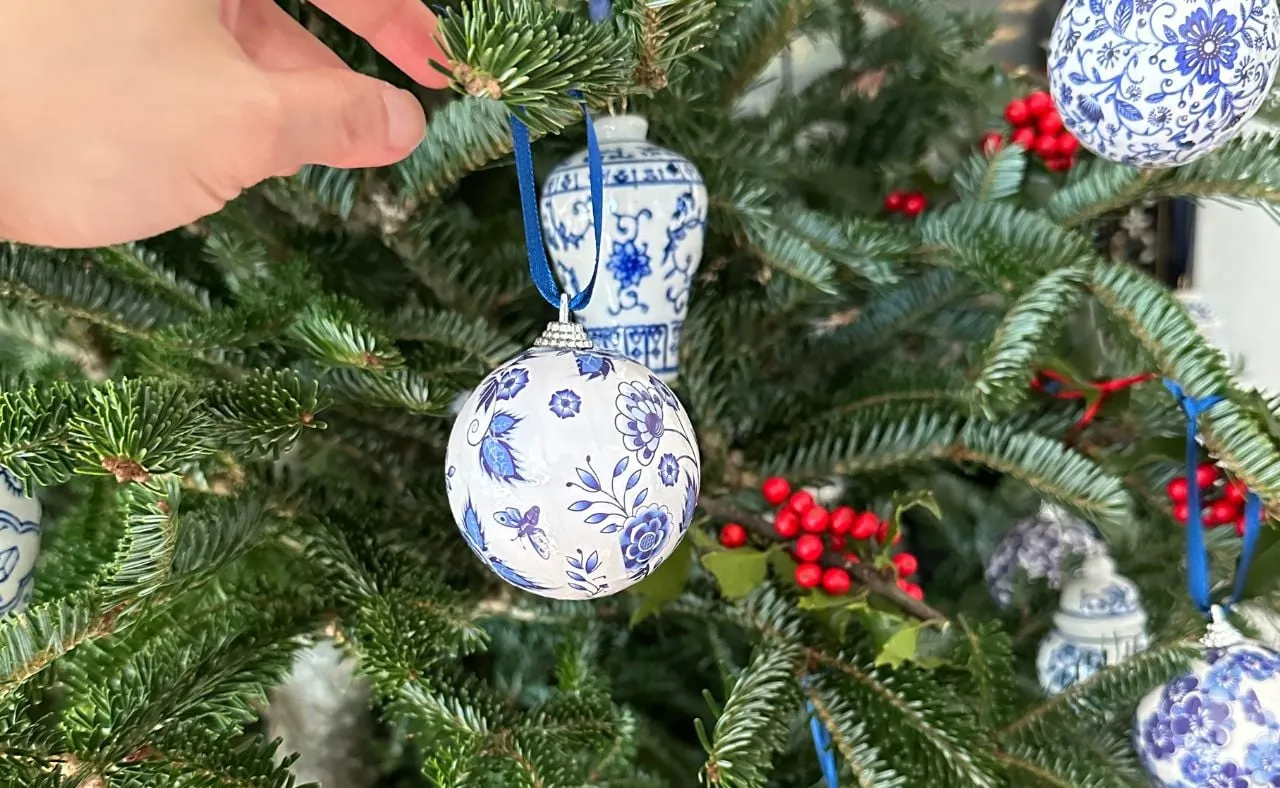
Blue-and-white patterned ornaments are the easiest thing to fake well. At Home and World Market both carry six-packs for $10 to $15 during the holidays, and thrift stores are goldmines in mid-January when everyone clears out. Mix three budget sets with six expensive keepsake pieces and the tree reads curated. Blue satin ribbon at Walmart is $3 a spool. You can dress a 7-foot real tree beautifully for around $150 in ornaments.
16. Kraft Paper Gifts and Fabric Ties Under Warm Fairy Lights
- Fabric ties: keep them wide. Narrow satin slips and the bow collapses by day three.
- Kraft paper: double-wrap anything heavy — it tears at the corners.
- Dried botanicals: they shed. Skip them on gifts that travel by car.
- Faux hide rugs: spot clean only, and never machine wash.
- Cordless fairy lights: buy one spare strand every year. They fail quietly.
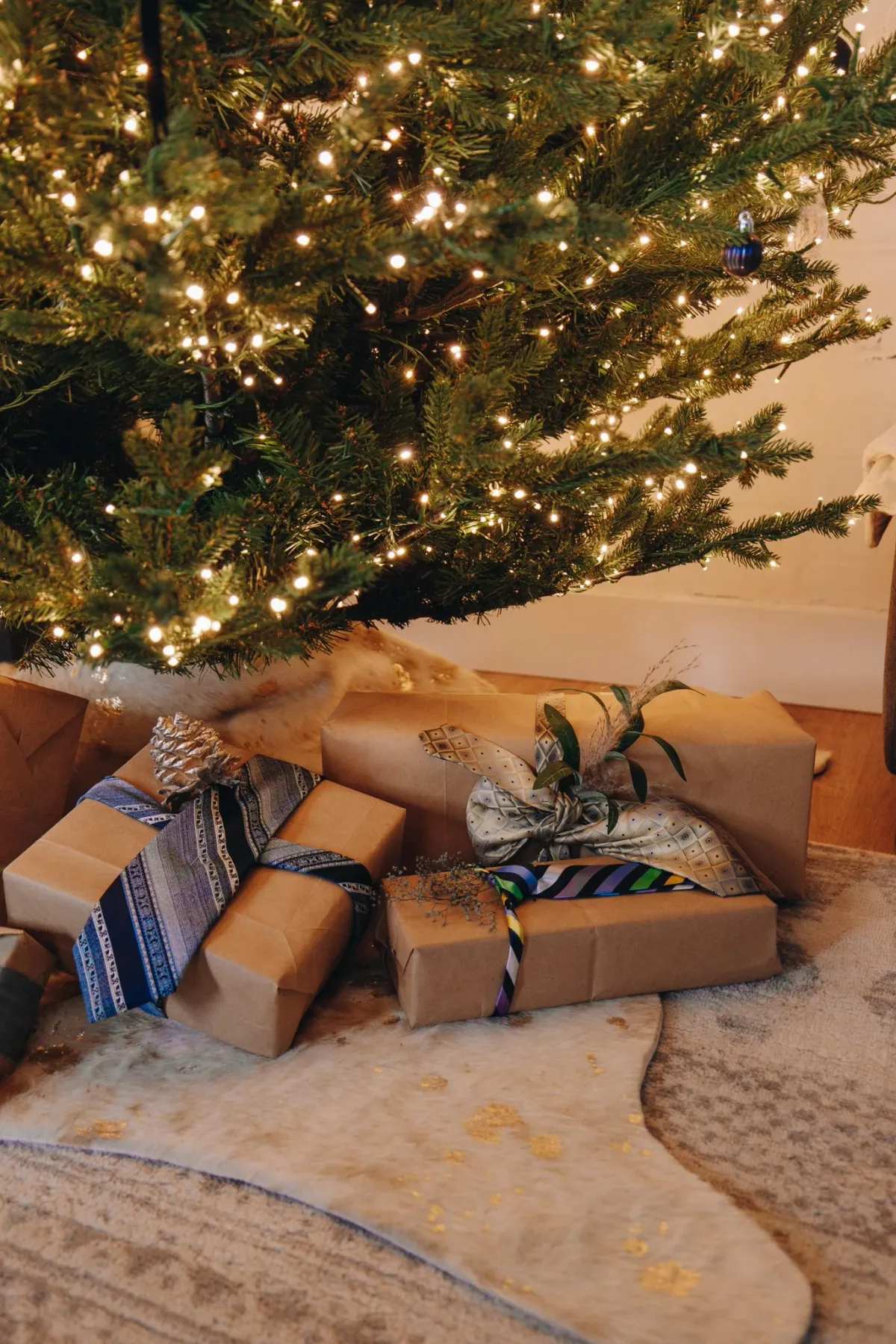
None of this is a reason to skip the look — it’s a reason to wrap on a table instead of the floor and buy 20% more ribbon than you think you need.
The gifts are matte and the tree is the only thing that sparkles. That’s the whole trick. Brown kraft paper under warm fairy lights goes soft and caramel-toned, which makes the greenery look deeper and the bulbs look warmer. Fabric ties in blue and grey quietly echo the blue theme from the rest of the room without a single ornament matching. Then the gold pinecone on one package does exactly what a jewel does on a plain dress.
17. The Ornament That Wears a Tiny Green Wreath
Build your tree around hero ornaments. Pick four to six pieces that are interesting enough to stop someone mid-sentence — this tiny wreath-topped ginger jar is a perfect example — then place them at eye level, roughly every 12 inches, in a loose triangle pattern. Everything else is filler. Most people do this backwards: they hang 90 ornaments evenly and wonder why the tree feels flat. A tree needs hierarchy, not equality.
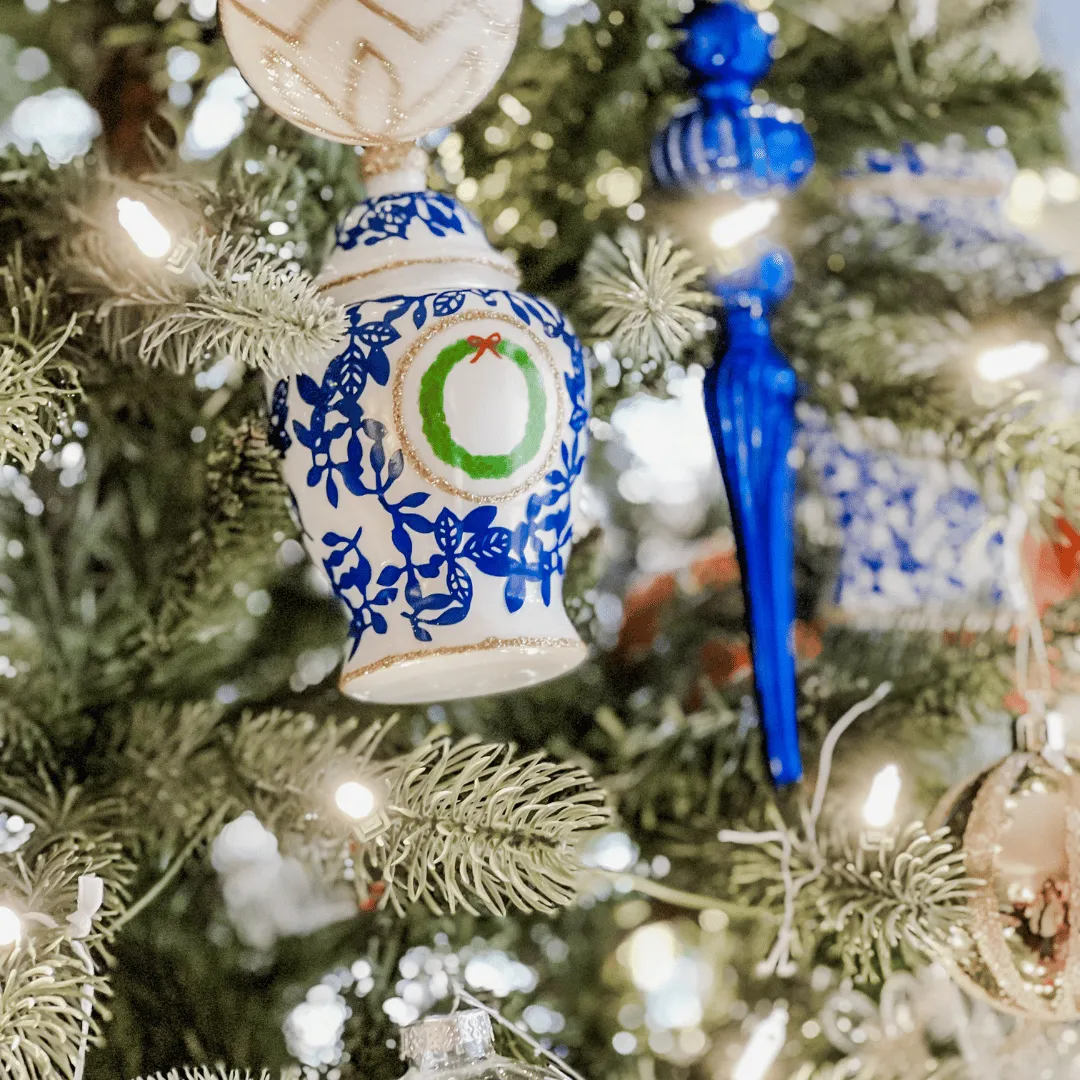
Ornaments have quietly become collectibles again. Shoppers are buying one or two special pieces a year instead of a full matching set, which is why the market for hand-painted and miniature-detailed ornaments has grown so fast heading into 2026. The appeal is simple: a tree that accumulates personality over a decade beats one assembled in a single Saturday. If you buy one keepsake ornament this season, make it something small and specific.
18. Tabletop Duo: A Flat Chinoiserie Cutout and a Wooden Spiral
- Measure your tabletop — a flat cutout tree needs 14 to 18 inches of clear surface.
- Decide your tallest object first; everything else scales down from it.
- Check the outlet or battery plan for the pine sprig lights.
- Confirm your mantel pattern won’t fight the cutout’s blue floral print.
- Leave one empty spot. Vignettes need air.
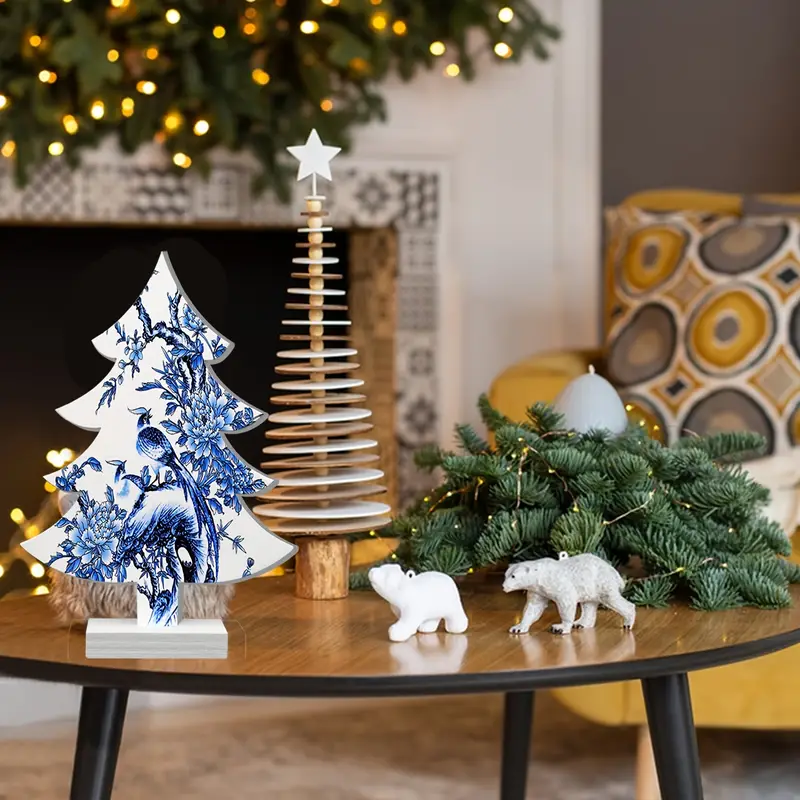
The dark wood table is the anchor here: blue-and-white ceramics on dark wood is the most forgiving combination in decorating.
- Place the tallest item slightly off-center — the flat patterned tree, in this case.
- Add the wooden spiral tree beside it, three inches back, to create depth.
- Lay the lit pine sprig across the front edge, spilling off the table a little.
- Set the two bear figurines as a pair, angled slightly inward.
- Finish with the candle, and light it before you photograph anything.
About 25 minutes, and $0 if you shop your own house first.
19. White Tree Skirt, Matching Garland, One Cohesive Palette
This is the open-plan version of a blue-and-white tree, and it needs 12 by 14 feet to breathe. The trick is that it doesn’t stop at the tree: the garland carries the same ornaments across the sofa, and matching pillows tie the seating into the scheme. Working in a smaller living room? Keep the tree and the garland, skip the pillows. A 10 by 12 room handles this palette fine if the sofa sits within eight feet of the tree.
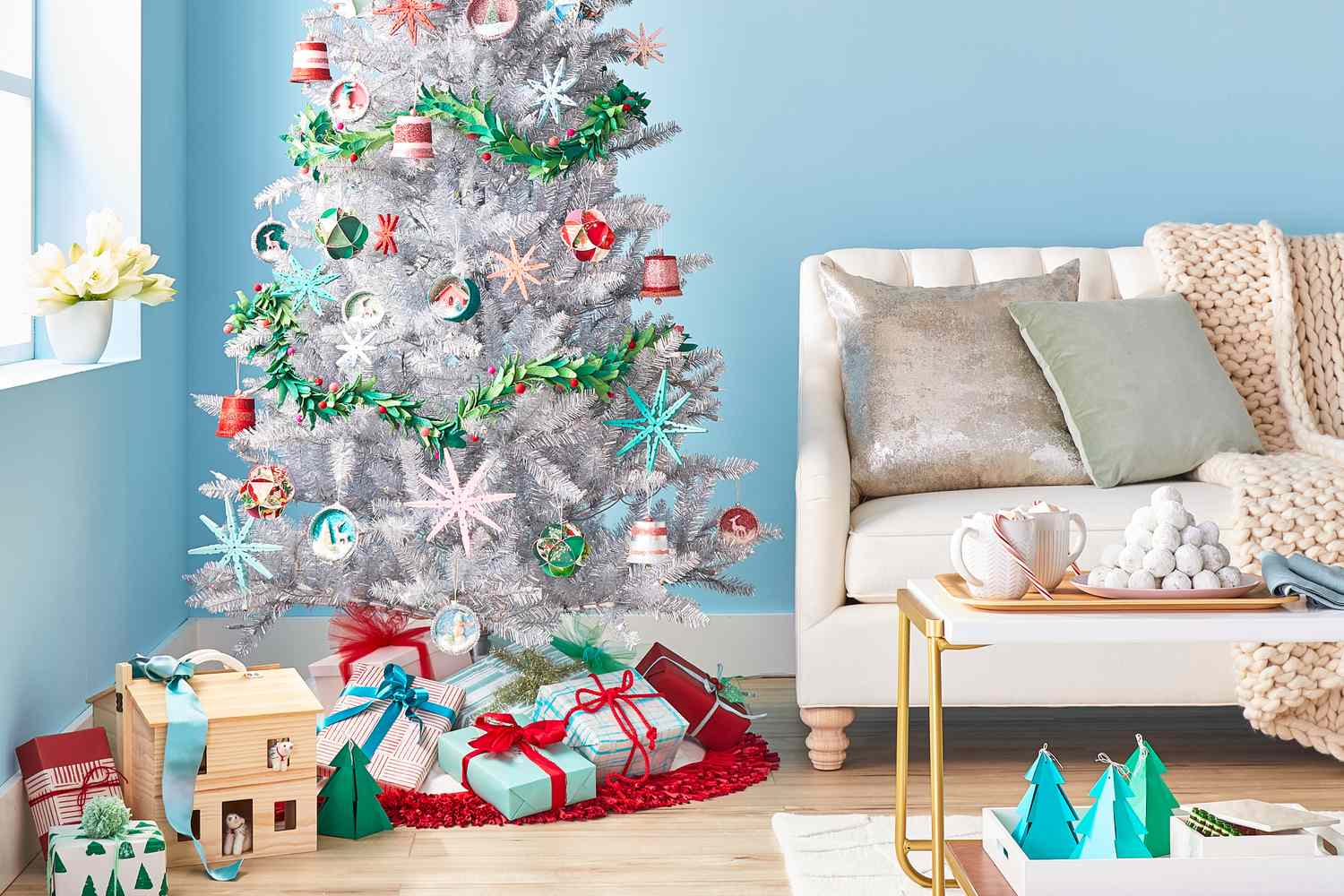
White fluffy tree skirts are beautiful and completely unforgiving. Shake yours outside once a week, spot clean with a damp cloth, and never put it in the washing machine — the pile mats instantly. The light floor under this tree shows every fallen needle, so keep a handheld vacuum nearby through December. Flocked trees shed for roughly the first ten days. And if you have a dog, this is the tree they will choose.
20. The Red Flag Check Before You Buy Blue Ornaments Online
A red exclamation point on a black screen is the internet’s polite way of saying look closer before you click. Blue ornaments deserve the same suspicion. The cobalt in a listing photo is almost never the cobalt that arrives, because studio lighting runs cool and your living room runs warm. Powder blue, slate blue, and navy can all be sold as “blue,” and none of them will sit happily next to each other. Order one piece, hold it against your tree, then buy the set.
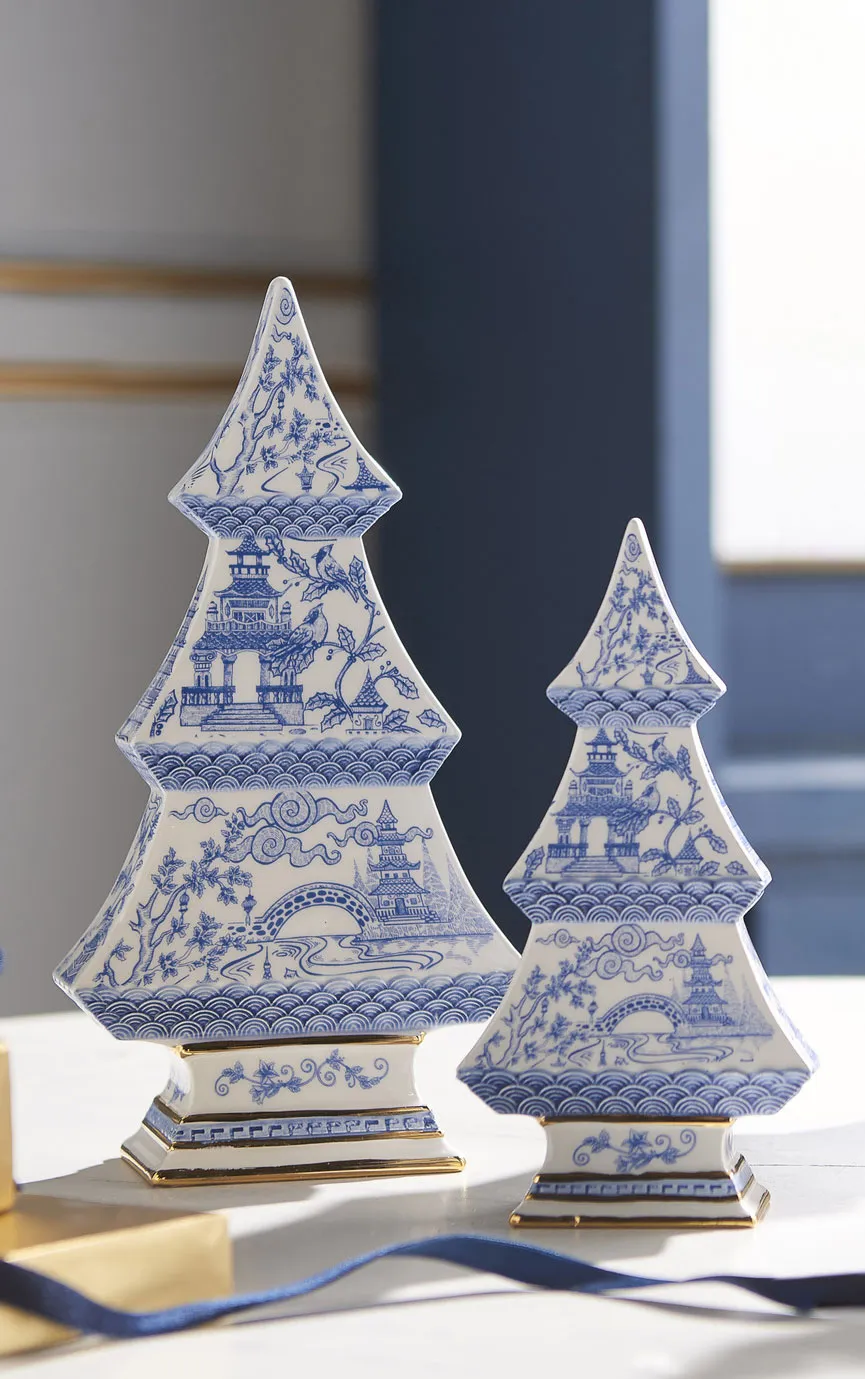
- Order a single ornament first and check it in your own light, day and night.
- Confirm the return window — 30 days minimum for a set you haven’t seen.
- Photograph your existing ornaments together to spot clashing blues before you buy.
- Note the finish: matte, pearl, and glitter blues never match one another.
Five minutes of homework saves a January return trip and a tree you quietly resent.
21. Blue Tinsel and Bronze Baubles on a Full Green Tree
Break this one down as 40% deep green foliage, 20% mixed blues, 25% metallics split between gold, silver, and bronze, 10% natural brown from pinecones, and 5% tinsel glint. The bronze is doing the heavy lifting — it’s the least common metallic on Christmas trees and the one that reads most like a real antique. Swap the tinsel for matte blue velvet ribbon and you get a softer, more modern version of the same abundance.
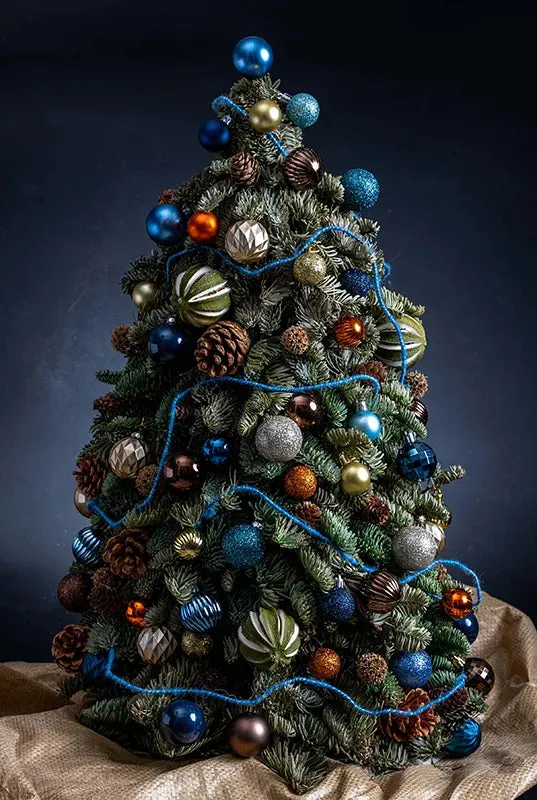
- Green 7.5 ft tree: $100–$350
- Blue and metallic ornament assortment, about 80 pieces: $150–$280
- Thin blue tinsel garland: $8–$20
- Pinecones and green ribbed baubles: $20–$45
- Textured fabric tree base: $25–$60
Total: $303–$755
Budget alternative: this is the tree to build from a thrift haul. Shop January clearance at 70% off, keep a running box all year, and you can dress it for under $200 without anyone noticing.
22. A Snowflake Topper and One Wide Vertical Ribbon
The oversized blue-and-white snowflake at the top. Most trees end in a star or a bow, and both are fine — but a snowflake topper makes the tree’s theme legible from across the room. It also solves the scale problem toppers always have: snowflakes read big without looking heavy, so they work on a 9-foot tree and a 7-footer alike. Take it away and this becomes a nice blue tree. Leave it and the whole thing has a thesis.
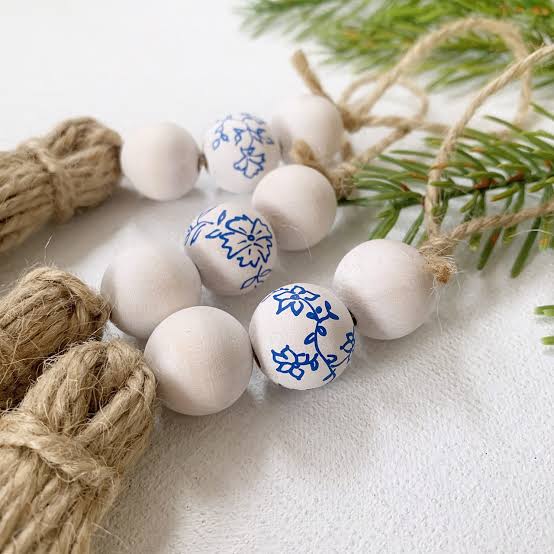
Vertical ribbon and a tall snowflake topper want height. This works best with 9-foot ceilings minimum, and it’s one of the few designs that genuinely earns a two-story foyer or a vaulted living room. In a standard 8-foot room, use a 7.5-foot tree and a single ribbon strand instead of two. Rooms under 10 by 10 feet should look at Idea #11, which covers similar ground in a much smaller footprint.
23. Disco Ball Metallics Tucked Between Blue-and-White Porcelain
Mixing matte patterned porcelain with mirrored metallic disco balls is a texture play, not a color play. The blue-and-white spheres hold still; the silver and gold ones shatter the warm string lights into dozens of little reflections. That contrast is why the cluster looks expensive without using anything rare. Aim for roughly three matte pieces for every one mirrored piece, so the shine reads as an accent rather than the main event. Skipping the mirrors entirely flattens the whole arrangement.
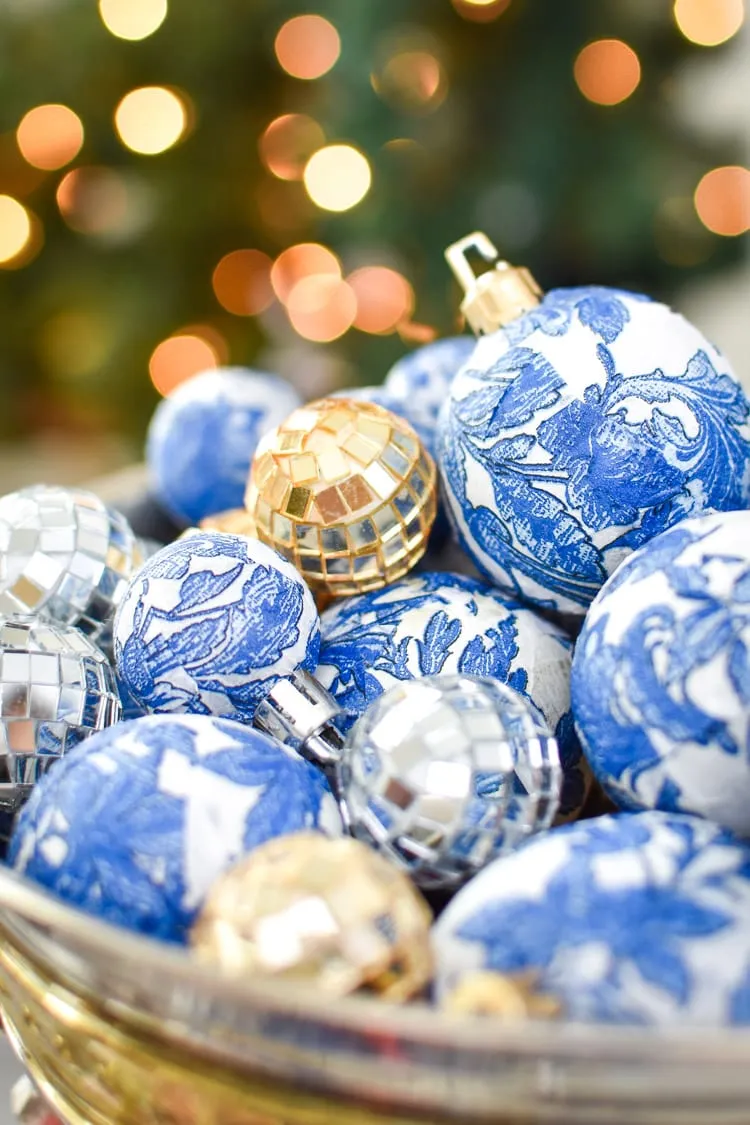
Disco ball ornaments are the cheapest luxury in holiday decorating. Walmart and Five Below sell four-packs for $5, and the mirror finish is nearly identical to the $12 versions. Pair them with blue-and-white spheres from At Home at $10 for six and you’ve recreated this cluster for about $30. For the patterned pieces, a paint pen and plain white ornaments get you surprisingly close — and compare with Idea #17, which plays the same game one ornament at a time.
One Palette, Twenty-Three Ways to Hang It
The best blue-and-white tree isn’t the one with the most ornaments — it’s the one where the blues agree with each other and the metallics warm them up. Start with one hero piece, check your light temperature, and build from there.
Save this to your Christmas board and come back to it in November when you’re standing in a store aisle holding two nearly identical spools of ribbon. 📌