Pastel Christmas decor is having a major moment on Pinterest right now — and after scrolling the same hundred photos you have, we get it. The hard part isn’t finding inspiration; it’s finding the version that works in your actual house, with your actual lighting and your actual sofa.
So we did the browsing for you. We spent serious time combing through Target, Anthropologie, World Market, Etsy, and Amazon to bring you only what’s worth your attention this year, across every price point from about $8 to $1,450. Inside you’ll find 32 pastel Christmas ideas — frosted trees, quiet neutral living rooms, moody heritage pastels, and vintage-whimsy tabletop moments — with budget and luxury versions compared side by side, and every idea shoppable with direct product links.
Pastel holiday styling broke out of the candy-cane box in 2026 because the palette finally grew up: sage and mauve instead of baby blue and bubblegum, cream instead of snow white. And stay until the end — we break down the most common mistakes that can ruin these looks. 📌 Save this to Pinterest for later — you’ll want to revisit these ideas.
1. Snow-Dusted Branches With Pink, Mint, and Iridescent Ribbon
Three things are doing the heavy lifting on this tree. First, the flocked branches — that powdery white base keeps pink and mint from reading like candy, because every ornament has a soft landing behind it. Second, the color ratio: roughly equal parts pink, mint, and white, held together by iridescent ribbon that doesn’t introduce a fourth color, it just bounces light around. Third, warm white bulbs instead of cool white. Switch those out for cool LEDs and the whole tree goes chalky.
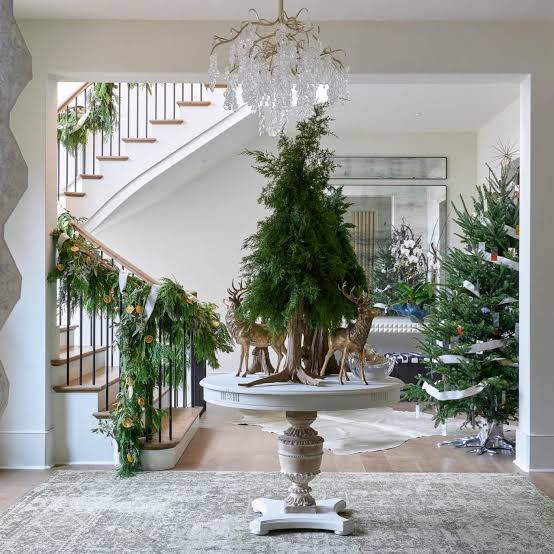
Weave the ribbon garland:
- Cut 6-inch strips of 2-inch-wide iridescent ribbon — 40 to 50 strips for a 7-foot tree.
- Fold each strip in half and twist once at the center to make a soft loop.
- Tuck the loop onto a branch tip, spacing them about 8 inches apart in a slow spiral.
- Step back every 10 strips to check spacing. Even beats perfect.
- Finish by bending a few frosted picks outward so ribbon peeks through the branches.
Time: about 45 minutes. Cost: $12–18 in ribbon.
2. Horizontal Wood Paneling and a Glowing Corner Tree
This look needs room to breathe. Plan on at least 220 square feet of living space and a 9-foot ceiling — horizontal paneling visually shortens a wall, so wide plank lines plus a low ceiling can feel squat. A 7.5- to 8-foot tree in the corner is the sweet spot; go taller and it crowds the stone fireplace surround. In a room under 180 square feet, borrow the mood from Idea #12 instead, where a frosted tree works against a single paneled wall without the wraparound wood.
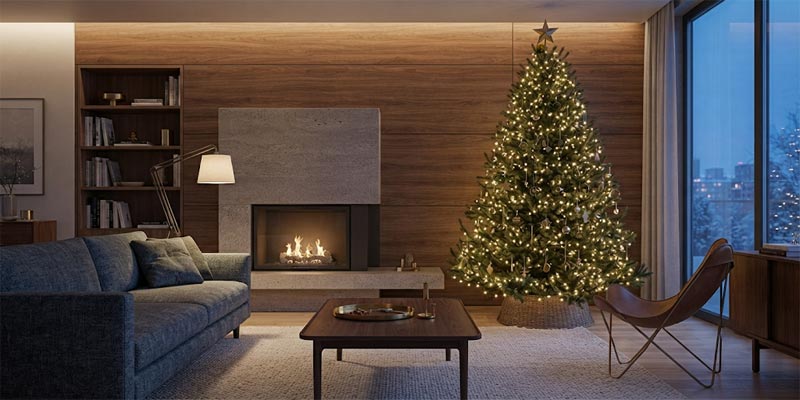
Two honest cautions. Horizontal paneling plus a corner tree eats your visual width, so keep ornaments small — nothing over 3 inches or the tree turns into a wall of baubles. Warm-toned wood also fights cool-white LED strands, and cool bulbs will make that lovely gray stone look blue. One safety note: keep the tree at least 3 feet from the fireplace opening, since heat warps faux branches and dries real ones into a genuine fire hazard.
3. Fairy Lights in Glass Jars Along a Rustic Mantel
Fairy lights are the cheapest magic trick in holiday decorating and also the shortest-lived. Budget strands of 20 to 30 bulbs typically last one to two seasons with daily use, so plan on replacing about $30 worth every year. Glass jars collect dust and soot fast when they sit near a working fireplace — expect to wash them monthly. Battery strands save you cord chaos but cost roughly four times as much to run across a season.
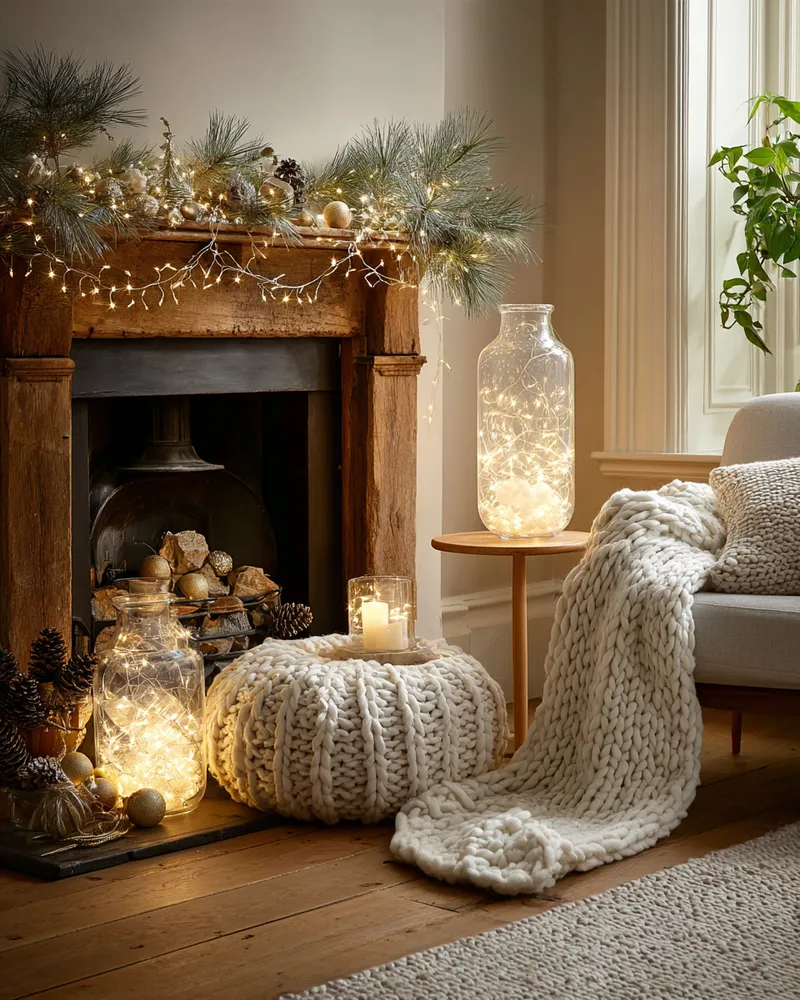
Cluster jars in odd numbers and stagger the heights by at least 4 inches — a 14-inch jar, a 9-inch, a 6-inch. Fill each about two-thirds with a 10-foot strand of warm white micro lights, then tuck the battery pack behind the jar body so nothing shows from the front. Keep every strand at 2700K. Mixing 2700K and 3000K bulbs is the single most common reason these displays look accidentally mismatched.
4. An Orange Armchair, Taper Candles, and a Cabin on Screen
The formula is warmer than it looks: 60% ambient warm neutral — wood tones, candlelight, the glow coming off the tree — plus 25% orange from the chair and the draped throw, plus 15% deep green from the tree itself. Swap the orange for rust or mustard and it still works; swap it for cool gray and the corner goes flat. The trick is that none of those three is a Christmas color on its own. The holiday happens in the light, not the palette.
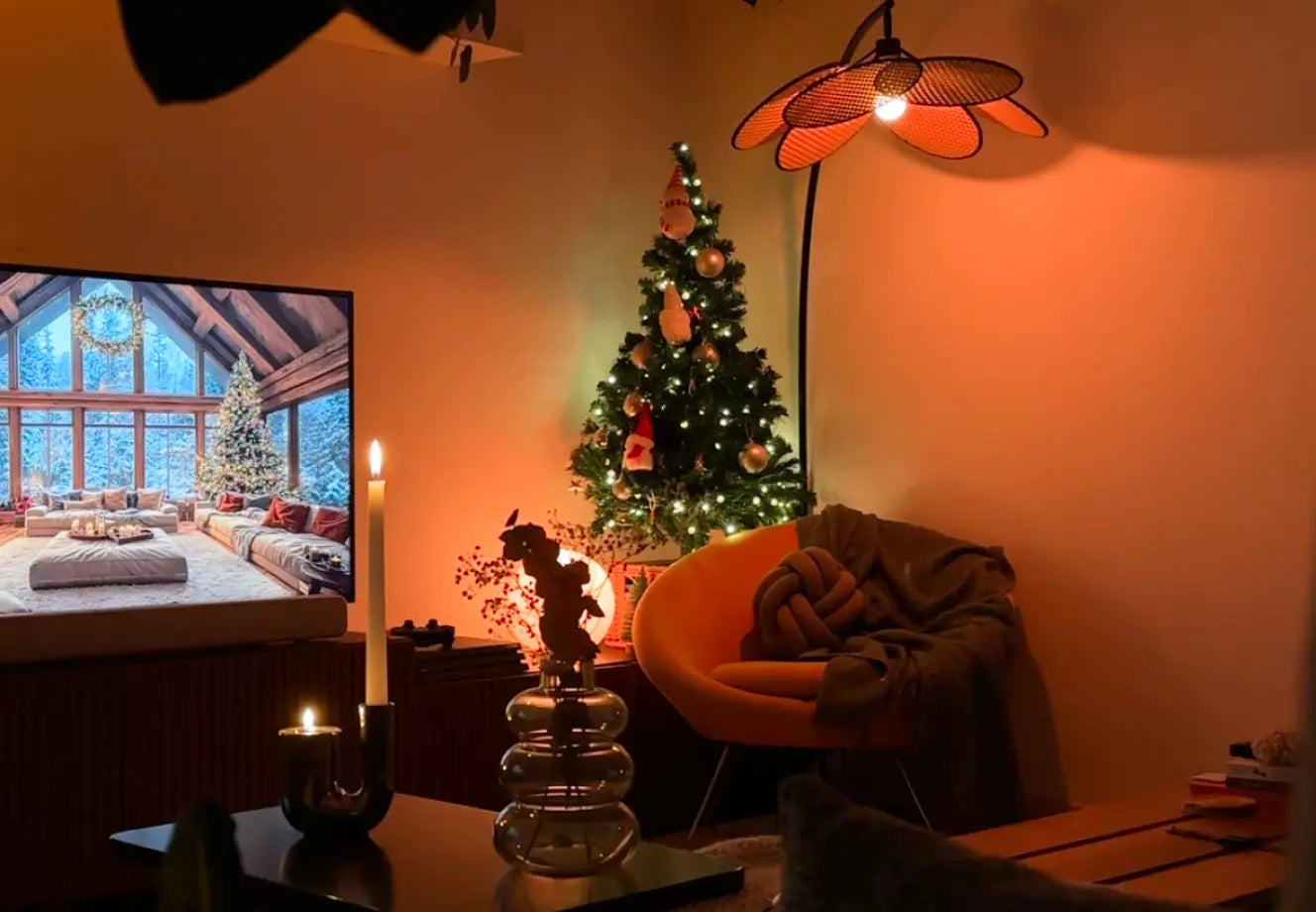
Screens as decor used to be a design sin. In 2026 they’ve become a mood tool — a fireplace loop, a snowy cabin still, slow-motion falling snow. It’s the same instinct behind the analog-clock revival and the return of physical photo albums: we want home to feel like a place, not a feed. Warm-toned footage behind a lit tree genuinely reads as a fourth light source. Pick something with no text or logos, mute it, and set brightness around 40%.
5. Two Flanking Trees Over a Big Green Shaggy Rug
What it costs to recreate:
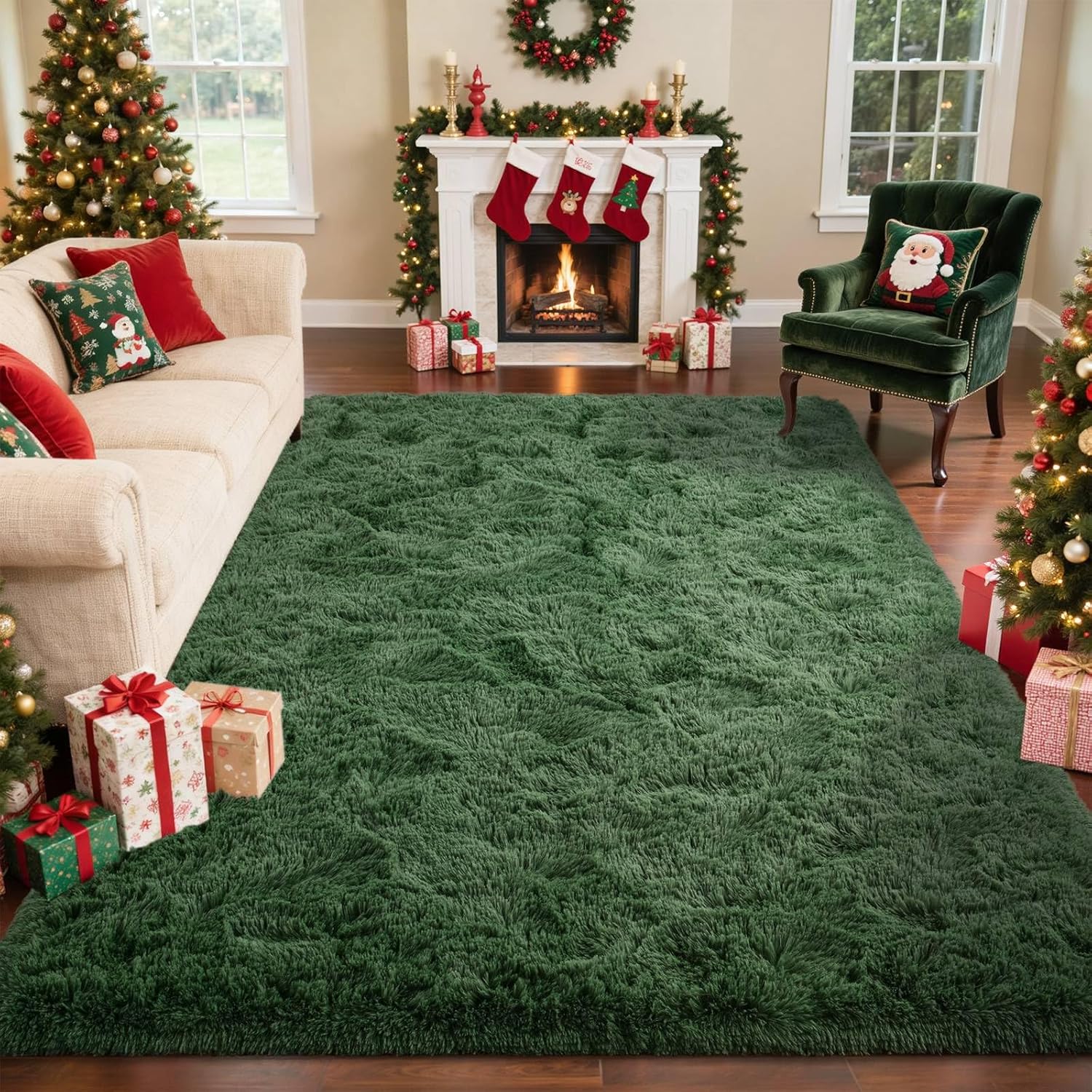
- Cream fabric sofa: $900–2,200
- Green velvet armchair: $400–1,100
- Green shaggy area rug, 8×10: $200–650
- Two Christmas trees with lights: $250–800
- Mantel garland, stockings, candles: $120–300
- Throw pillows and small accents: $60–180
Total: roughly $1,930–5,230. Budget alternative: one 7-foot tree instead of two, a washable shag rug from a big-box retailer ($130–200), and a velvet-look armchair cover ($40–70). You keep the entire color story for about 55% less.
The rug is the piece that matters most. Take it away and this becomes two Christmas trees arguing for attention in a beige box. That saturated green shag does three jobs at once: it grounds both trees as a single composition, pulls the velvet armchair into the same family, and gives the cream sofa something to sit against. Pastel-adjacent rooms need one dark anchor — go a shade deeper than feels comfortable.
6. Frosted White Tree With Pink and Blue on Neutral Everything
On a white tree, ornament size matters more than ornament color. Work in three sizes — 4-inch, 3-inch, and 2-inch — and place the largest in the bottom third, medium in the middle, small up top. That’s roughly 12 large, 24 medium, and 40 small for a 7-foot tree. Space the two dominant colors unevenly, about 60/40, so the eye reads rhythm instead of a checkerboard. This is Idea #1‘s palette moved onto a white base, and it lands in a completely different mood.
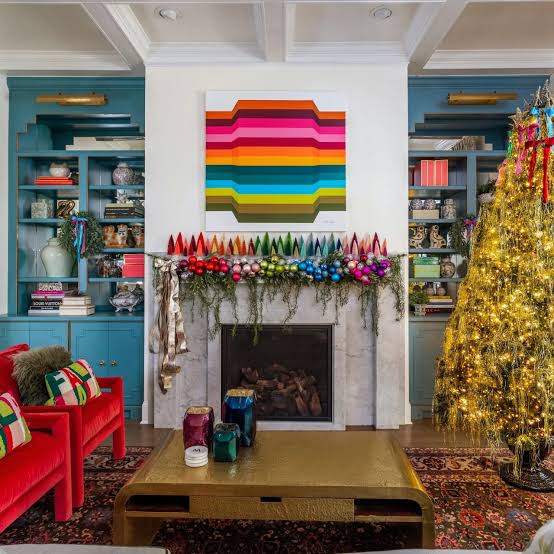
A frosted white tree sounds expensive and doesn’t have to be. Big-box 7-foot flocked trees run $79–150 in early November, and pastel shatterproof baubles come in 24- to 40-piece sets for $12–20. Keep the neutral sofa you already own; the pastel lives in ornaments and two or three textured pillows at $15–30 each. Thrift a wooden coffee table for $40–90 instead of buying new. The whole look can happen for under $300.
7. Dark Built-Ins, an Arched Mirror, and a Wreath That Centers It
The wreath on the arched mirror is the whole game here. An arch is a strong shape with a hollow center, and if you leave it empty the entire mantel reads unresolved. The wreath gives that void a heartbeat without adding a single new color. Hang it so the bottom third of the wreath overlaps the glass — dead-center placement looks like a sticker. Keep it slightly smaller than a third of the mirror’s height, or it swallows the arch entirely.
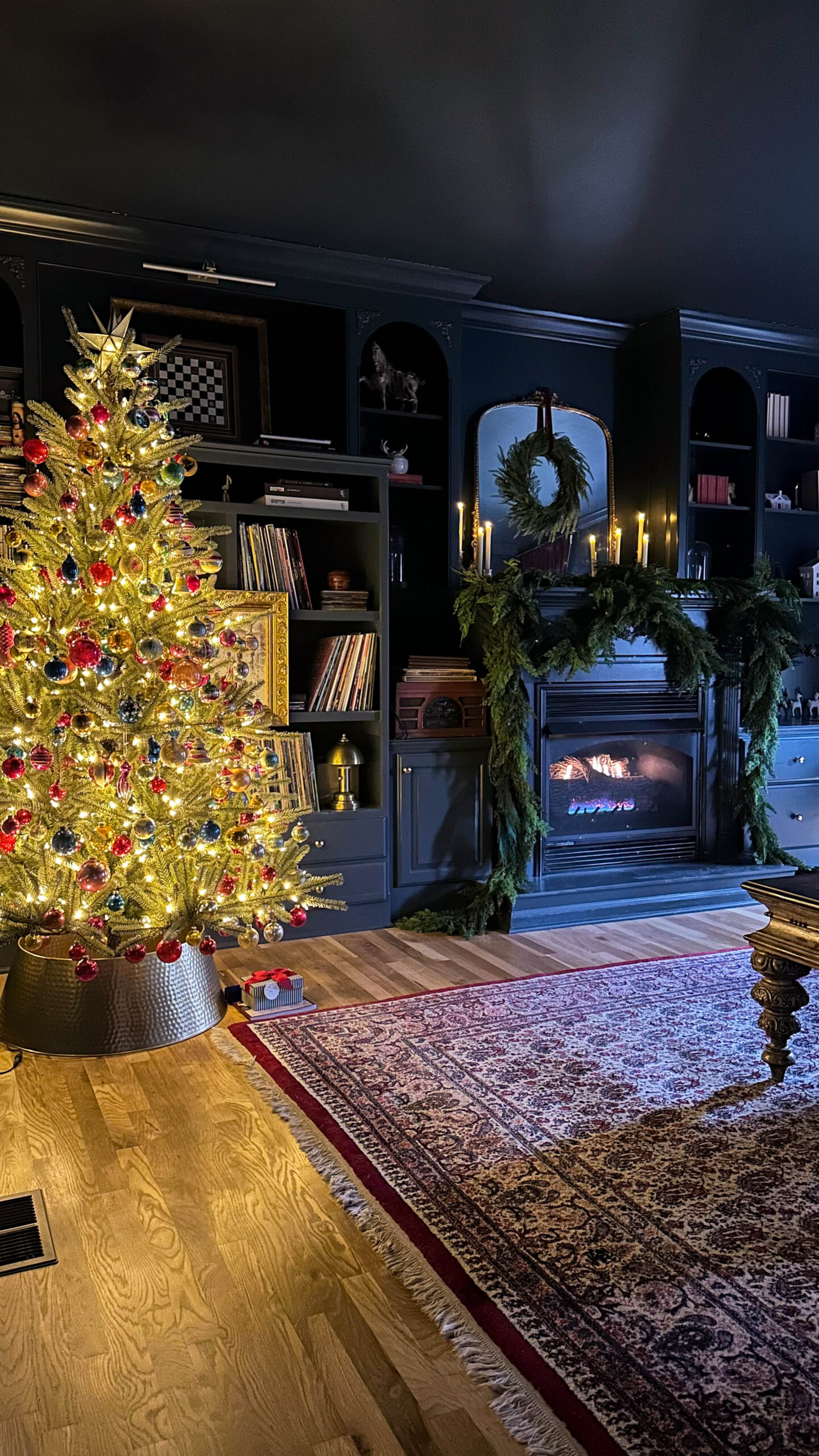
Charcoal shelving is doing something specific: it gives bright ornaments contrast. Against a light wall, multicolor baubles go muddy; against near-black, every red and gold pops like it’s lit from inside. The evergreen garland across the mantel then acts as the bridge — same material as the tree, darker than the shelves. Add taper candles at varying heights and you’ve built three light layers: tree, candles, fire. That stacking is why this reads dramatic instead of busy.
8. A Big Dark Star Above a Leather Sectional
Vertical wood paneling reads tall, which means it needs a tall wall — 9-foot ceilings minimum, 10 is better. The star should be roughly one-third the width of the paneled section, hung so its top sits 10 to 14 inches below the ceiling. For the tree, aim for 72 to 84 inches in a room at this scale. If your ceiling is 8 feet, drop the star and let the paneling carry the height on its own — the trick from Idea #7 translates better to a small room.
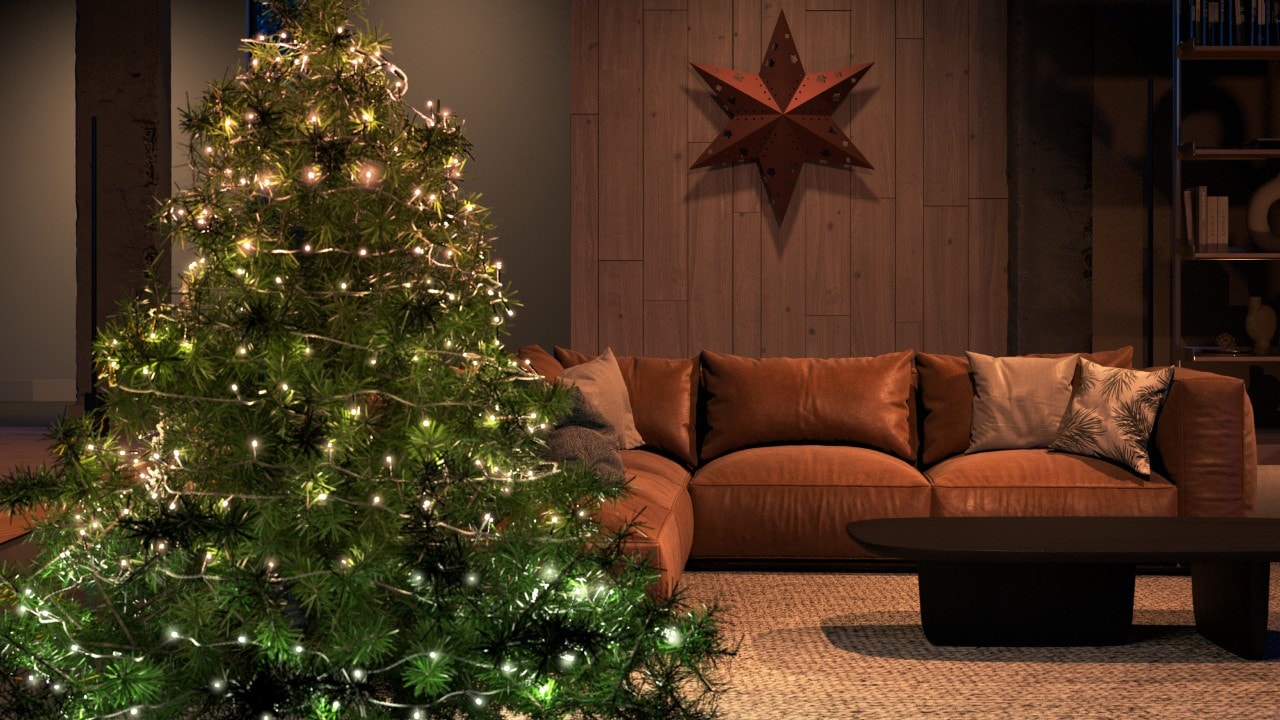
Leather and Christmas trees are a riskier pairing than they look. Live tree sap is sticky and can stain leather permanently, and the moisture under a fresh tree’s base raises humidity right where the sectional sits. Faux trees solve the sap problem but still shed plastic needles that grind into leather seams. Give the tree at least 4 feet of clearance, use a sealed stand, and keep leather conditioner on hand. A felt skirt isn’t just pretty here — it’s protection.
9. A Round Wood Table in a Beamed, Whitewashed Foyer
Check these before you commit:
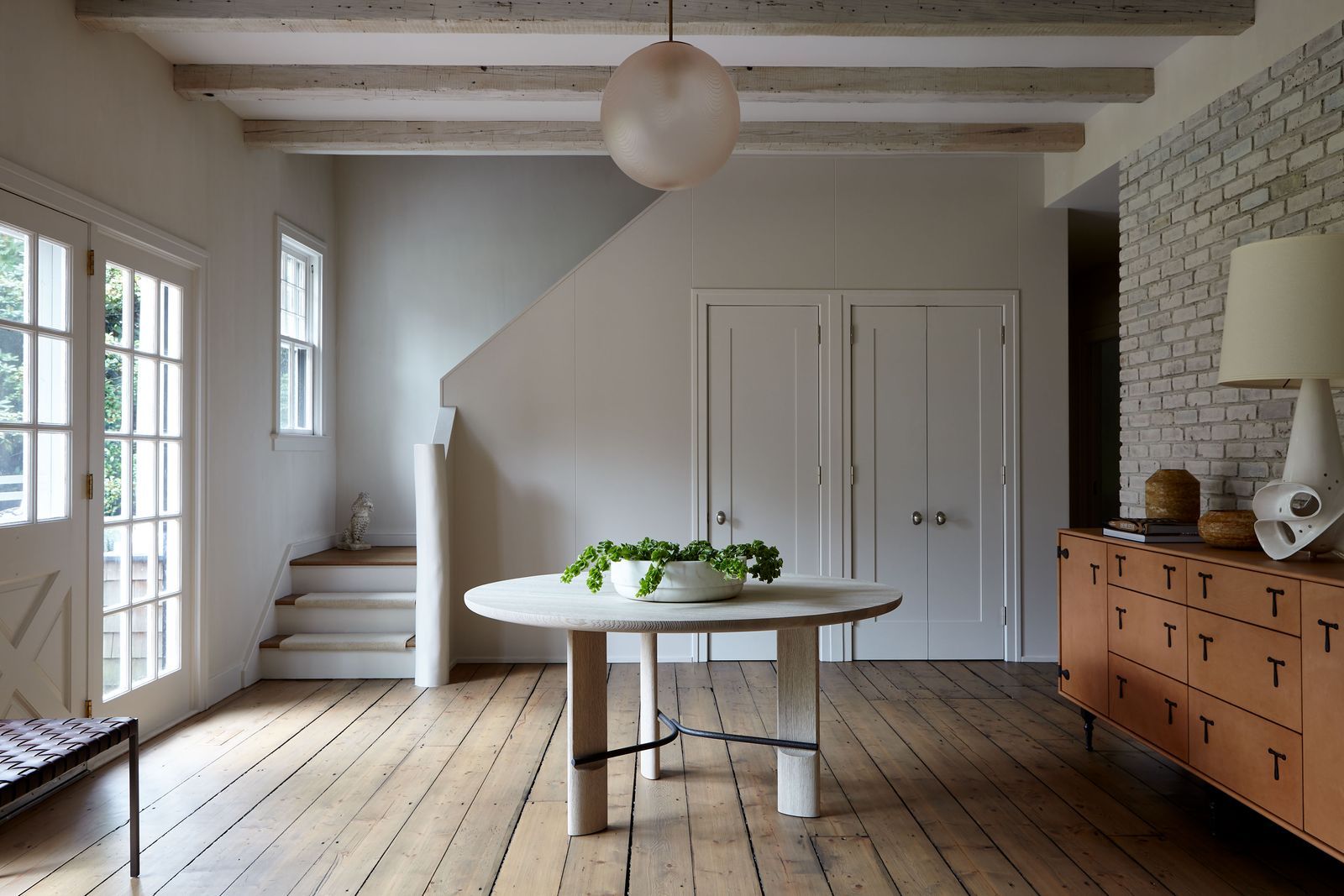
- Measure the walkway twice. You need 36 inches of clear path — the table’s widest point plus 18 inches on each side.
- Check your pendant drop. A glass globe should hang 30–36 inches above the tabletop.
- Find the nearest outlet before buying anything that lights up.
- Confirm the entry door swing clears the table. Round tops look small and measure big.
- Decide your floor’s finish level now — wide plank floors show every drip of tree water.
The color recipe is 70% warm light wood and off-white, 20% tan leather, and 10% black hardware. That last 10% is the part people skip and then wonder why the room feels unfinished — the black drawer pulls are what keep a beige entryway from going flat. Swap the tan for olive and you’d need to drop the black to about 5%, or the space starts to feel busy. Keep your accent under 15% and this formula runs in any neutral.
10. Silver Glitter Under a White Lattice — One Ornament, Done Right
If you love an ornament this texture-heavy, buy it in odd numbers and repeat it — five or seven total, concentrated across one third of the tree. Hang statement ornaments 60 to 66 inches off the floor, which is roughly eye level for a standing adult. Below that they vanish into the skirt; above it they compete with the topper. Check the hanger too: silver string on a silver-glitter ornament keeps the line invisible, where a green wire hook breaks the illusion instantly.
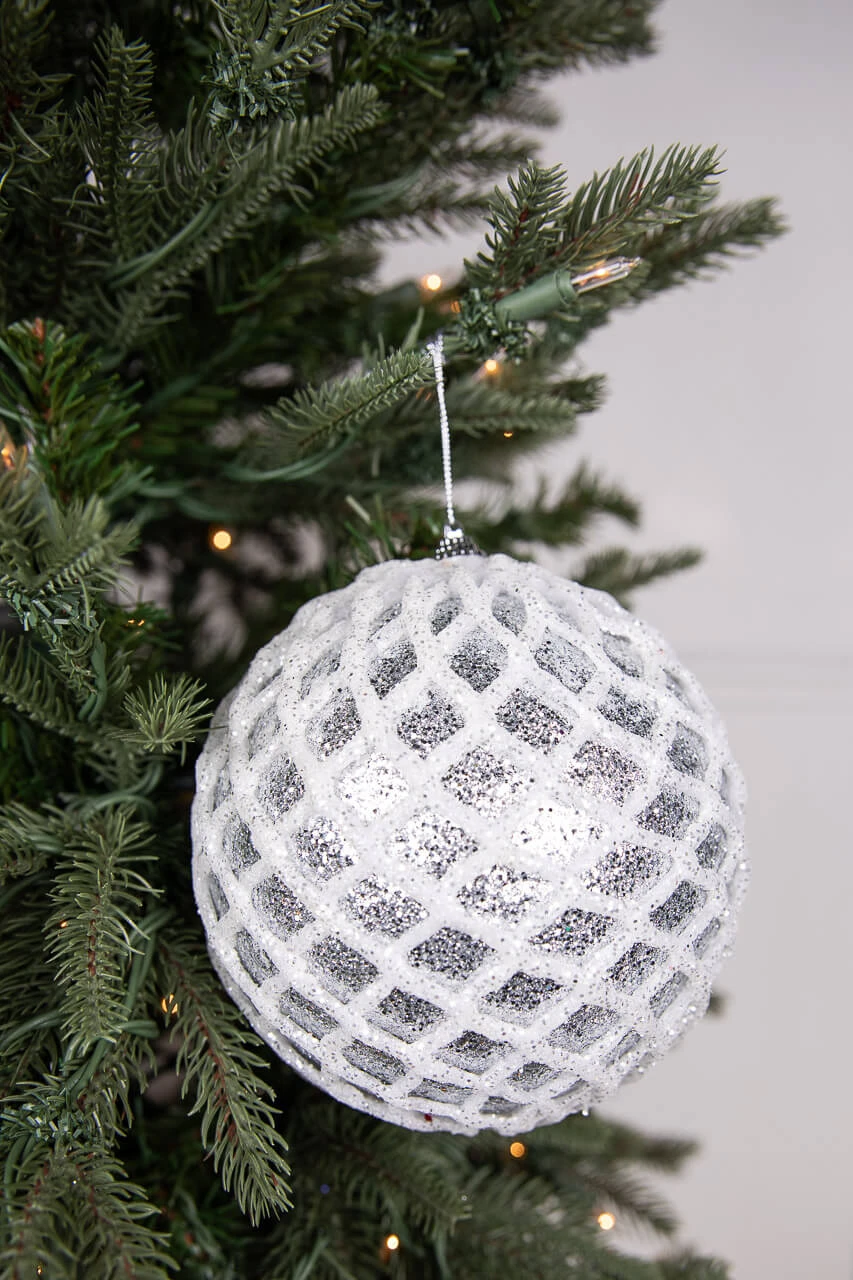
The white lattice overlay is the entire point. Without it, this is a silver glitter ball — pretty, common, forgettable. The raised white pattern is what turns it into a texture study: matte over metallic, white over silver, one surface catching light while the other scatters it. That contrast is why it reads elegant instead of discount-store sparkly. When you shop, look for ornaments with a dimensional overlay rather than a flat glitter dip.
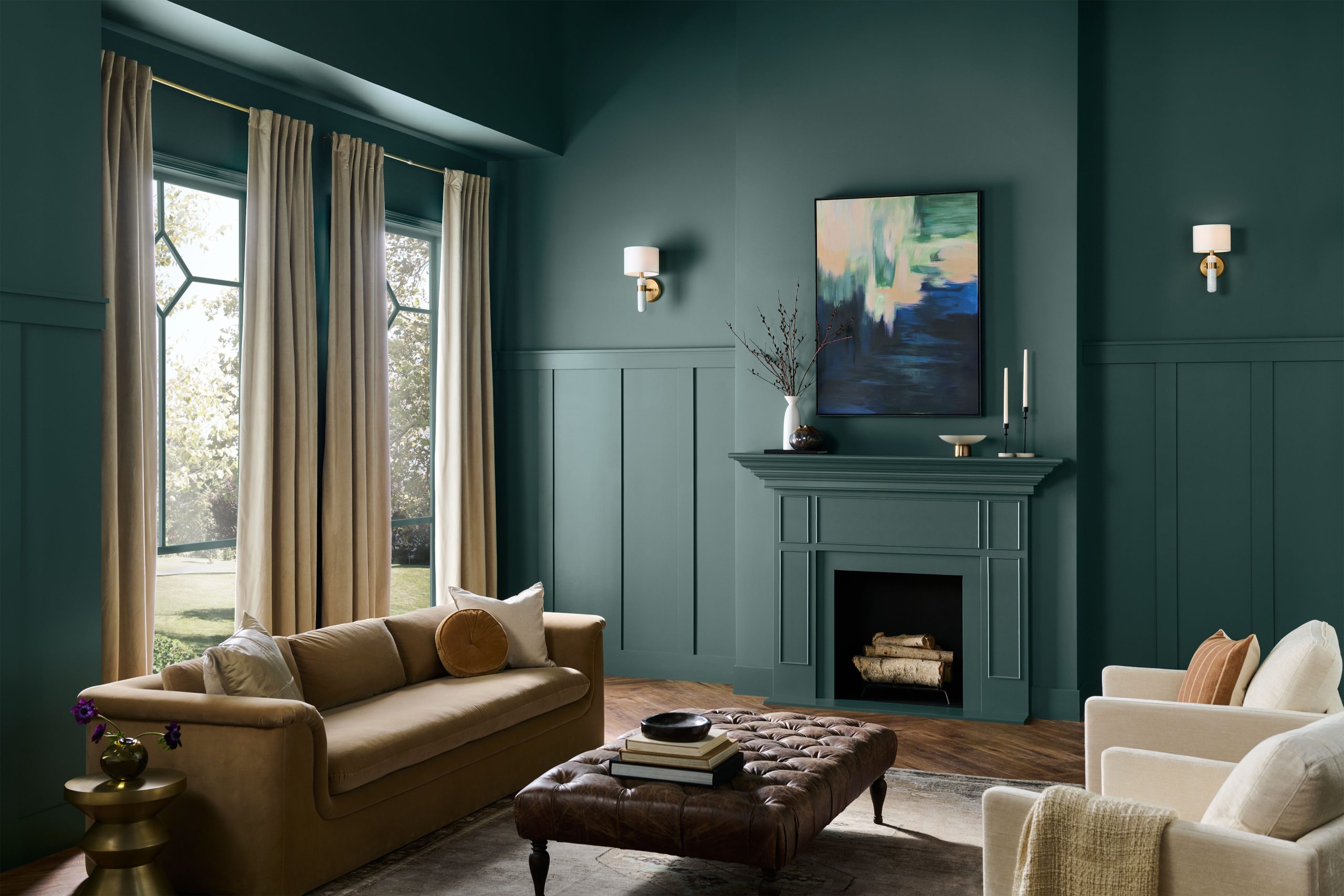
11. Sage Paneling, a Curved Mauve Dresser, and a Lighted Garland
This is the pastel move that took over 2026: muted heritage color on the walls, pastel on the furniture. Sage paneling with a mauve dresser comes straight out of heritage paint decks, and it works because both shades are desaturated. The trend arrived because people got tired of bright red-and-green maximalism and wanted holiday decorating that could survive into January. That’s the real test — if your setup still looks good on January 8th, you did it right.
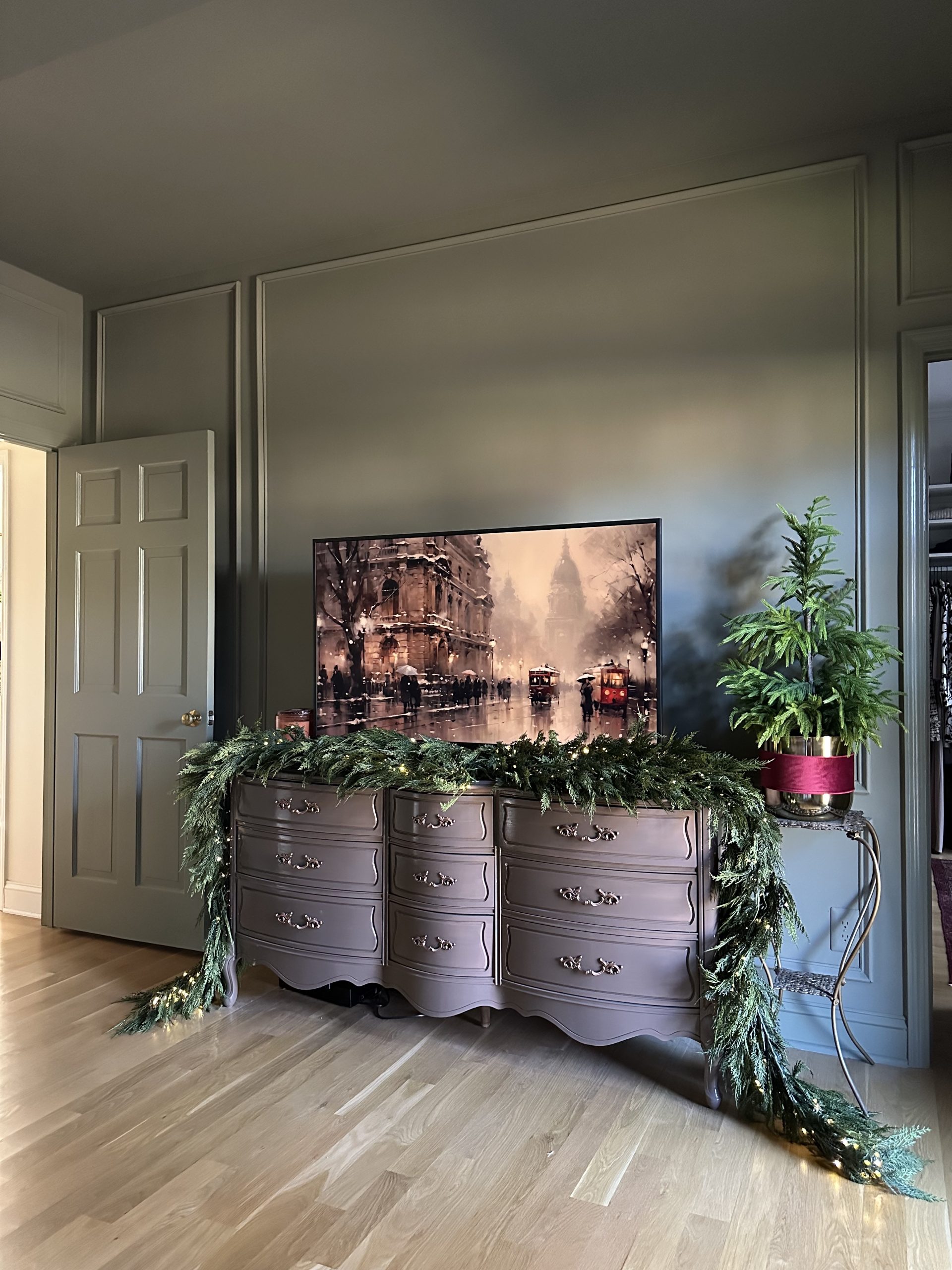
What it costs:
- Curved mauve dresser, vintage or secondhand: $150–600
- Pre-lit evergreen garland, 9 ft: $40–130
- Framed winter art or print: $30–160
- Small potted evergreen with ribbon: $20–65
- Paint, one gallon in sage: $60–95
Total: $300–1,050. Budget alternative: $70 on paint, a $40 thrifted dresser refinished in mauve chalk paint ($25), a $25 garland, and a print you already own in a $15 frame. Under $200.
12. A White Star, a Knit Armchair, and Honeycomb Pendants
Paper honeycomb pendants and fireplaces don’t mix. Anything hanging within 3 feet of a working hearth is a genuine hazard, and tissue paper yellows fast in heat and smoke. If your fireplace actually gets used, hang the pendants across the room instead — over a doorway or from a ceiling hook near a window reads just as well. The knit armchair deserves a thought too: thick braided yarn traps crumbs and pet hair, so a washable cover or a folded throw isn’t a styling choice, it’s upkeep.
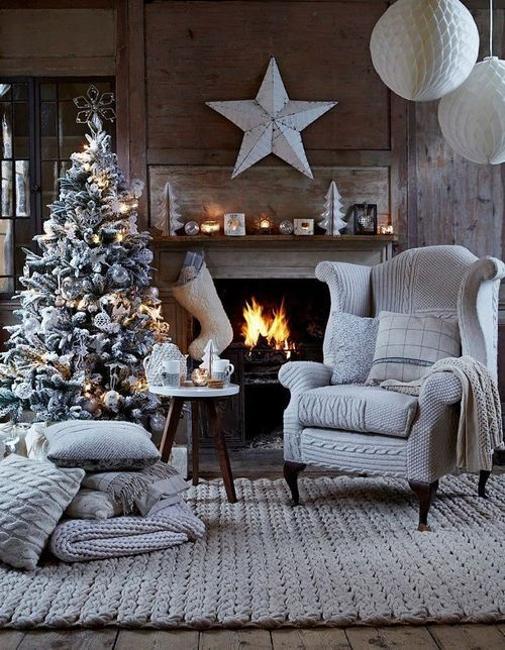
Hang a honeycomb cluster:
- Choose a hook rated for at least 5 pounds — the clusters are lighter than they look, but you want margin.
- Mark your heights first: stagger three pendants at 12, 18, and 24 inches below the ceiling.
- Open each honeycomb slowly with both hands; rushing tears the inner cells.
- Hang from fishing line rather than twine so the suspension disappears.
- Add a small battery puck light inside the lowest one for a soft glow.
Time: 20 minutes. Cost: $18–35.
13. Terracotta Walls With Olive Velvet and Bubble Glass
Terracotta and olive sit close to complementary on the color wheel — not opposites, which would fight, but close enough to create real energy. That’s why this room hums. The black-and-white graphic curtains and rug then do something smart: they introduce a hard, high-contrast element so the warm palette doesn’t get syrupy. Finally, the multi-bulb glass chandelier scatters light instead of aiming it, which flatters deep wall color. Deep walls look flat under a single downlight — that’s a lighting problem, not a paint problem.
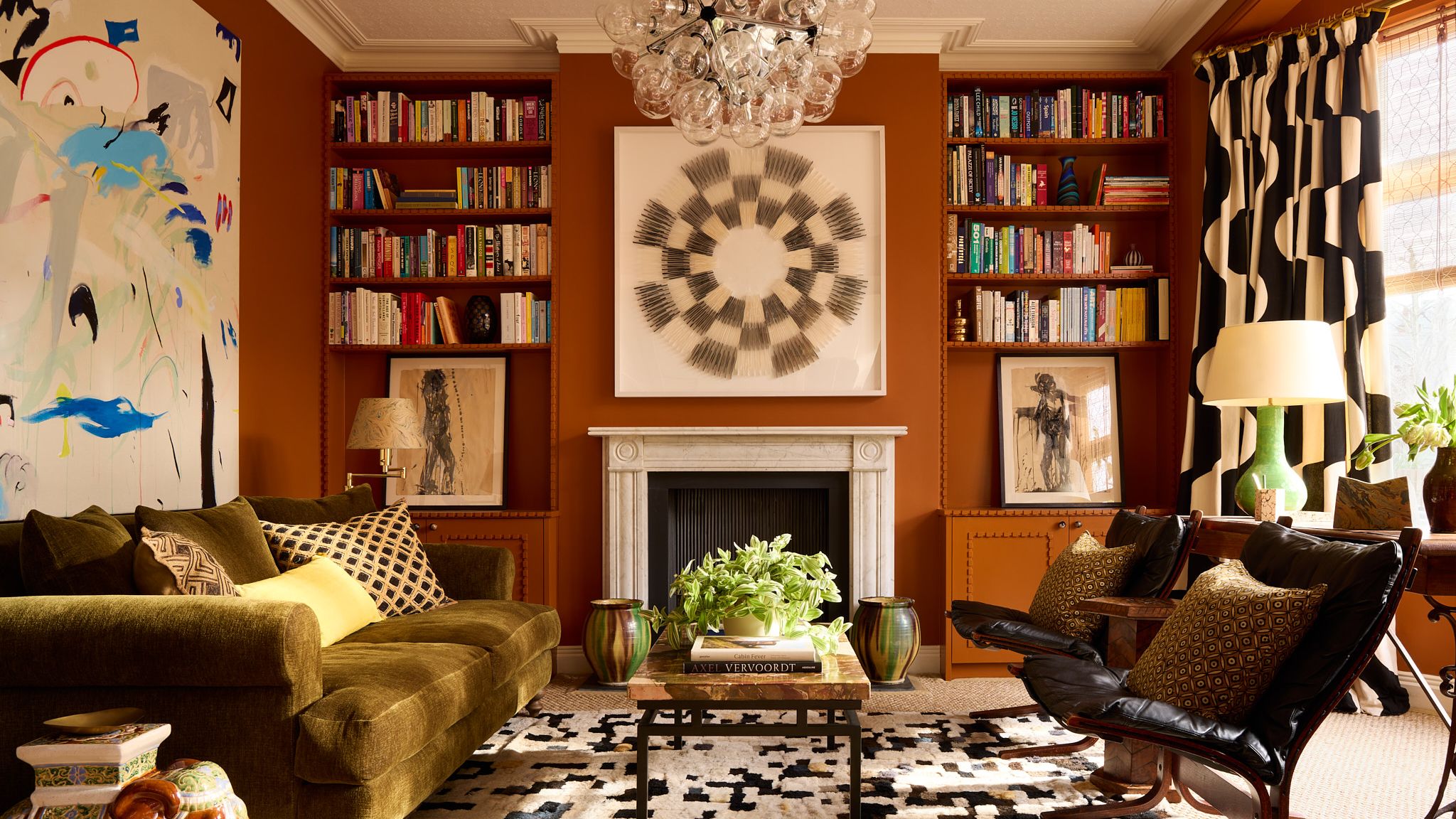
You can’t fake terracotta built-ins cheaply, but you can get close. Paint one wall and the trim the same terracotta ($70–90 a gallon) and leave the rest. Swap the olive velvet sofa for a velvet slipcover ($60–120) over something you already own, and hunt a black leather lounge chair on Facebook Marketplace — 1970s versions turn up constantly for $80–250. Multi-globe glass fixtures have been widely copied; look in the $150–350 range.
14. A Vintage Toy Train and Evergreen in a White Vase
The little red train. Everything else on that coffee table is a supporting player — the vase, the branches, the book boxes could live in any house and nobody would look twice. The train tells a story. It’s the difference between a styled surface and one with a personality. Vintage toys are the most underrated Christmas decor there is, and they’re cheap: flea markets and estate sales price die-cast trains at $5–20. Put one object on your table that has a memory attached and the whole room shifts.
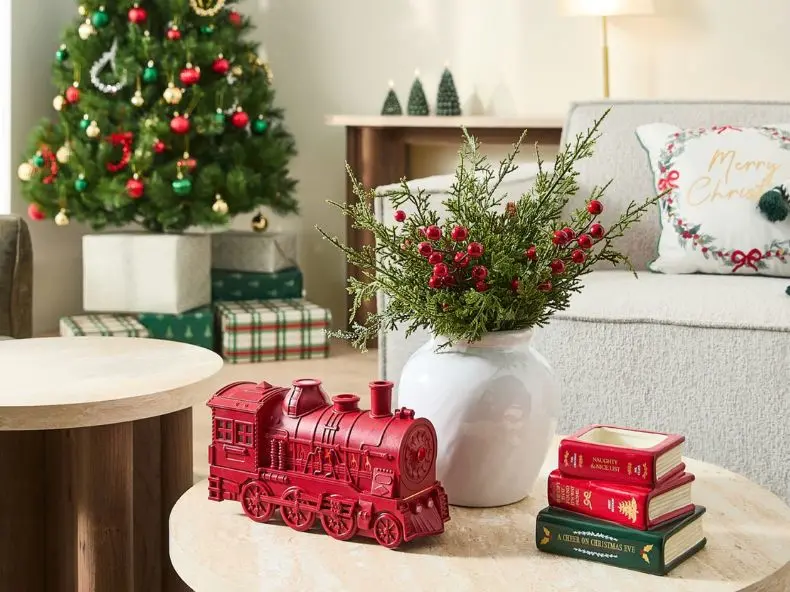
This styling works best on a round table 36 to 48 inches across. Smaller and three objects crowd it; larger and you’ll need four or five. The vase should be no more than a third of the table’s diameter, so 12 to 16 inches wide on a 48-inch top, and nothing on the surface should top 16 inches tall or it blocks the sightline to the sofa. In a tighter room, take the same idea down to a side table — Idea #31 shows the tabletop version.
15. The Pastel Christmas Palette, Translated for 2026
Here’s the formula worth memorizing: 55% cream or ivory base, 30% pastel across no more than three colors, 15% metallic or iridescent. That last 15% is what separates a pastel tree from a nursery display — soft colors need something shiny to bounce against or they go chalky. Pink, mint, and powder blue is the classic trio; sage, mauve, and blush is the 2026 update. Keep the ratio and you can swap shades every year without buying a new tree.
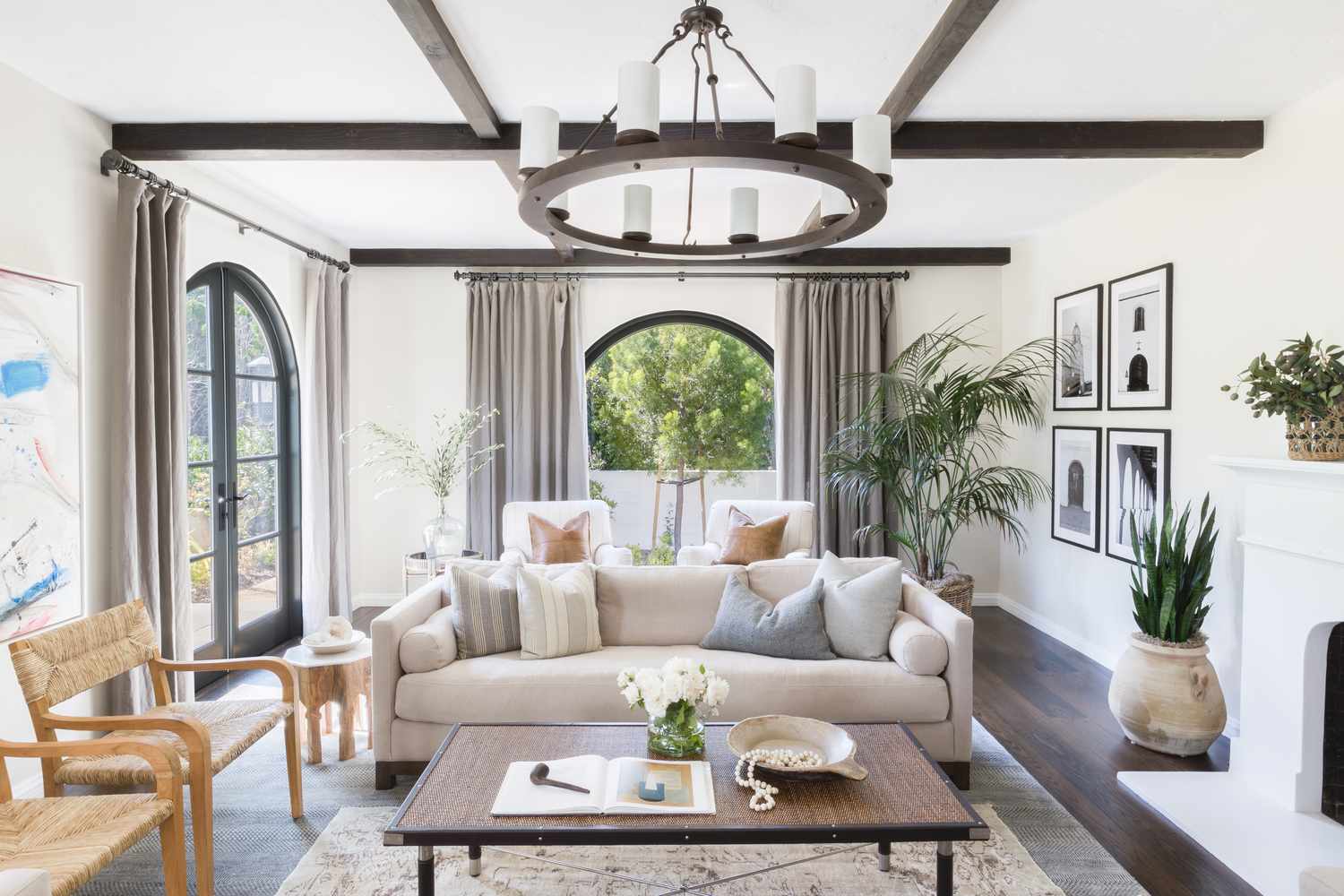
Choose your pastels under your actual bulbs. Most people pick ornaments in daylight at a store, then hang them under 2700K warm LED at home and watch their mint turn gray and their pink turn peach. Shopping online? Look for ornament photos shot on white with warm lighting, and check whether the listing mentions sheen. Matte pastels go flat under warm light; satin and pearl finishes hold their color. This matters more than the exact shade you choose.
16. Iridescent Glass on a Stack of White Books
Build the vignette:
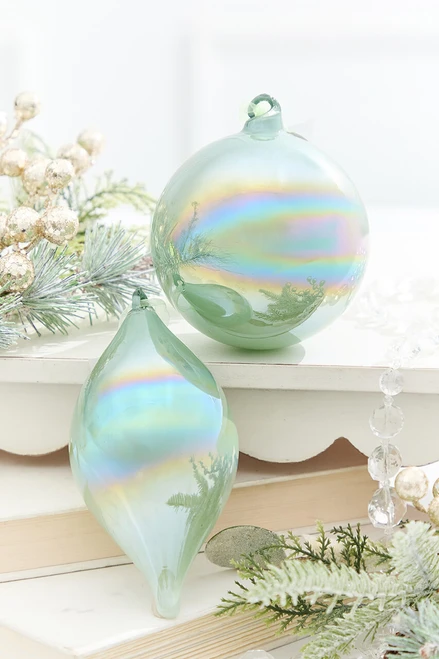
- Start with a scalloped or textured tray to contain everything — 12 to 14 inches wide is enough.
- Stack two or three white books flat as a riser, spiral edges facing away.
- Rest the larger ornament on the books and the teardrop on the tray in front, overlapping slightly.
- Tuck frosted pine picks behind at a 45-degree angle so branches peek past the glass.
- Add two gold berry picks at the outer edges — odd numbers, always.
- Drape the beaded garland loosely across the front so it pools.
Time: 15 minutes. Cost: $25–60, plus ornaments you already own.
Iridescent and mirrored finishes are coated, not solid, so they scratch and cloud. Never use ammonia glass cleaner on them — a dry microfiber cloth or a barely damp one is plenty. Store them in tissue rather than bubble wrap, since the plastic can leave dull spots over a season. Expect the coating on inexpensive iridescent ornaments to fade after two or three years, especially in direct sun. This is the one category where paying $6 each instead of $1 actually pays off.
17. A Snowy Tree Candle Ringed by a Eucalyptus Wreath
Here’s the breakdown:
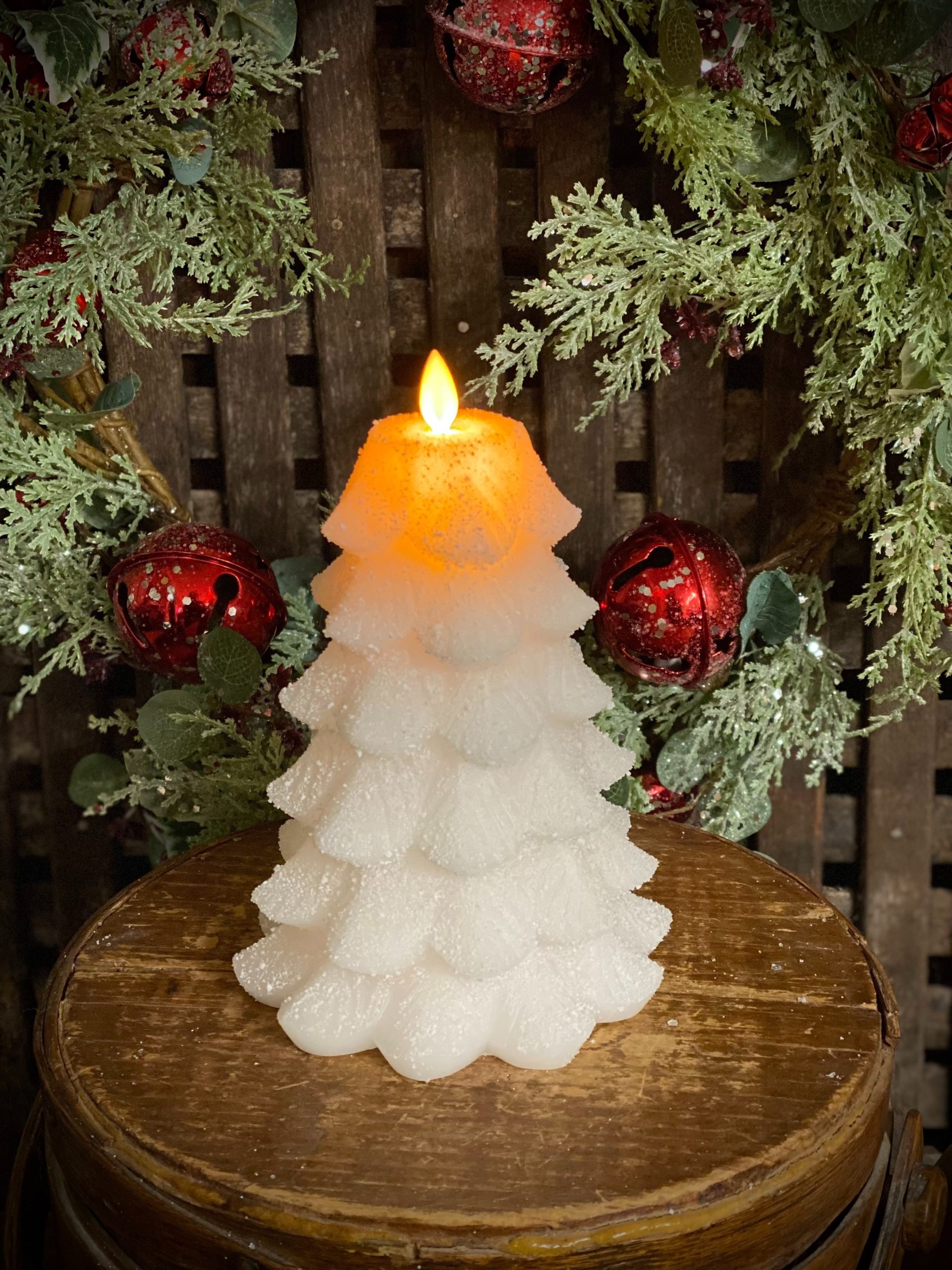
- Tree-shaped candle with snowy texture: $12–35
- Round rustic wood display stand: $15–50
- Frosted greenery wreath with eucalyptus: $25–85
- Red jingle bells or berry picks: $6–20
- Extra pine picks for the base: $8–20
Total: $66–210. Budget alternative: a plain white pillar candle ($6), a vintage wood cutting board as the base ($5–12 thrifted), a bare wreath form wrapped with $10 of grocery-store eucalyptus, and red ornaments borrowed from your own tree. Under $35.
One measurement saves this whole arrangement: the wreath’s inner opening should be 2 to 3 inches wider than your wooden stand. Too tight and the candle looks stuffed in; too loose and the wreath reads as a separate object rather than a frame. Center the candle so the flame sits at the exact middle of that opening — off by an inch and the whole thing feels tilted. Keep the stand at eye level or below.
18. One Light-Blue Bauble, One Sheer Gold Bow
Two details make this ornament sing. The ribbed surface breaks the iridescent coating into dozens of tiny reflections, so it sparkles from every angle instead of flashing from one. And the bow is sheer, not satin — you can see pine needles through it, which keeps the gold from reading as a solid block of color. Swap that sheer ribbon for a stiff gold one and you’d lose the delicacy and gain bulk. At this scale, texture choices do far more work than color choices.

Ribbon is the cheapest upgrade in Christmas decorating and the most annoying to buy pre-tied. Get a 3-yard spool of sheer gold ribbon for $4–8 and make your own loops — each bow takes about 30 seconds once you’ve done three. Iridescent glass baubles in sets of 12 run $15–30 online, and if you want this exact soft blue, search “pearlized” or “opal” rather than “blue.” The set in Idea #30 would carry through a whole tree.
19. Monochrome Terracotta With Pale Yellow Curtains
This is about as close to a single-color room as you can get: 85% terracotta across walls, sofa, and chair, 10% pale yellow from the curtains and dried botanicals, 5% natural wood. The yellow is doing all the relief work, which is exactly why it’s so pale — a saturated yellow or an orange curtain would collapse the whole thing into one blob. Run the same formula with sage walls, a sage sofa, and buttercream curtains. Monochrome only works when the counterweight is barely there.
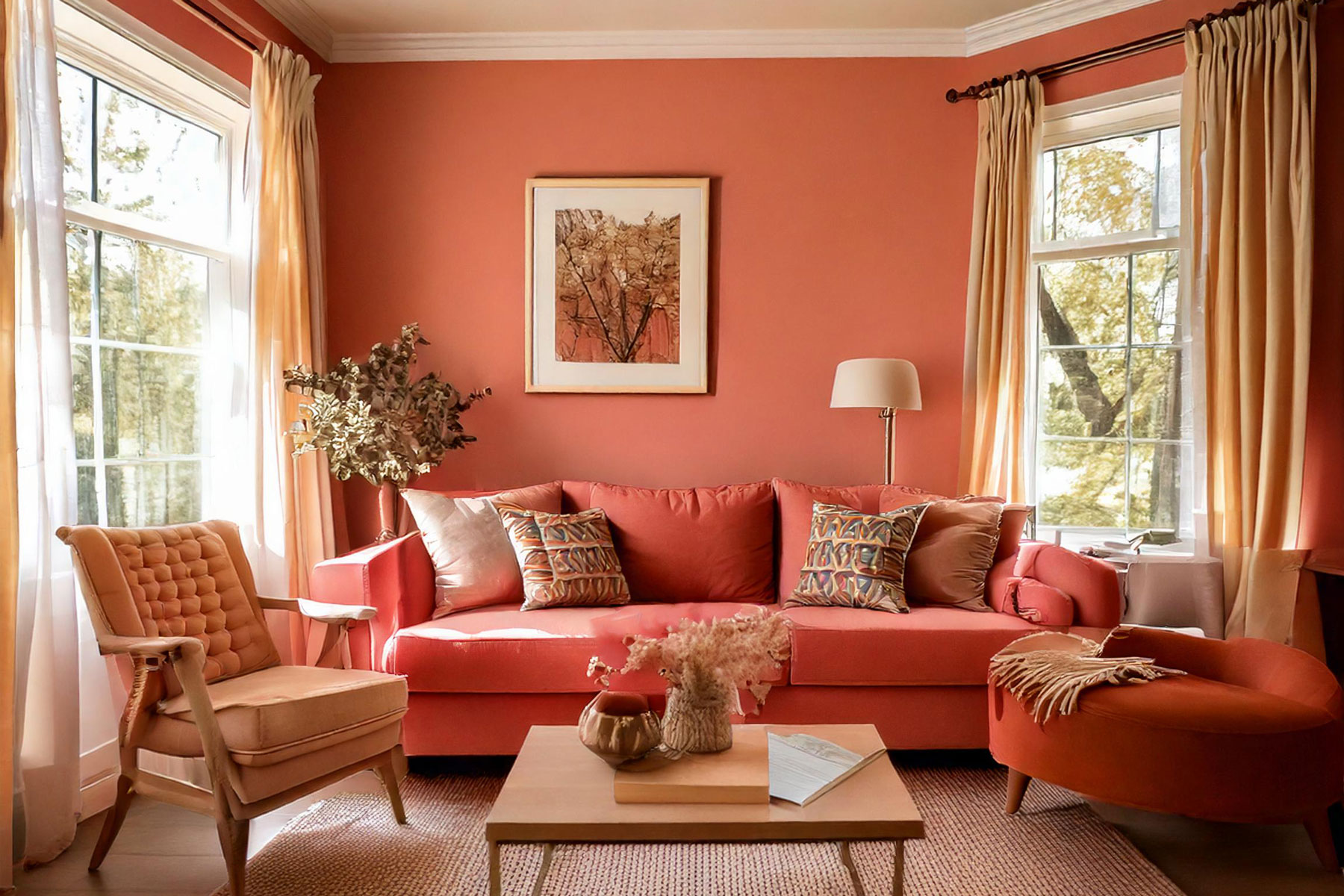
Terracotta is a high-commitment color and its mood swings with your light. In a north-facing room with no direct sun it goes muddy and slightly pink; in a bright south-facing room it can read almost orange-red at midday. Buy a sample pot ($6–10), paint an 18-inch square on two walls, and live with it for three days before committing to the room. For the cozier version, ask for a touch more brown in the mix.
20. A White Twig Tree Against a Sage Green Wall
A lighted twig tree is a silhouette, so it needs a mid-to-dark wall behind it. Against white or cream it disappears. Hang 12 to 18 ornaments maximum on a 5-foot twig tree — these show every gap, so less really is more, and ornaments should hang from the outer tips rather than the inner wires. Because twig branches are stiff, use ribbon loops instead of wire hooks. Keep ornament sizes small too: 2 to 3 inches, or the branch tips bend.
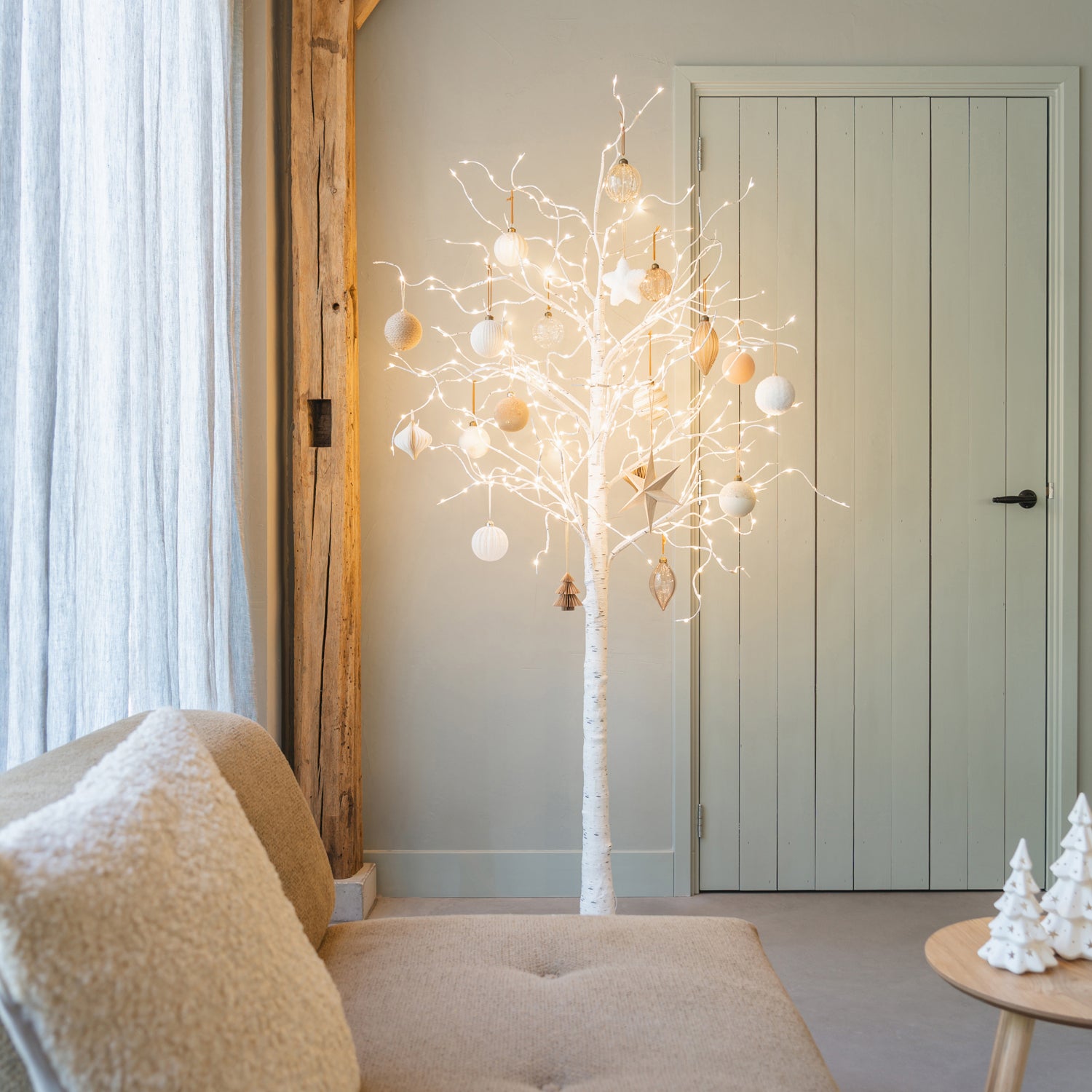
Twig trees are the small-space answer. A 4- to 6-foot lit twig tree works beautifully in rooms under 150 square feet and takes up about 20 inches of floor footprint — a fraction of a full tree. Place it in a corner or beside a doorframe rather than mid-wall. With taller ceilings, group three at staggered heights (3, 4, and 5 feet) instead of buying one big one. Idea #25 solves the same problem with a slim profile.
21. A Fringed Quilted Skirt Beside a Lit Stair Garland
Tree skirts are one of the few holiday items genuinely cheaper to make. A quilted one like this runs $60–180 retail; quilted fabric off the bolt costs $12–25 a yard and you need about two yards, plus $10 of fringe trim and an afternoon. If sewing isn’t happening, a large round quilted tablecloth from a discount store ($20–35) works under a tree and nobody can tell. For the stairs, pair a $25 unlit greenery strand with a $15 string of warm lights and zip-tie them together.
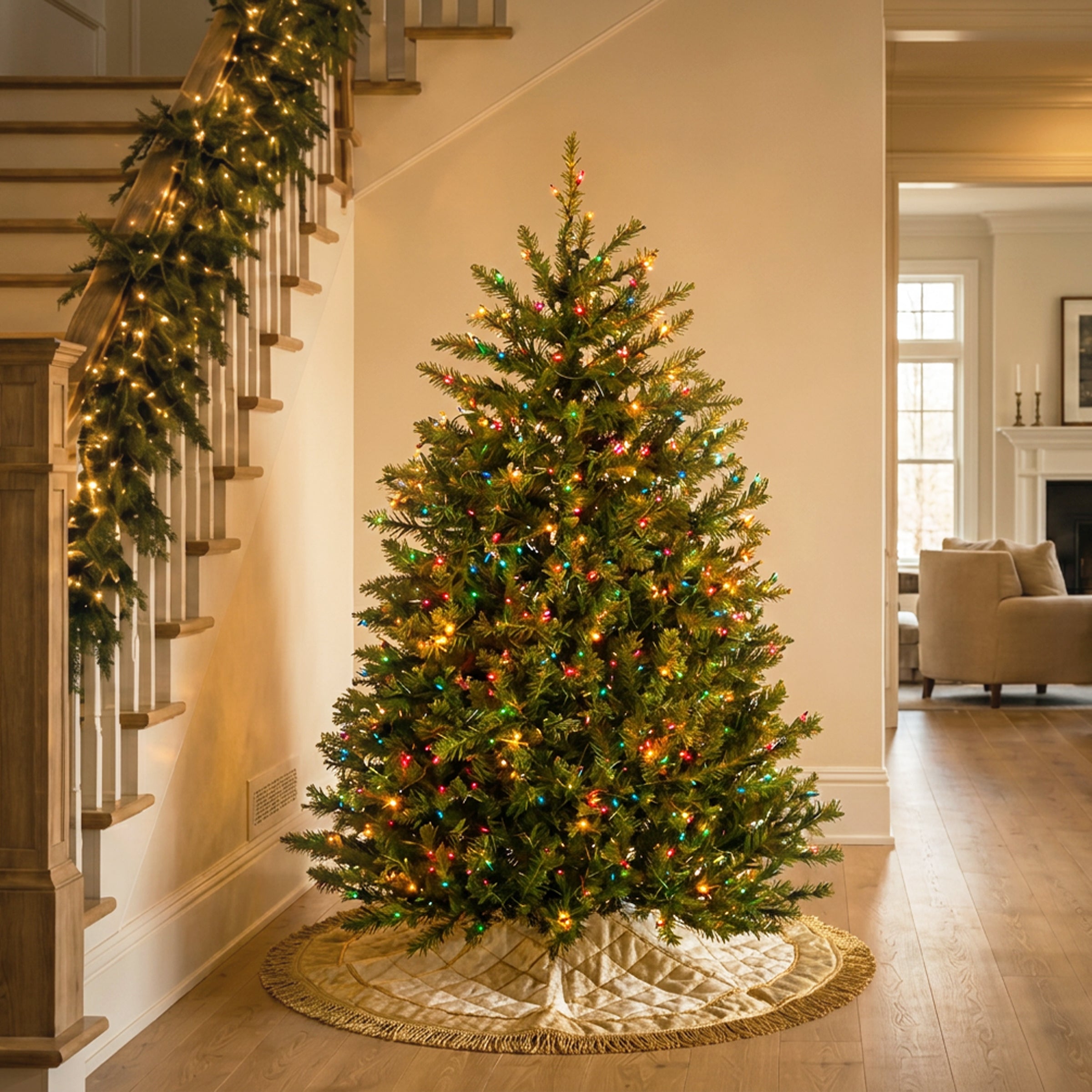
Stair garland has one non-negotiable rule: it never covers the handrail. Keep the full grip surface clear, and if you use zip ties, position them on the underside of the banister so hands don’t catch. A strand running down a staircase takes real abuse from hands and bags, so secure it every 12 inches or you’ll be chasing a sagging loop all December. With a toddler or a cat in the house, skip candles at the base entirely.
22. Ceiling Projections, Window Stars, and a White Mantel
Set up projection lighting:
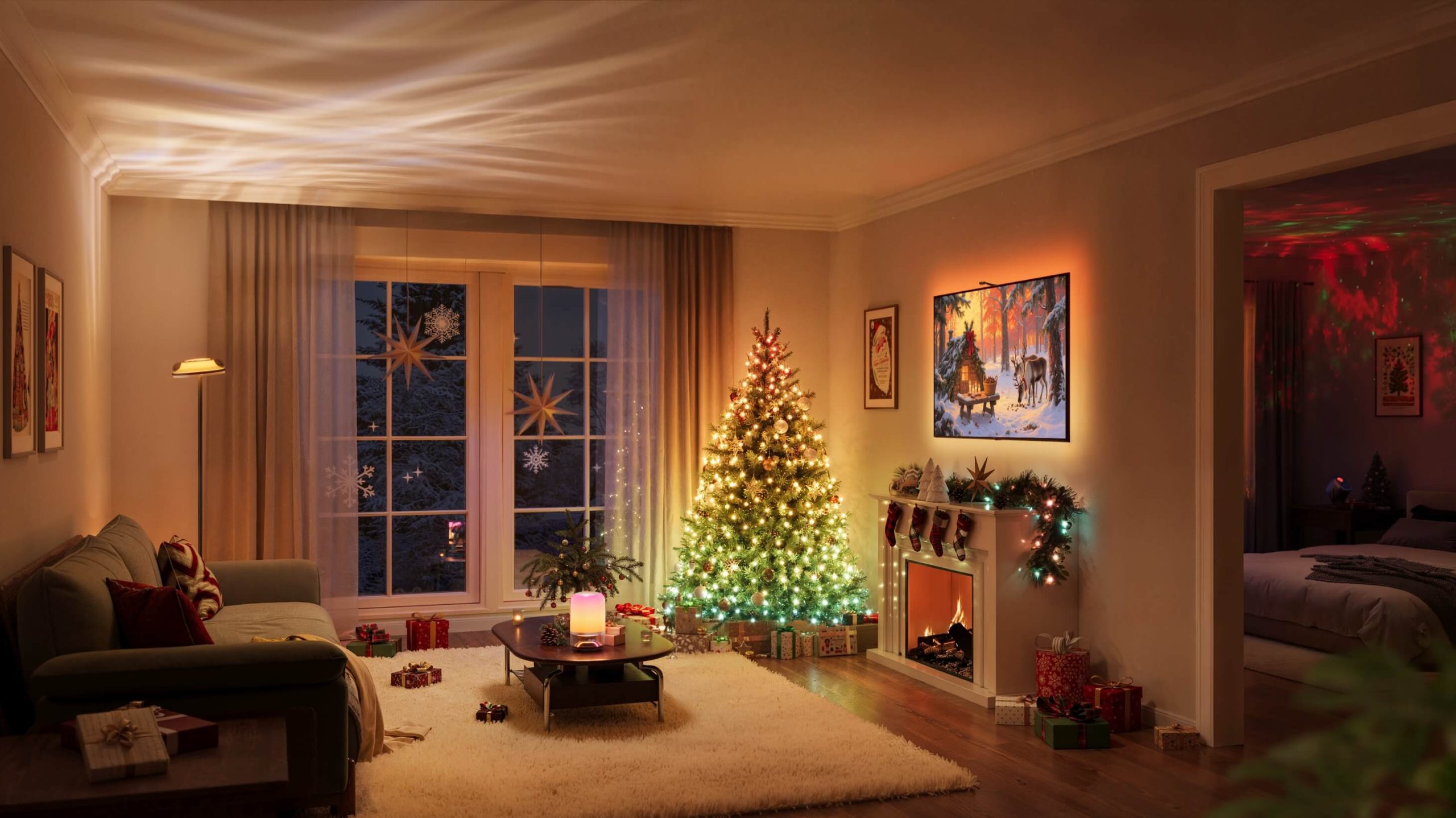
- Place the projector on the floor in a corner, angled up at the ceiling — 8 to 12 feet back works for most rooms.
- Choose a water or aurora pattern with a slow speed setting; fast movement looks like a nightclub.
- Set brightness around 30 to 40% so it reads as glow, not projection screen.
- Point it away from your TV and any glossy surfaces, which turn into mirrors.
- Run the cord along the baseboard and secure it with clips.
Time: 20 minutes. Cost: $25–60.
The light on the ceiling is the piece that matters. Everything else in the room — the tree, the mantel, the stockings, the stars in the windows — is doing what a Christmas living room is supposed to do. The ceiling glow is the element nobody expects, and it changes how the whole space feels without adding a single object. Low, ambient, moving light mimics firelight and makes a room feel occupied. If you try one thing from this list, try this one.
23. Tan Credenza, Black T-Hardware, Trailing Green
Verify these first:
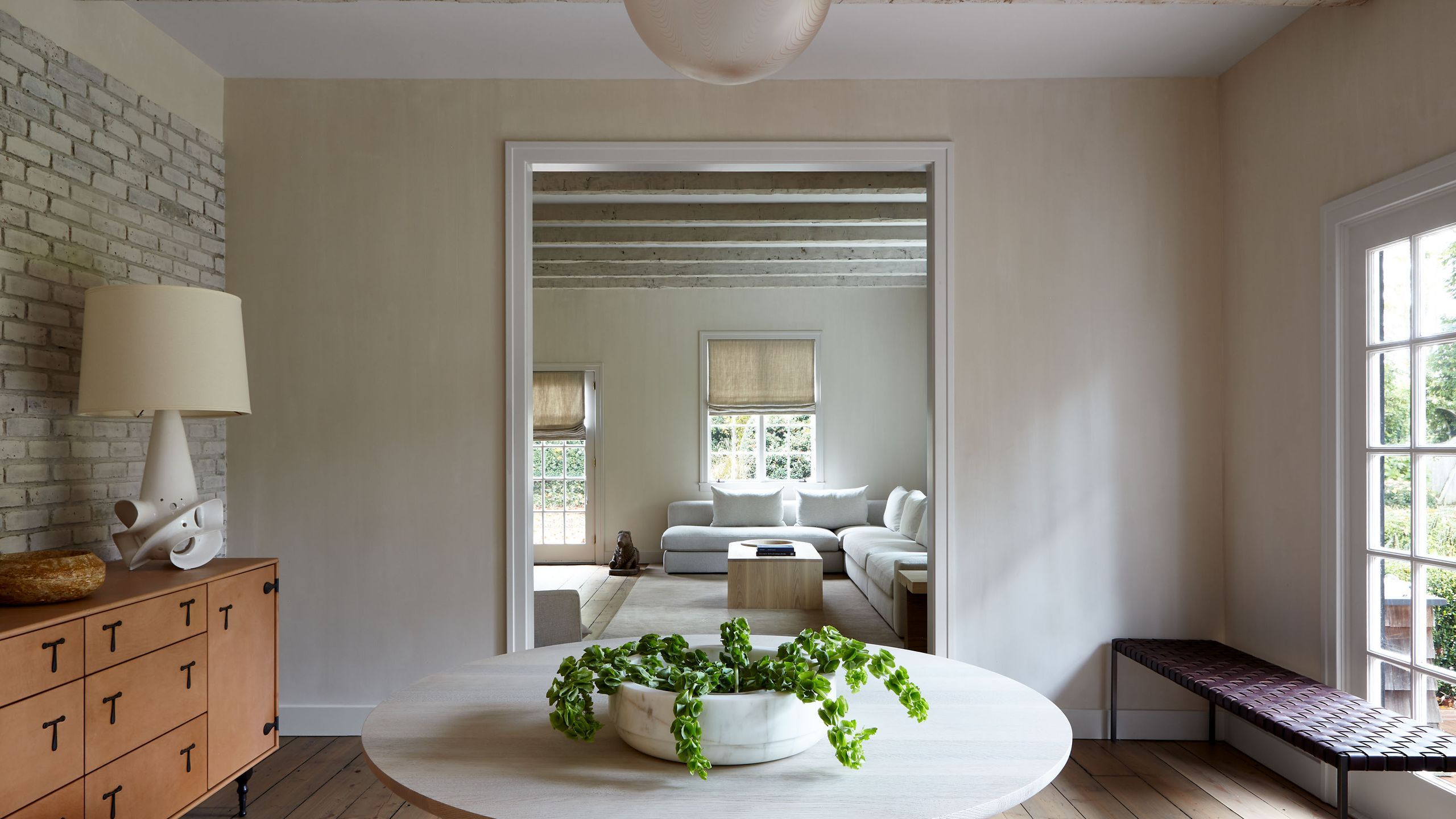
- Measure your doorway’s width and height before buying a credenza — 30 to 32 inches tall is standard, but depth is what blocks a hallway.
- Check that a trailing plant will get 6 to 8 feet of indirect light; if not, choose pothos over string of pearls.
- Confirm the credenza is anchored or on levelers if you have kids or pets.
- Plan the lamp’s cord route now — sculptural lamps hide cords badly.
- Leave 36 inches of walking clearance in front of any drawer that opens.
Let trailing plants spill over the edge by 6 to 8 inches and no more — past that they read as untended rather than styled. Rotate the pot a quarter turn every week so growth stays even, and trim the longest vine monthly to push fullness instead of length. In a marble bowl, line the bottom with a plastic nursery pot and a saucer; marble stains from standing water and you will not get it out. The black T-hardware is doing the same job as the plant: three small dark accents holding a beige room together.
24. Pastel Pile-Up: When Soft Colors Lose Their Anchor
Here’s the version of pastel Christmas that goes wrong: pink tree, pink ornaments, pink stockings, blush pillows, pale rug, cream walls. It photographs fine and feels flat in person, because nothing in the room has weight. Pastels are low-contrast by nature, and a room with no contrast has no focal point. The fix isn’t more color — it’s one dark element. A black picture frame, a walnut side table, a single deep green cushion. One anchor makes ten pastel pieces look intentional.
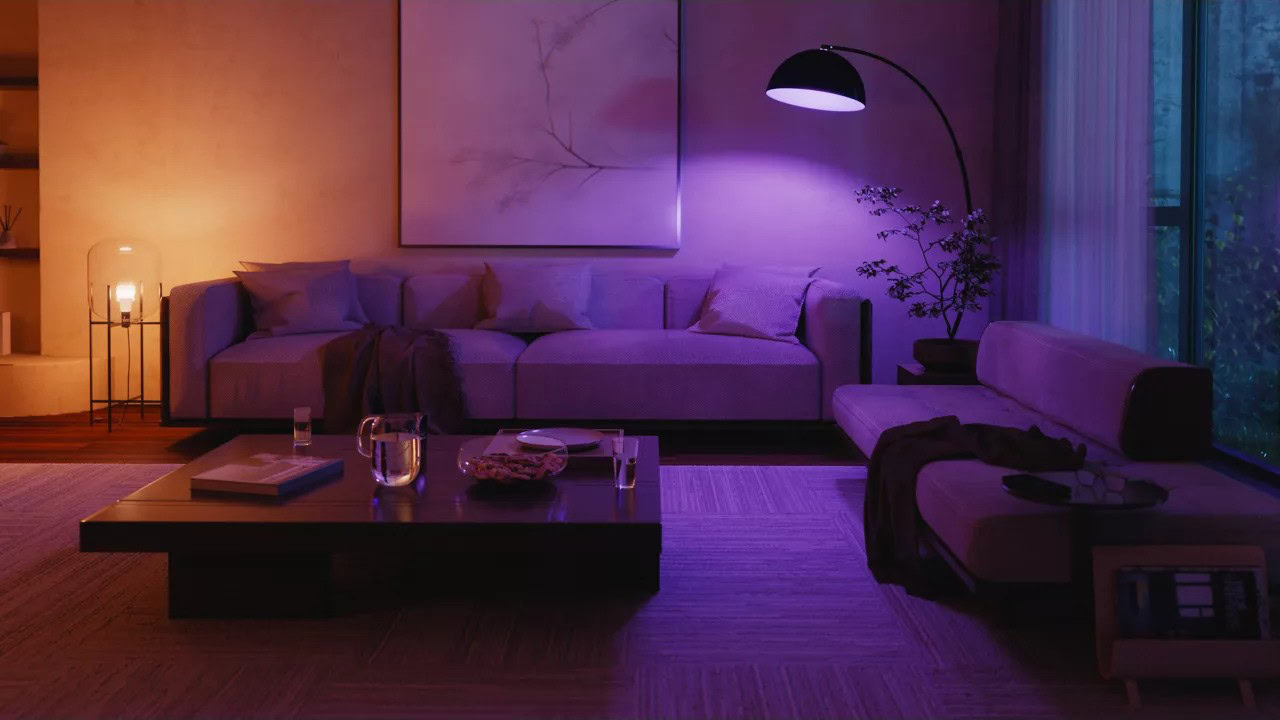
Designers call this value contrast, and it’s why mood boards with pastel palettes almost always include something heavy. Your eye needs a place to land, and in a low-contrast scheme there’s nowhere to go. Adding one dark, matte object at roughly 10% of the visual field gives the pastels something to be soft against. Test it in ten seconds: squint at your decorated room. If everything blurs into one pale smear, you need the anchor. If you can see clear shapes, you’re done.
25. A Slender White Tree Against Grey Paneling
Slim trees are measured by profile, not height. A 6- to 7.5-foot tree with a 24- to 30-inch base diameter fits an 8-foot ceiling and a narrow wall, and it needs just a 30-inch square of floor space. Keep it at least 12 inches from the fireplace surround, and hang the wreath so its top edge sits level with or just below the mantel shelf. This is the solution for small rooms that Idea #8 handles with vertical paneling — same illusion, less space.
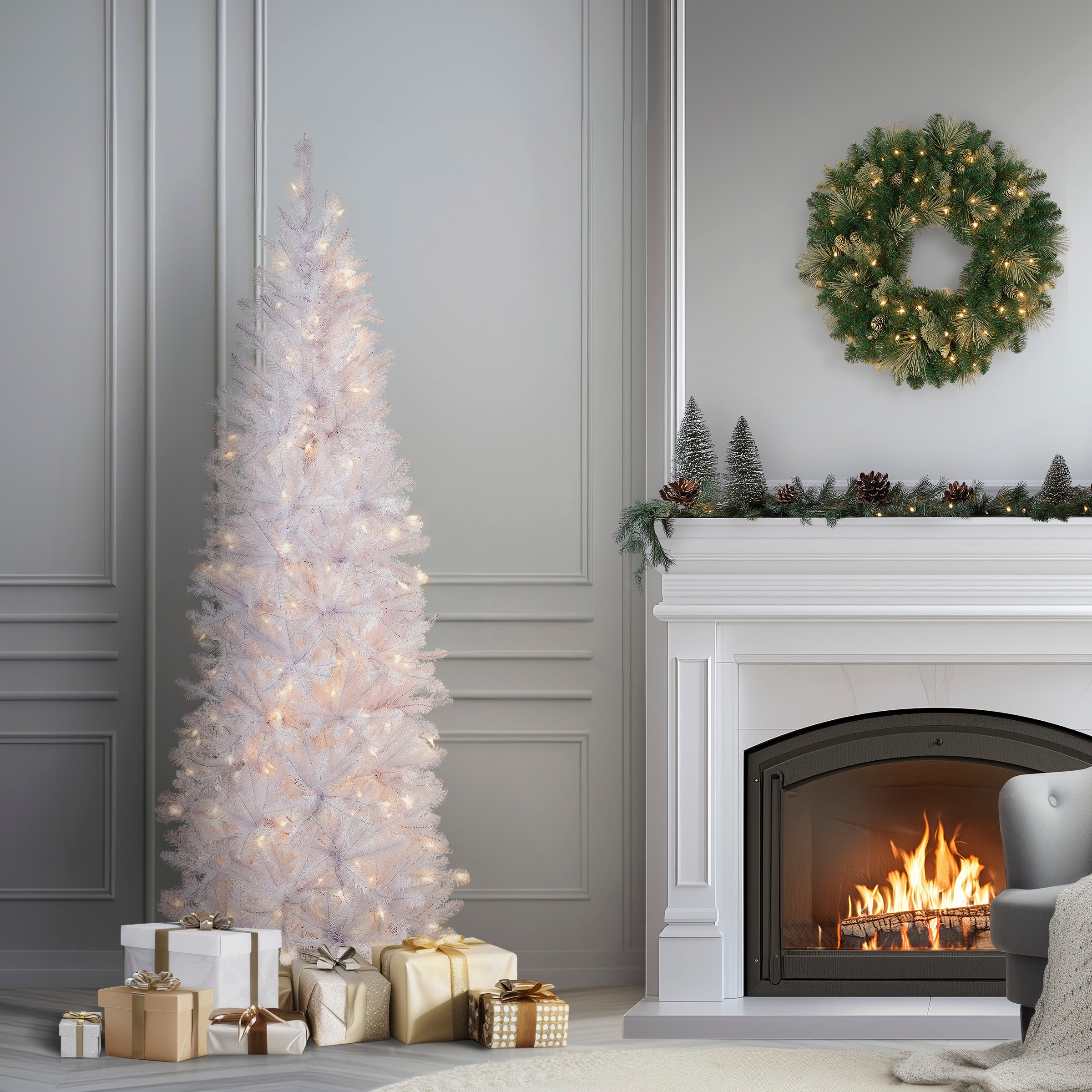
The numbers:
- 6- to 7.5-foot white slim pre-lit tree: $120–450
- Illuminated green wreath with pinecones: $45–140
- Gift wrap, ribbon, and boxes: $40–90
- Tree skirt or basket base: $30–80
- Extra warm-white light strands: $12–30
Total: $247–790. Budget alternative: an unlit white slim tree ($60–110) plus two $12 warm LED strands saves about 60%, and a grapevine wreath you dress yourself with grocery-store greenery lands around $25.
26. Blush and Mint Bottlebrush Trees on a Neutral Sofa
Pillow math on a sofa: two 22-inch pastel pillows with two 18-inch textured ones in front, offset to one side rather than symmetrical. Symmetry reads like a showroom; the offset looks like someone lives there. Fold, don’t drape, the knit throw — one loose fold across a single arm keeps it from looking like laundry. Keep the bottlebrush trees in groups of three at staggered heights (4, 6, and 8 inches) on the coffee table or a console, never scattered. Clustering is what makes small decor read as deliberate.
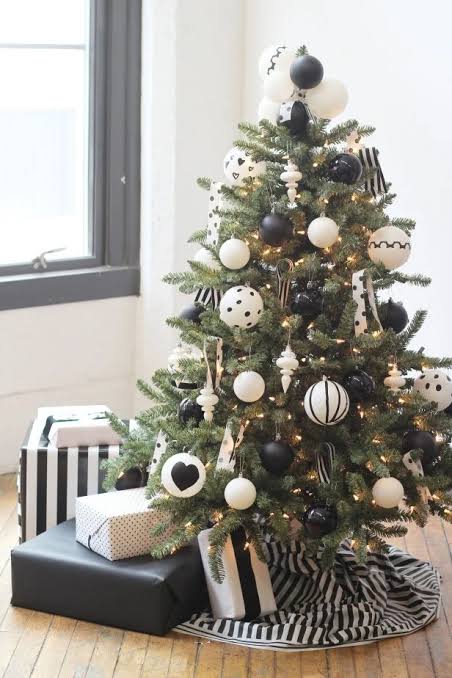
Miniature bottlebrush trees are one of the great cheap finds in holiday decor. Craft stores sell plain ones for $1–4 each, and a bottle of pastel dye — or acrylic paint thinned with water — costs about $6, enough to tint a dozen in an afternoon. Pink and mint pillows run $15–30 each at big-box stores, or $8–15 if you buy covers and stuff them with inserts you already own. Spend well on the knit throw ($30–60) since it has to survive a winter.
27. A Distressed White Wood Tree With Pinecones and Red Berries
The cut-out star. It’s a small detail on a small object, and it’s the reason this figurine reads as designed instead of homemade-blah. A solid silhouette tree would be perfectly fine; the negative space of the star is what makes you look twice and notice the distressed edges, the vertical plank wall behind it, the pinecones. Negative space does the work. If you’re buying or making a wooden tree, choose one with a cutout or an open frame — solid shapes have to be perfect to be interesting.
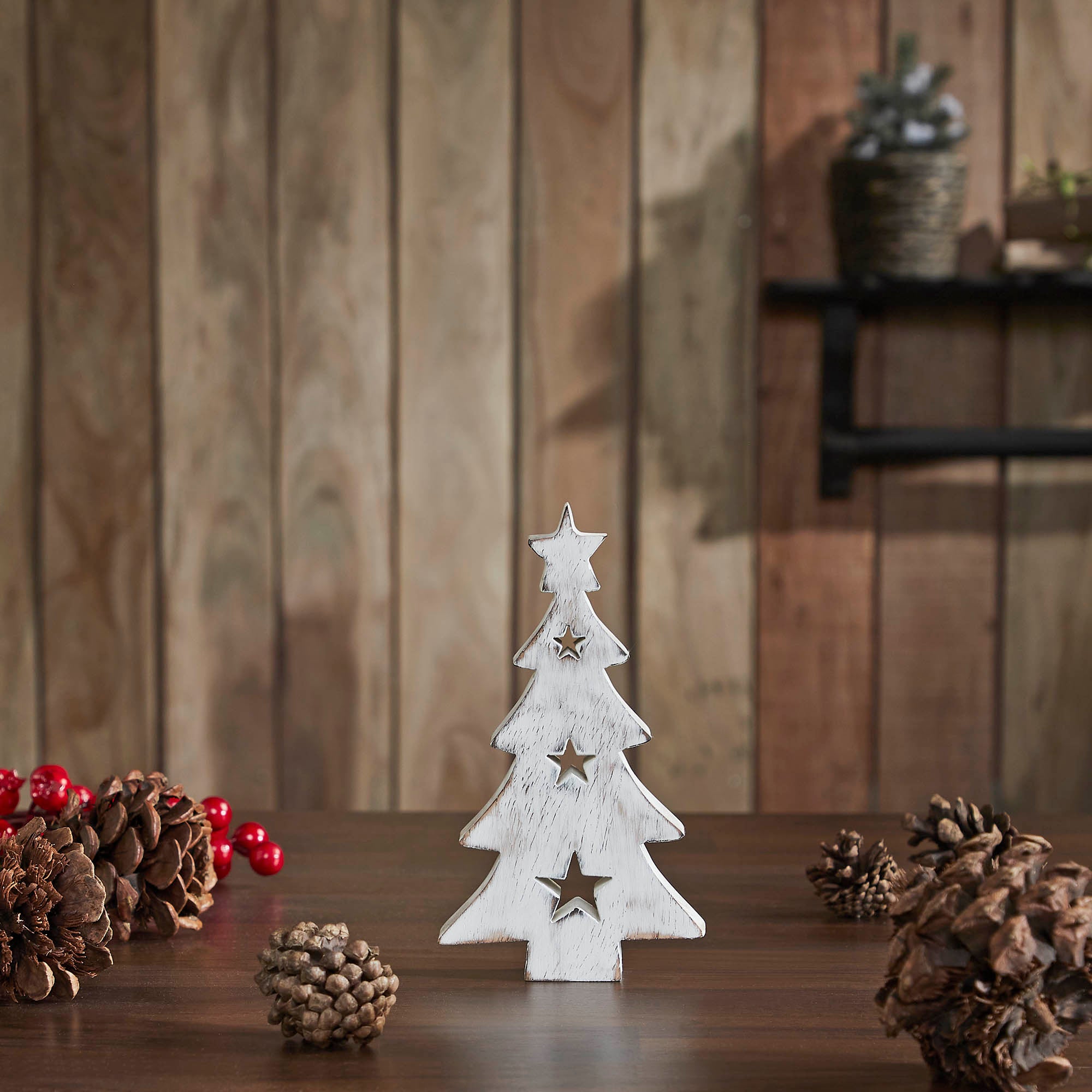
DIY a distressed wood tree:
- Cut a simple triangle from 1-inch pine ($4–8 for a board) or buy a blank online.
- Drill or jigsaw a star into the upper third before painting.
- Paint two thin coats of flat white, letting each dry fully.
- Sand the edges and any raised grain with 220-grit until the wood shows through.
- Rub a little dark wax into the sanded spots and buff it off immediately.
Time: about 1 hour plus drying. Cost: $8–14.
28. Brown Paper Gifts on a Red Skirt Under a Towering Tree
Where the money goes:
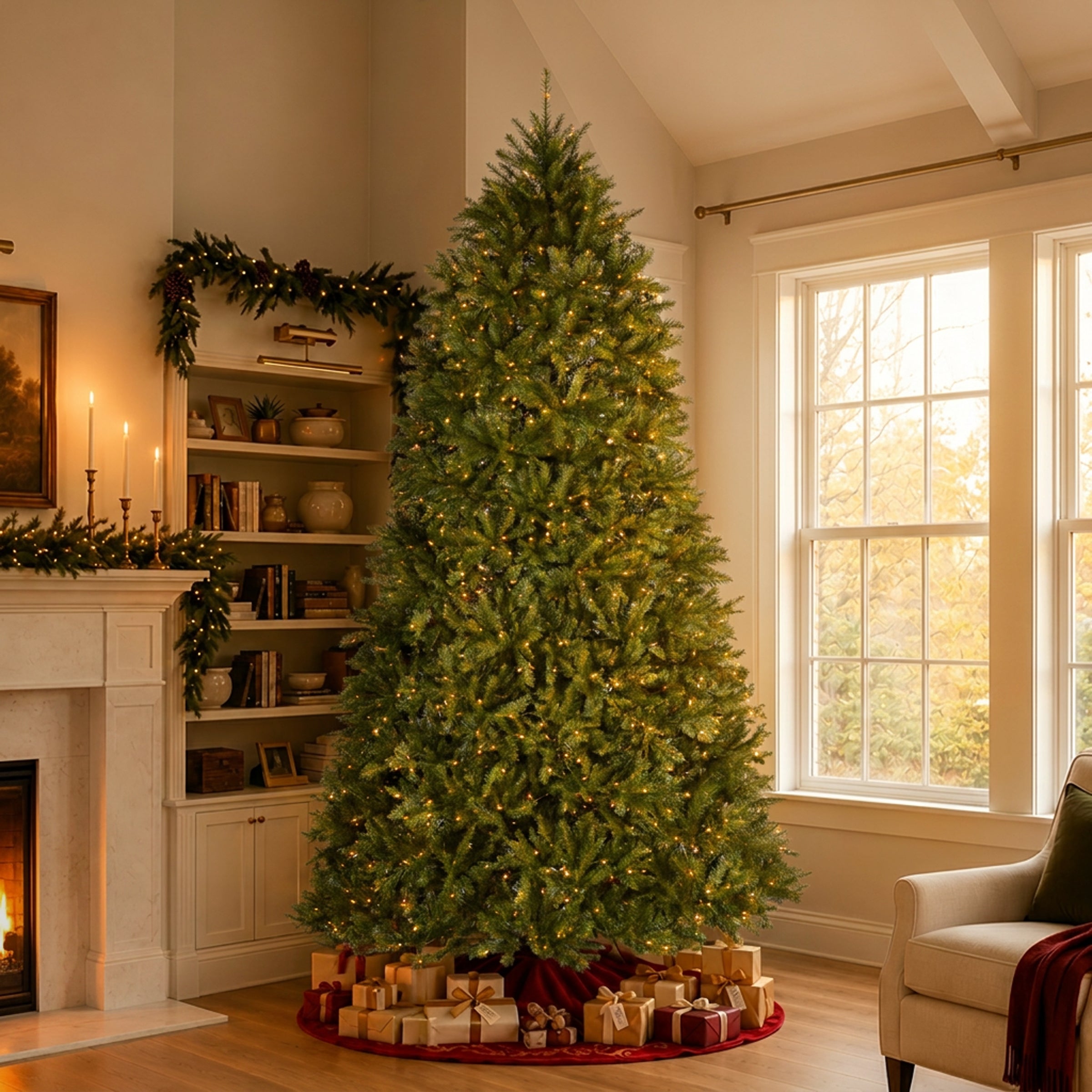
- 8- to 9-foot pre-lit tree: $200–850
- Red tree skirt: $30–90
- Brown kraft paper and twine: $15–35
- Ribbon and gift tags: $12–30
- Mantel garland and extra lights: $40–120
Total: $297–1,125. Budget alternative: kraft paper is already the budget move — a $10 roll wraps more than anything glossy. Thrift the tree skirt or knot a red flat sheet around the base. And buy the tree in the first week of December, when pre-lit prices drop 20–30% from their November high.
If this is a real tree, plan on needles. A fresh 8-foot fir drops about a cup a day by week three, and it drinks up to a gallon of water daily that first week — which is why a waterproof skirt matters more than a pretty one. Faux trees have their own upkeep: they hold dust year-round, so vacuum before decorating and again before storage, and store them sealed so they don’t yellow in a garage. Either way, budget $20–40 a year for bulbs and fuses.
29. Glossy Plum Banisters Framed by Sage Green Paneling
The ratio here is 70% sage green, 20% deep plum, 10% dark wood and cream. Plum at 20% only works because it’s glossy — a flat plum banister would just read dark brown in low light. Shine is what lets a saturated color stay a highlight instead of a shadow. Try the same formula with sage and burgundy, or sage and navy, and keep the third color under 10% while the architecture carries the rest. It’s the same heritage-pastel logic as Idea #11, pushed into the bones of the house.
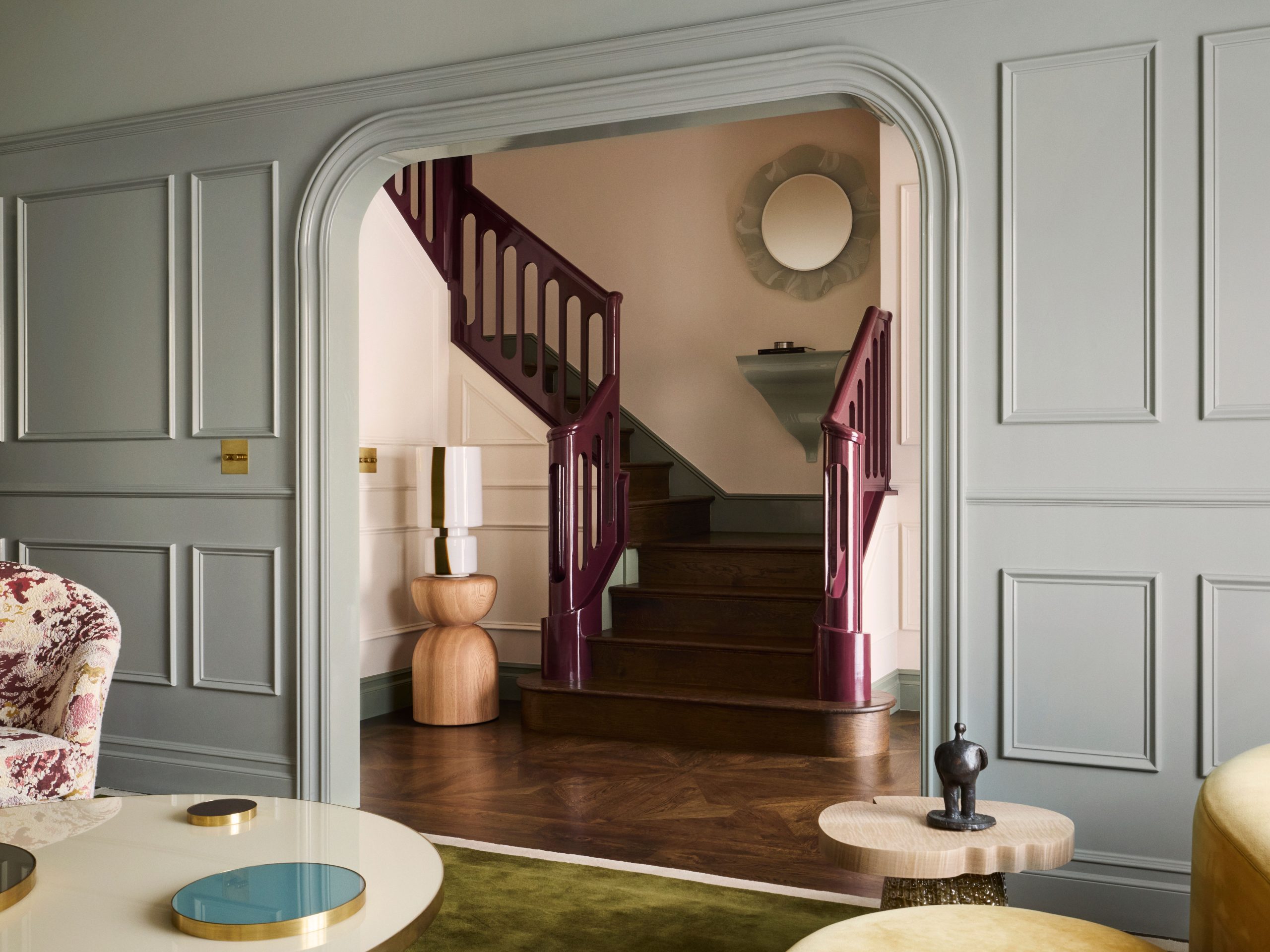
High-gloss paint on a banister shows every fingerprint, which is a real problem on the piece of your house people grab most. Here’s the compromise: semi-gloss on the rail, high-gloss on the balusters and newel posts. You keep about 85% of the shine and lose most of the smudge anxiety. Ask your paint store for a waterborne alkyd — it levels smoother than standard latex and dries harder, which matters on a handled surface. Two coats minimum, three on the rail.
30. Ornaments Only: Pastel Baubles and Nothing Else
Strip away the ribbon, the picks, the florals, and what’s left is a tree wearing only ornaments — and it works because restraint is doing the decorating. Fairy lights sit evenly spaced and tucked inside the branches rather than draped on top, so the light seems to come from within. The pastel baubles repeat three colors in a loose spiral so your eye travels around the tree instead of stopping dead. Because nothing hangs vertically, the silhouette stays clean. If layering keeps looking busy, remove an entire category.
This look is nearly free if you already own lights. Ornament sets in pink, mint, and pearl run $12–25 for 24 pieces at big-box stores, and shatterproof means you can decorate a hallway tree without wincing. Shop after Christmas: pastel is the slowest-selling colorway, so January clearance takes it to 70% off. That’s how you build a collection of 80 to 100 baubles for under $60 across two seasons.
31. Feather Tabletop Trees and Tall White Tapers
Style the tabletop trio:
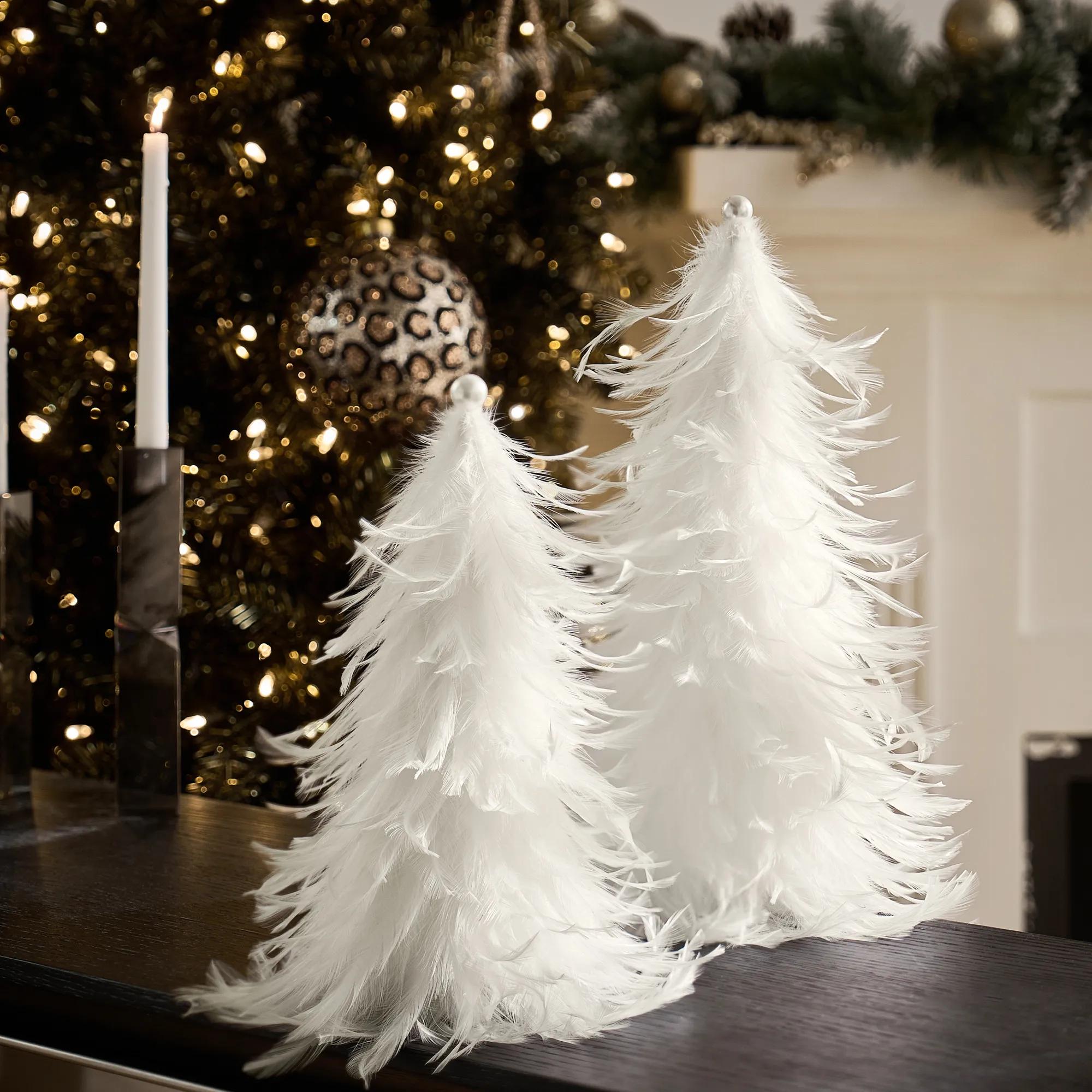
- Start with a tray or dark wood board to define the edges — 18 inches wide is plenty.
- Set the two feather trees at different heights on opposite thirds, not side by side.
- Add two taper candles between them, one 10-inch and one 12-inch.
- Let the taller candle sit slightly behind so the flames don’t line up.
- Tuck a single tiny ornament at the base to break the symmetry.
Time: 10 minutes. Cost: $35–90.
The cost breakdown:
- Two feather tabletop trees: $36–90
- Pearly bead tree toppers: $8–20
- Tall white taper candles, pair: $8–16
- Candle holders: $12–35
- Tray or wooden board: $15–45
Total: $79–206. Budget alternative: feather trees turn up at thrift stores for $5–12 in December, especially the small ones. Grocery-store white tapers cost $3–5 a pair, and a dark wood cutting board makes a perfect tray for $10. Whole grouping for about $35.
32. A Wicker Bench, Fabric Bunting, and Candles on the Floor
The hallway is 2026’s favorite decorating frontier. People have already done the living room and the mantel, and the entry is where a little effort reads as a lot of intention — it’s the first thing guests see and the last thing you look at before bed. Fabric bunting instead of plastic garland is part of the same shift toward texture over shine, and the dim, warm light levels trace back to the Scandinavian idea of hygge that never really left. Rustic hallway trees keep showing up on Pinterest for exactly this reason.
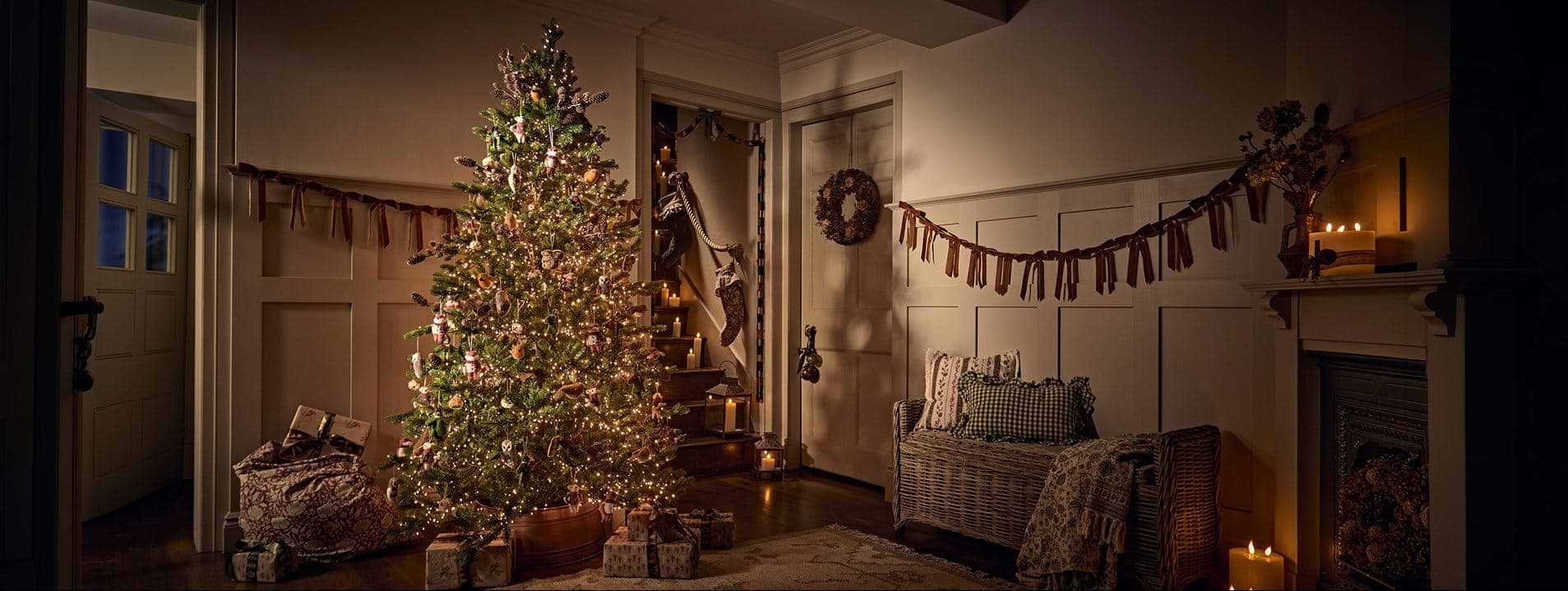
Check these before you start:
- Measure your hallway’s clear width — you need a 36-inch path, even with a bench in place.
- Check for outlets at both ends; extension cords across a walkway are a tripping hazard.
- Confirm the bench is no deeper than 16 inches, or the hallway shrinks fast.
- Test candle placement: anything lit at floor level needs to be well out of foot traffic.
- Check your ceiling height before buying a tree — hallway trees usually max out around 6 feet.
Pastel, But Make It Yours — Starting With One Branch
You don’t have to commit to a full pastel takeover to get the feeling. Pick one idea here that actually fits your room — the twig tree, the feather tabletop trio, the ceiling projections — and let it be the thing people notice. The palettes in this piece only work when there’s a real home underneath them, and yours already has one.
📌 Pin your favorite three ideas now, so when December rolls around you’re decorating instead of scrolling.