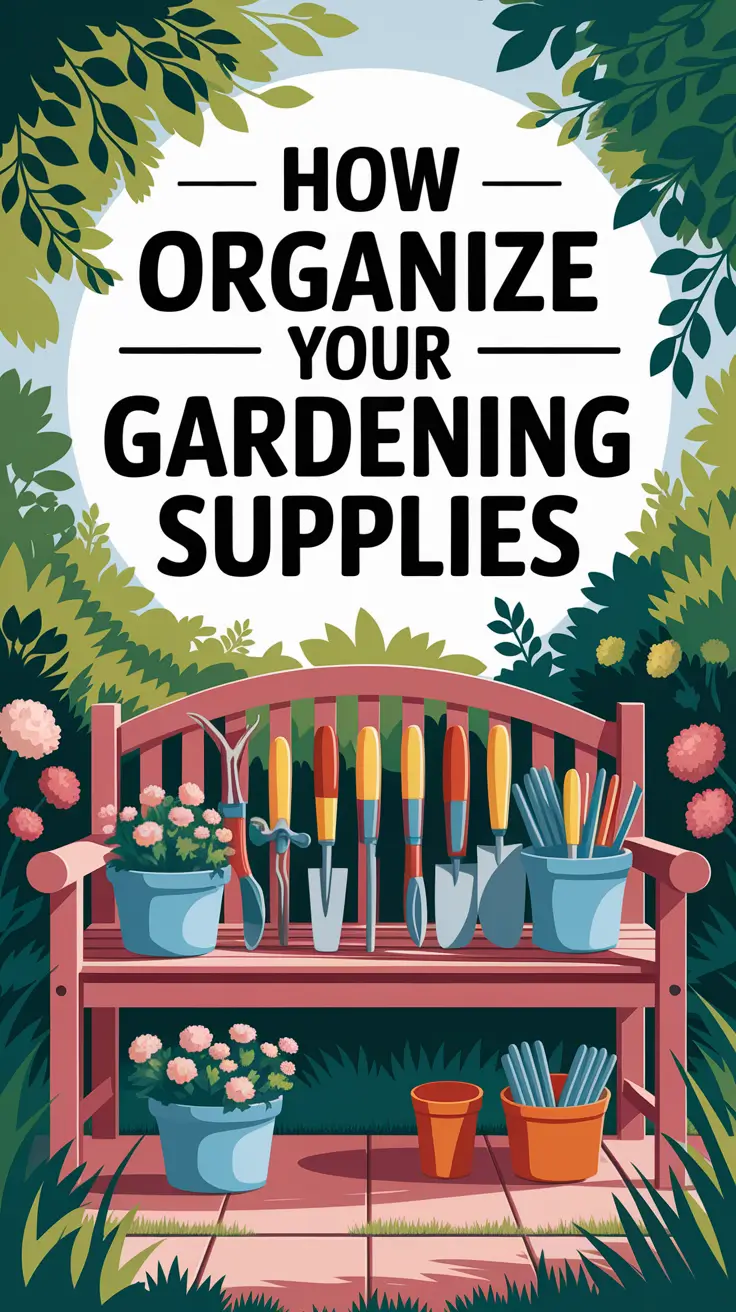
That morning started well: fresh coffee, good light, and a garden already buzzing. Then I opened the shed and stopped cold. My shears were missing, again. After fifteen minutes of digging through plastic tubs, cardboard boxes, and a canvas tool bag that smelled faintly of mildew, I gave up and grabbed the kitchen scissors. That was the moment I admitted I was spending more time hunting for my tools than actually gardening. If you’re heading into 2027 with the same problem, this is for you.
Maybe your tool collection, seed packets, gloves, and half-used rolls of twine have quietly multiplied over the years. Even a tidy home can get cluttered once the garden season starts, and the mess spreads fast after every rainy week.
So I built a system around the way I actually garden. It needed to look pleasant, but its real job was to help me work faster, more easily, and with more enjoyment. Here’s how I put it together.
Start with What You Already Have
What caught me off guard was how many duplicates I had: two or three of nearly everything.
I owned three watering cans and five bags of soil, most of them half full. One drawer held a pile of gloves, yet I kept grabbing the same pair. The problem wasn’t a lack of room. I simply didn’t know what I already had.
How I Took Inventory (Without Losing My Mind)
I spread everything out on an old picnic blanket, with tools on one side and seeds and fertilizers on the other. I snapped a photo, and the disorder I’d been avoiding was suddenly impossible to ignore.
Then I asked myself:
- What do I use weekly?
- What haven’t I touched in a year?
- What’s broken or expired?
The answers were humbling.
The Real Shift?
I let go of the “just-in-case” items. I gave away what I didn’t need, recycled what was beyond use, and my gardening stash stopped feeling like a mystery drawer.
Organizing Options — Compared Side by Side
I tried just about every option: rolling carts, pegboards, you name it.
Some performed better in the shed, while others saved me on my balcony garden. Here’s what I learned, summed up in a simple table:
| Storage Type | Best For | Pros | Cons |
|---|---|---|---|
| Plastic bins | Long-term storage | Inexpensive, waterproof | Hard to see contents |
| Pegboards | Tools, scissors, gloves | Easy access, wall-mounted | Needs wall space |
| Rolling carts | Mobile tasks, small tools | Portable, multi-layered | Bulky if not used often |
| Hanging pockets | Balcony or vertical spaces | Great for seed packets | Not for heavy items |
My advice?
Mix and match. Everyone’s needs are different, so your storage should be too.
The Ritual That Keeps Everything Tidy
I used to think a good system had to be large. It turns out it only needs to be repeatable.
Once things calmed down, I needed a way to keep them that way. So I created a short routine that takes just five minutes and saves me hours over time.
My Post-Gardening 5-Minute Reset
- Wipe down tools with a dry rag (or a quick spritz of vinegar water)
- Check bins — are gloves damp? Trash wrappers lingering?
- Refill essentials: plant markers, string, labels
- Log any empties in a sticky note on the bin lid
- Close up bins and leave it ready for next time
A numbered list brings rhythm and flow, and this routine is what keeps my space from sliding back into chaos.
What to Look For in Containers and Organizers
I learned the hard way that pretty boxes aren’t always practical.
Some looked great on Pinterest but grew mold within weeks. Others were too shallow for long-handled tools or so deep that nothing could be found in them.
So I started testing, and these are the things that worked:
What to Look For in Storage Solutions
- Transparency: Clear boxes let you see what’s inside without opening everything.
- Durability: Look for waterproof or at least water-resistant materials.
- Stackability: Saves space, especially in tight areas.
- Right Size, Right Job: Deep bins for soil bags. Shallow trays for seed packets.
A bullet list gives instant visual clarity, and clarity matters most when you’re up to your waist in spring planting.
What Actually Changed After Organizing
This is where everything changed.
Gardening used to thrill me, right up until the challenges piled up. Now I work with intention. My tools are exactly where I expect them to be. I grow more, throw away less, and spend far more time simply being present in the garden.
Most of all, I now see my garden space as an extension of my home rather than a passageway. That shift in mindset changed everything.
Find the Right Spot — Not Just Any Spot
The first step was something I didn’t expect to matter: a dedicated gardening zone.
Supplies used to be scattered across the shed, the porch, and the hallway closet, so every session turned into a scavenger hunt. Then one day I cleared a small corner beside the back door and gave it a single shelf. That was enough to change everything.
3 Steps That Helped Me Build My Gardening Corner
- Defined the Zone: I chose a spot I pass by daily. Easy access makes maintenance a breeze.
- Used Vertical Space: I installed an adjustable shelf system and hooks for tools.
- Grouped by Task: One bin for pruning, one for planting, one for harvesting.
Every box has a simple label, so even my 6-year-old niece can spot the trowel.
The Takeaway?
Don’t hold out for the perfect space. Begin with what you have, even if it’s only a shelf or two. You’re not aiming for a magazine spread. You’re building a space that works for your everyday life.
Taming the Tiny Things — Seeds, Labels, Wire & More
The small stuff ended up driving me the most crazy.
Seed packets spilling everywhere. Plant labels scattered in every direction. A ball of twine that slipped loose in a drawer and knotted itself up. Sound familiar?
My Mini-System for Gardening Bits
For my craft drawers, I used some office supply drawer organizers. One compartment holds labels and tags, another holds elastic ties, and a third holds the mystery screws and stakes I’d been hanging on to.
As for seeds, I use a photo box with monthly dividers, January through December. Each new packet goes into a folder labeled with the month it should be planted.
Such a small trick, and such a big difference.
🌸 Final Thought
In the end, keeping your gardening supplies in order is about more than tidying up. It’s about making your relationship with a passion as smooth as possible. Whether you have a small balcony or a large backyard, you need a setup that supports your gardening instead of getting in its way.
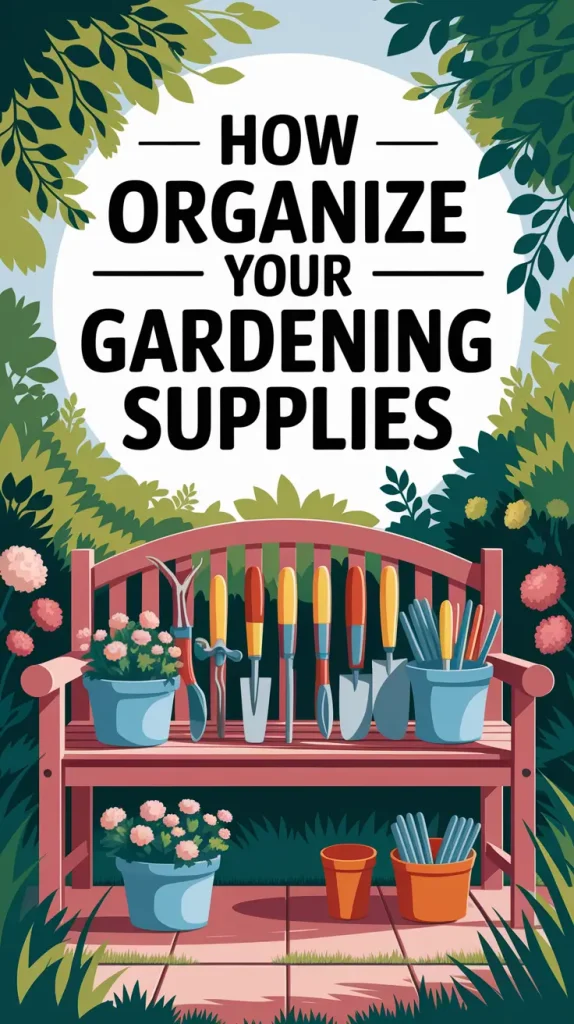
If your garden tools could use a refresh, pin this.
What is one small change that made your gardening easier? I’d love to hear about it.